
Last updated September 20, 2026
Free on-site gate assessment - hinges, posts, and your LiftMaster or Nice gate operator checked before anything is quoted
The assessment is free and the quote is the invoice.

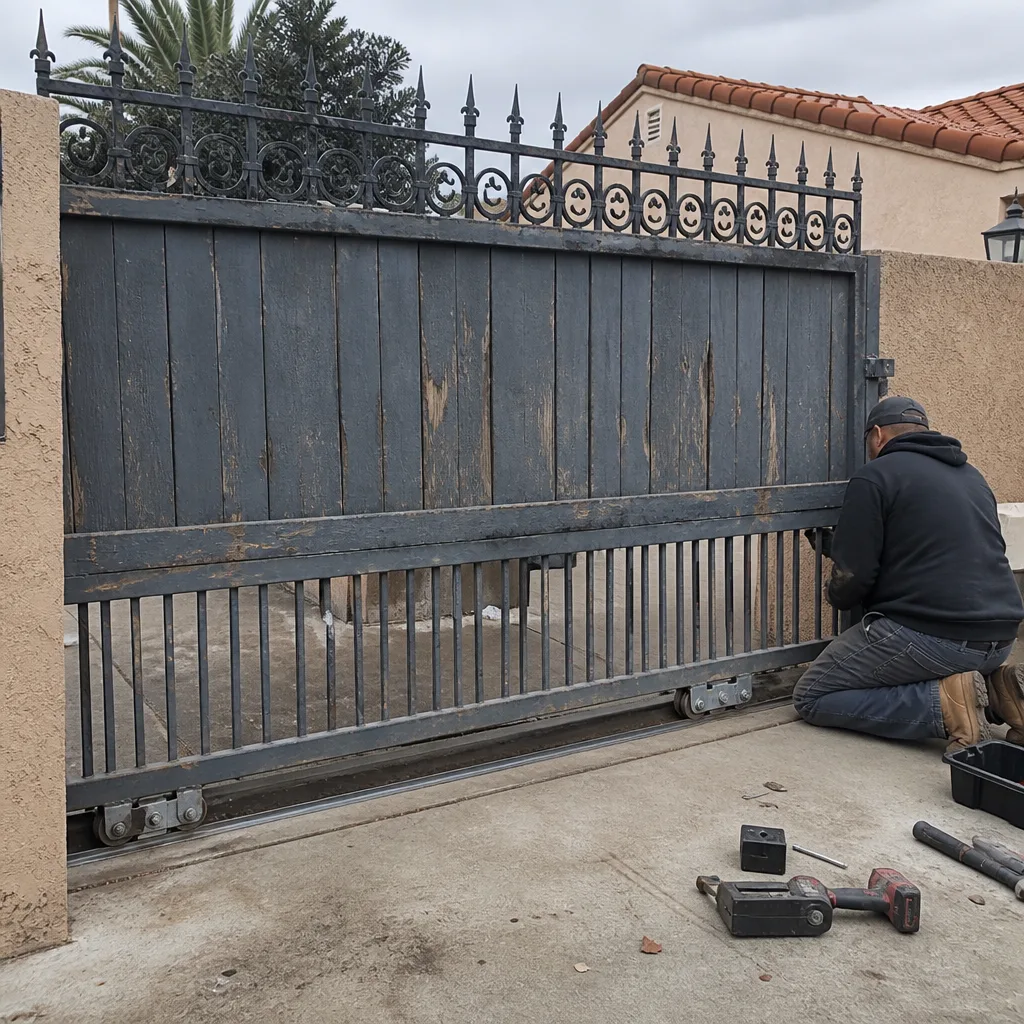 Before
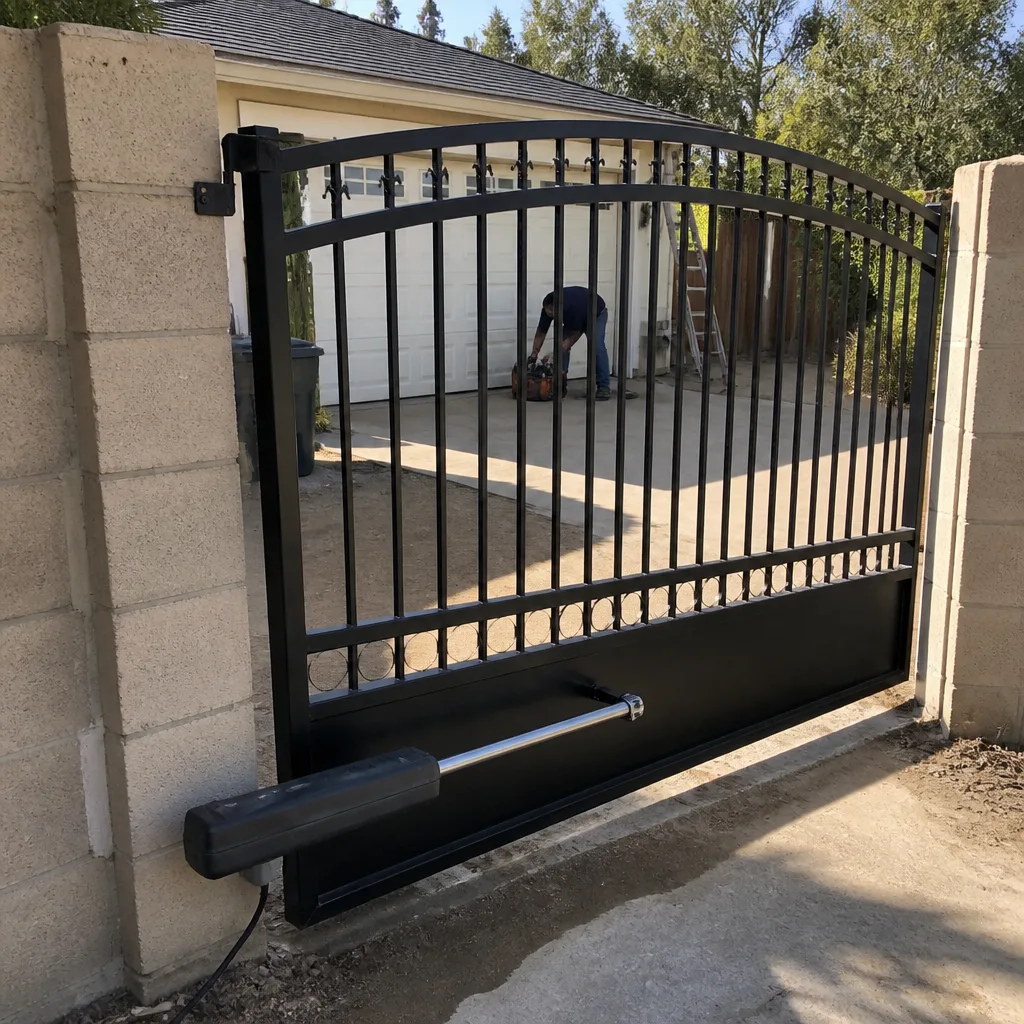 After
After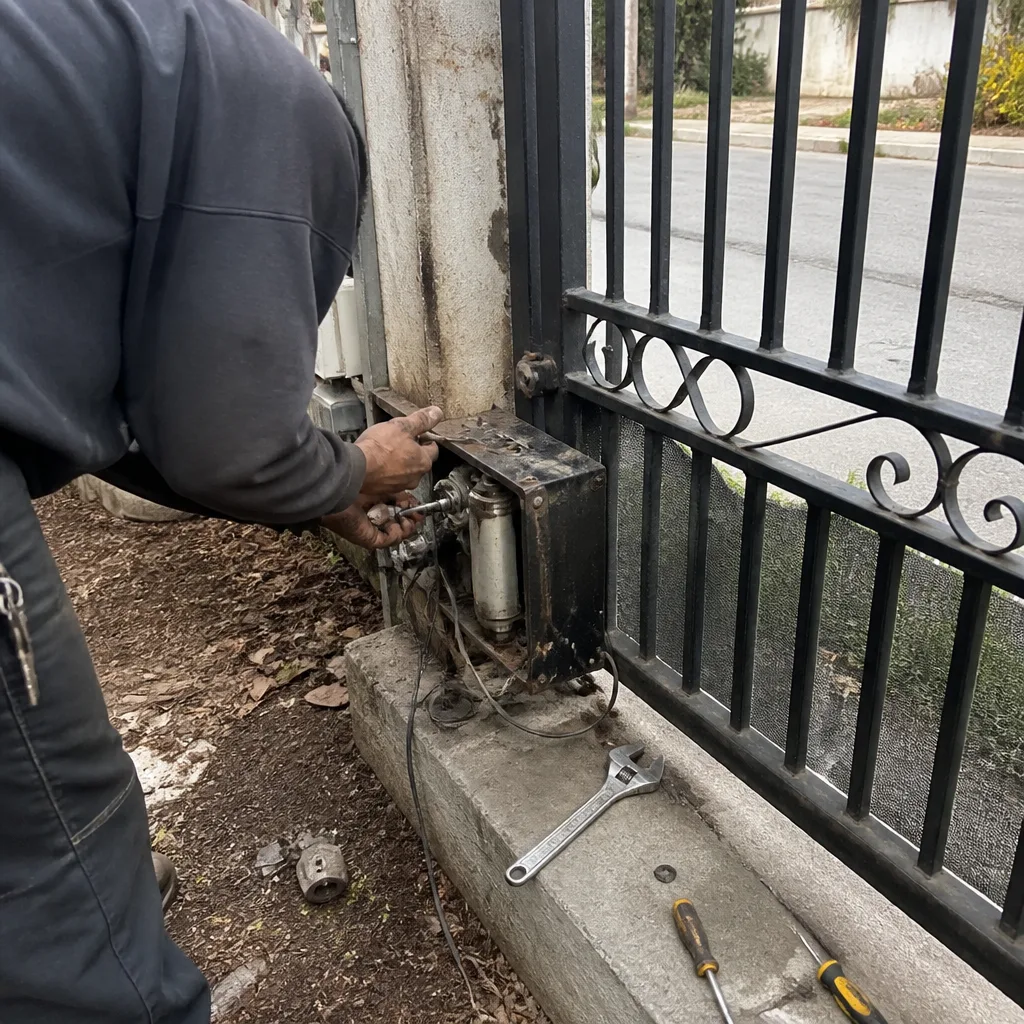 Before
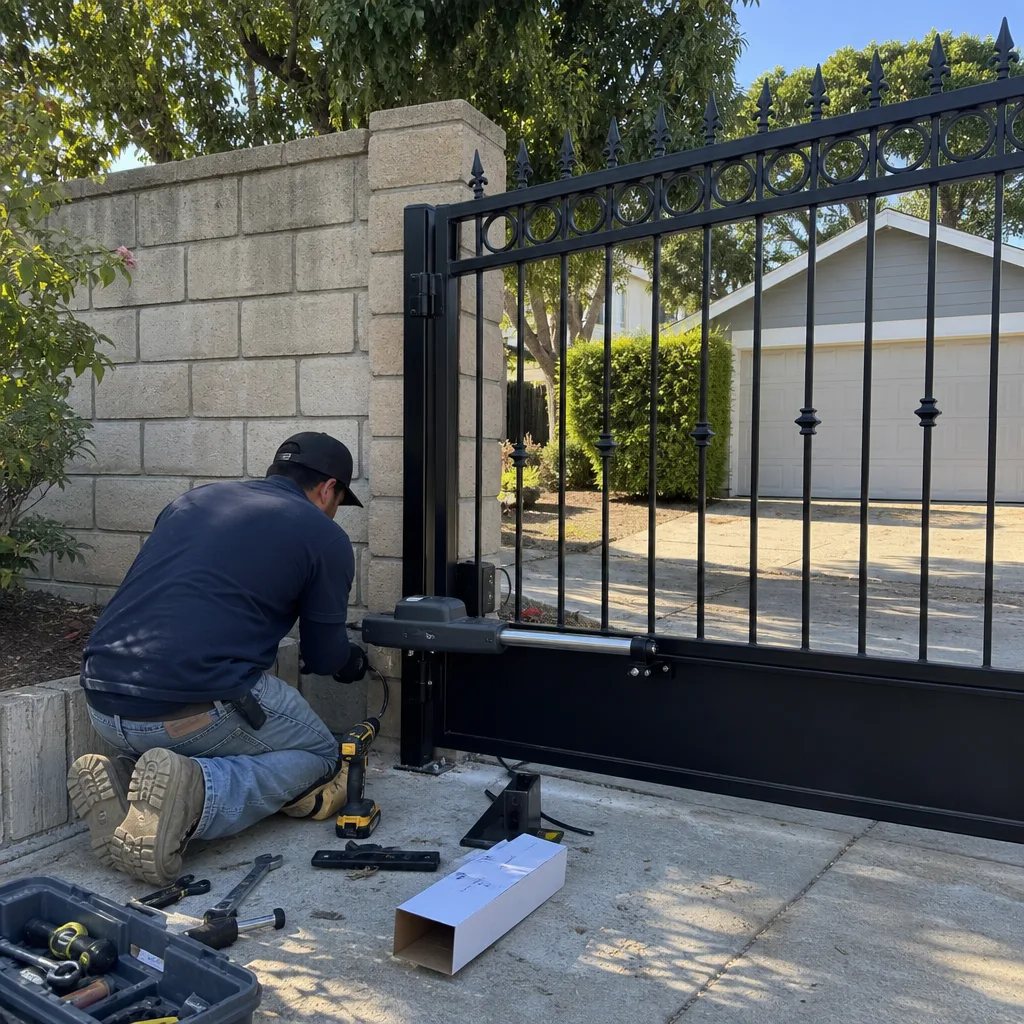 After
After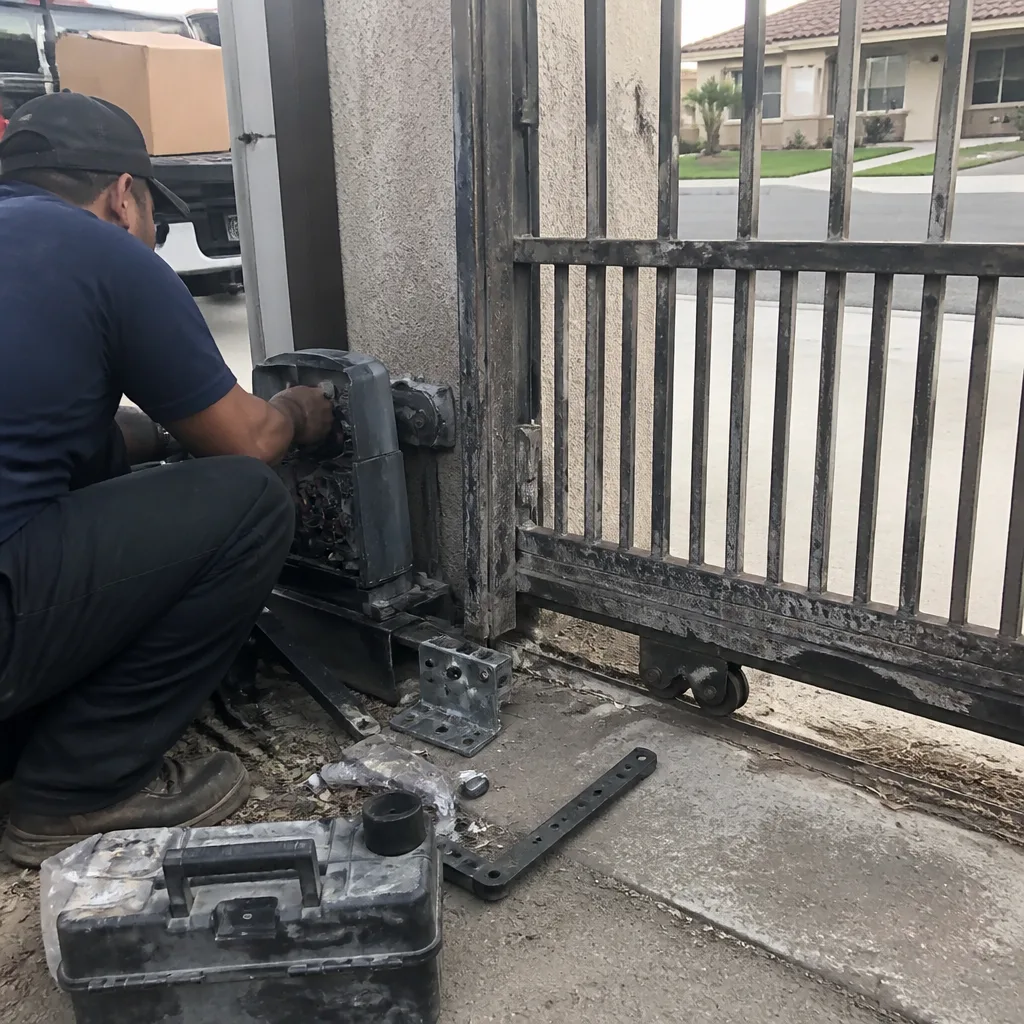 Before
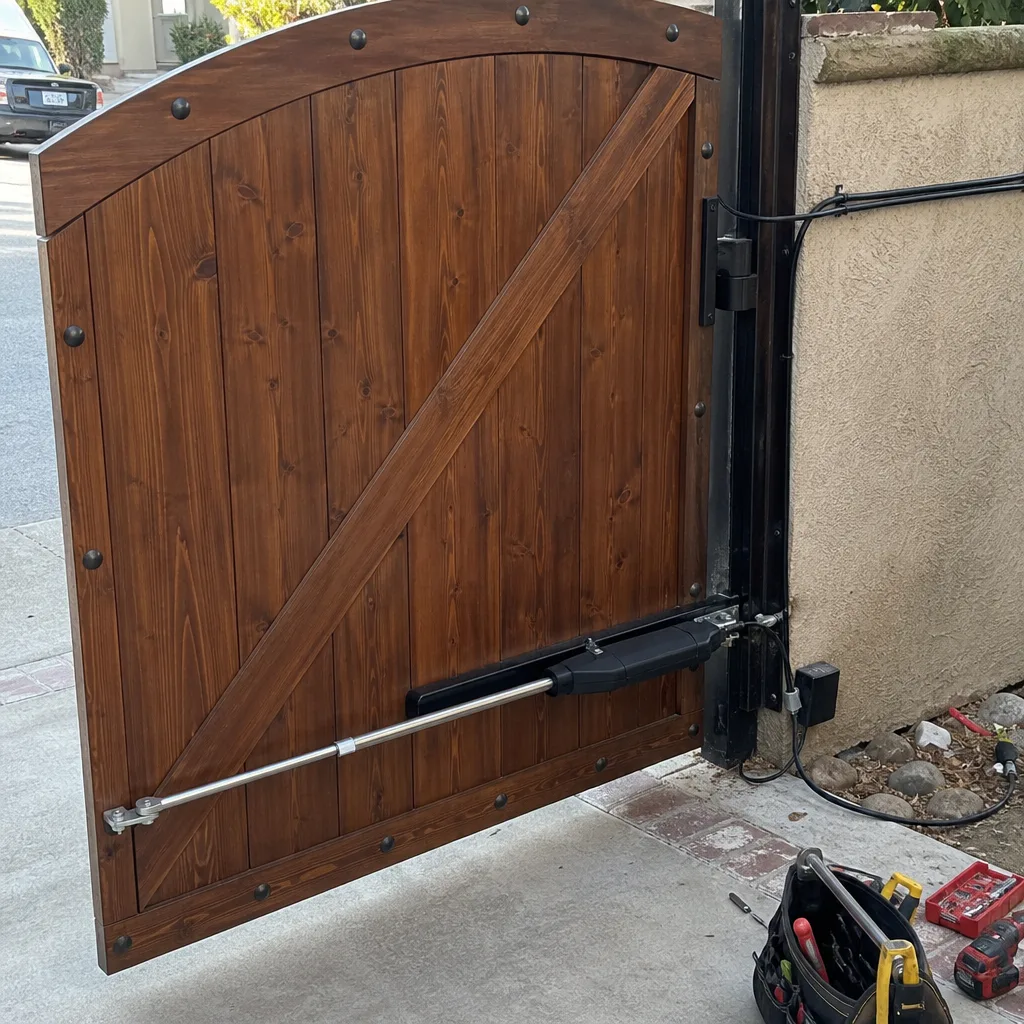 After
AfterDIY vs Professional Gate Repair: The Riverside Homeowner’s Decision Guide
The most expensive DIY gate repair mistake in Riverside isn’t electrical. It’s a homeowner who adjusts a limit switch without documenting the original setting, can’t return to baseline, then calls a technician who now has no reference point and charges twice as long to diagnose. That scenario plays out across Riverside driveways every month, and it’s the reason this Gate Repair guide exists. We’re going to walk through which gate repairs are genuinely safe for a homeowner, which ones carry legal or safety obligations that force a professional’s hand, and how to document your own work so you never pay twice to rediscover the same problem.
Quick Answer
DIY gate repair in Riverside makes sense for roughly 30% of common failures: cleaning photo-eye lenses, tightening loose hinge bolts, lubricating tracks, replacing remote batteries, and clearing debris from slide-gate rails. It does not make sense for anything involving high-tension springs, control board wiring, entrapment protection devices, or gate motors that fall under California’s UL 325 compliance requirements. If the repair involves a spring under load, a circuit board, or a safety sensor, call a professional; if it involves a wrench, a rag, or a battery, you can probably handle it with proper documentation.
Table of Contents
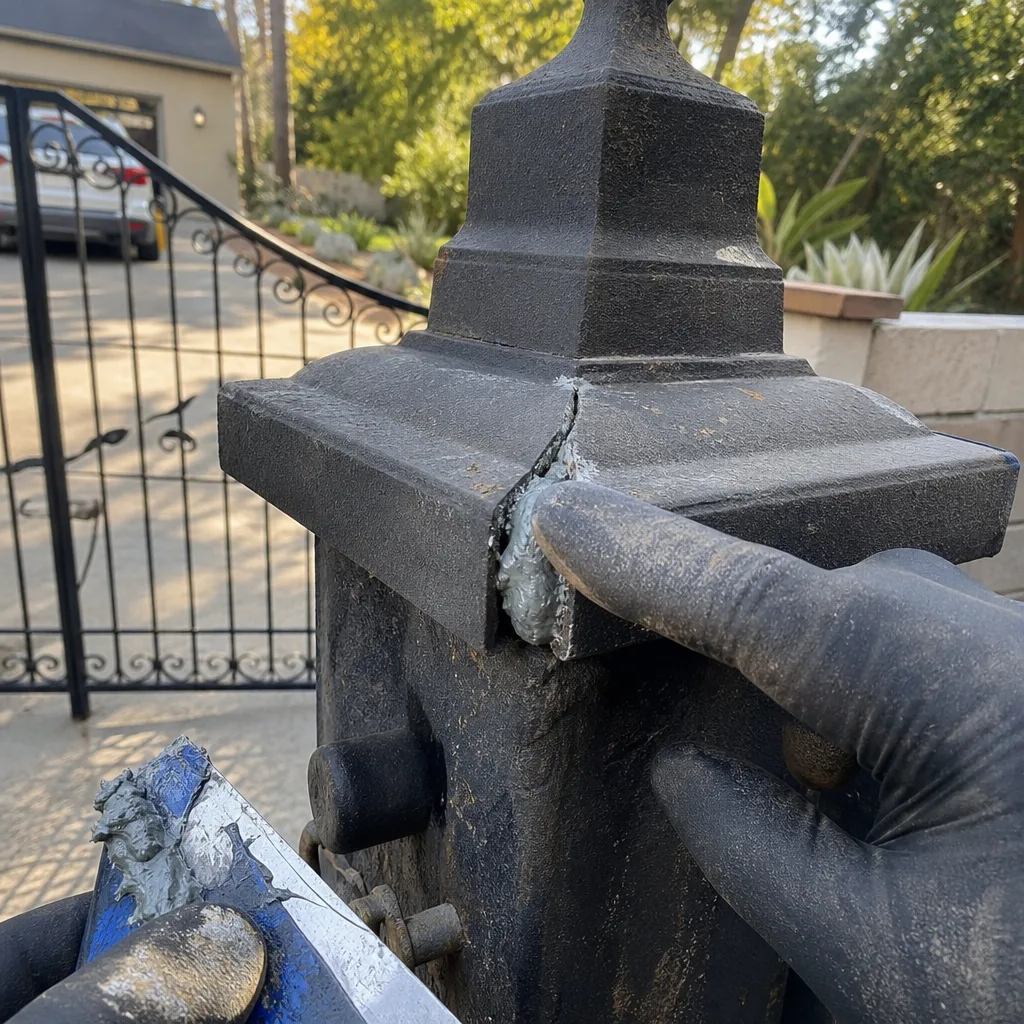
- The Task-by-Task Decision Matrix
- The Documentation Rule: What to Record Before You Touch Anything
- UL 325 and California: When DIY Becomes Illegal
- The Hidden Variable: Your Time Is Not Free
- Partial DIY: Prep Work That Reduces Professional Hours
- Springs, Cables, and the Injuries That Come With Them
- Brand Reality: What You’re Actually Working On
- Common Mistakes to Avoid
BeforeAfterThe Task-by-Task Decision Matrix
Most DIY-versus-professional advice treats gate repair as a single category, which is why it fails. The question isn’t “can you repair a gate?” It’s “can you repair this specific component without making the problem worse?” In Riverside, where driveway gates run daily cycles through summer heat that bakes wiring insulation and winter Santa Ana winds that stress hinge welds, different components fail at different rates and demand different skill levels. Here’s the breakdown, based on what we’ve documented across thousands of Riverside gate repairs since 2014, with more guides & resources available for homeowners who want to go deeper.
Safe for Most Homeowners (Low Risk, High Success Rate)
- Cleaning photo-eye lenses: The photo-eye (the infrared beam that stops the gate if something crosses the path) collects Riverside dust constantly. Wiping both lenses with a dry cloth solves a surprising number of “my gate won’t close” calls. Five minutes, no tools, no risk.
- Tightening visible bolts and hinge fasteners: Gate hinges loosen gradually, especially on heavy wrought-iron gates common in older Riverside neighborhoods like Wood Streets and Hawarden Hills. A socket wrench and ten minutes restores smooth operation. The key is checking all fasteners, not just the squeaky one.
- Lubricating rollers, hinges, and slide-gate tracks: Use a silicone-based lubricant, not WD-40. Apply to hinge pins and slide-gate rollers every six months. Riverside’s dry climate means less rust, but also less natural lubrication, so regularity matters more than quantity.
- Replacing remote batteries and reprogramming remotes: If the motor responds to the wall button but not the remote, it’s usually a $3 battery. Most modern systems from Linear, Viking, Ghost Controls, and DoorKing have straightforward remote-programming sequences printed on the motor cover.
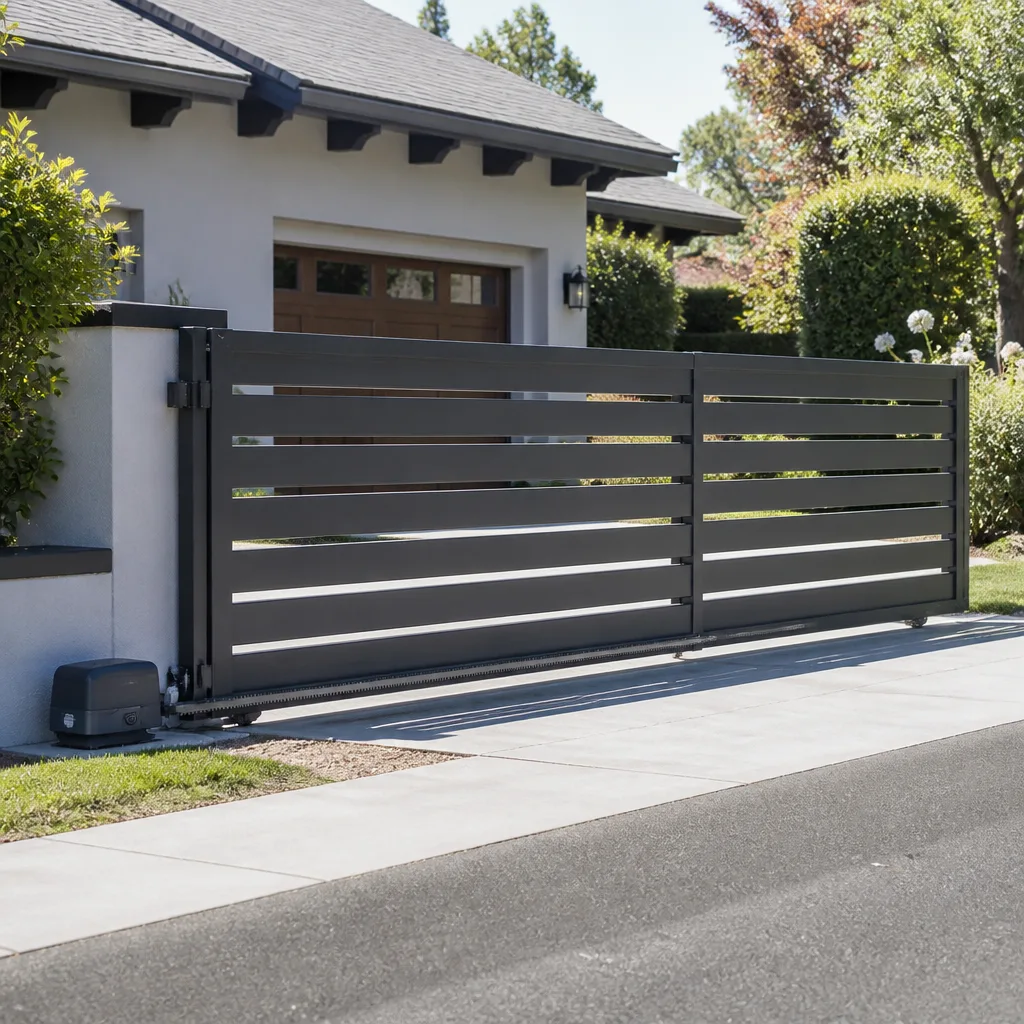
- Clearing debris from slide-gate rails: Riverside wind blows leaves, gravel, and sand into V-track rails. A broom and five minutes restore travel. This is the single most common slide-gate issue we see, and it requires zero technical skill.
Risky Without Experience (Call or Study Hard First)
- Adjusting limit switches: Limit switches tell the motor where to stop. Adjusting them without marking the original position is the mistake from the opening of this guide. If you do attempt it, photograph everything first, mark all screw positions with a permanent marker, and only move one setting at a time.
- Replacing gate wheels or rollers on a heavy gate: A 400-pound slide gate resting on a failed wheel requires lifting the gate clear of the track. That’s manageable with a jack and blocks if you understand weight distribution, but a dropped gate breaks hinges, bends tracks, and has injured more than one Riverside homeowner.
- Reset procedures after power surges: Riverside’s summer brownouts and occasional electrical storms reset gate motor settings more often than any other cause we track. The reset itself is usually simple; knowing which settings to restore afterward is not. Many boards default to unsafe parameters when reset.
Professional-Only (Do Not Attempt)
- High-tension spring replacement or adjustment: A wound torsion spring on a cantilever gate stores enough energy to break bones or worse. These springs require specific winding tools and careful torque management. Even experienced technicians respect the failure mode here. Do not attempt under any circumstances.
- Control board rewiring or replacement: Gate motor control boards carry 12V DC logic circuits alongside 120V AC power inputs. One misplaced wire smokes the board, voids the warranty, and turns a $350 repair into a $900 replacement.
- Photo-eye or entrapment sensor replacement (when tied to UL 325 compliance): This isn’t a skill question. It’s a legal one. Covered in detail below.
- Any repair involving the motor capacitor: Capacitors store electrical charge even with power disconnected. Discharging one correctly requires tools and knowledge most homeowners don’t own. The shock from a charged capacitor is not a “learning experience.”
Gate Repair in Riverside covers the full range of professional repairs with written pricing before any work starts.
The Documentation Rule: What to Record Before You Touch Anything
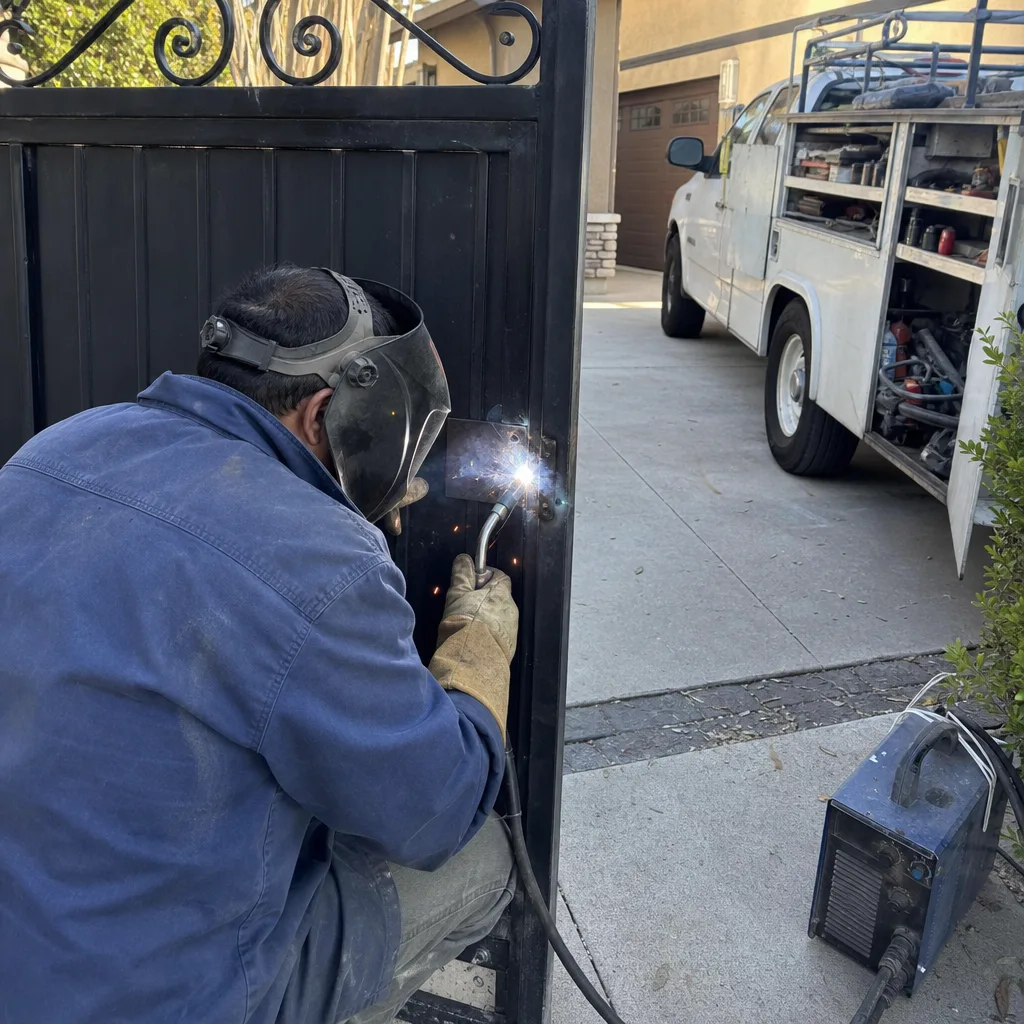
Here’s the habit that separates a $40 DIY fix from a $400 professional rescue: document the baseline. Vance Gate Repair operates under what we call the Haven Standard, and Clause 4 (Evidence on every job) exists because we’ve spent a decade un-doing undocumented DIY work. Before you adjust, remove, or disassemble anything on your gate system, create a record a future technician can use. This applies even if you’re confident you’ll remember. You won’t.
The Pre-Work Documentation Checklist
- Photograph the entire motor unit from three angles: straight on, from above, and from the side showing wire connections. These photos become your reassembly reference.
- Photograph every wiring connection before touching it: Use macro mode. Get close enough to read wire colors and terminal labels. This single step has saved Riverside homeowners hundreds of dollars when a plug comes loose and they can’t remember which terminal it came from.
- Mark limit switch positions with a permanent marker: Draw a line across the adjustment screw and the housing so you can return to the exact original setting. Photograph the mark.
- Record the motor brand, model number, and serial number: Write them down or photograph the data plate. When you call a professional, this information converts a two-hour diagnosis into a forty-five minute one.
- Note what the gate is doing and when it started: “Gate stops 10 inches short of close, started March 2nd, worse in the morning” is useful. “Gate is broken” is not. Include whether the problem follows temperature, time of day, or wind conditions.
- Test and document all symptoms before repair: Run the gate through a full cycle. Does it stop at the same point every time? Does the motor hum but not move? Does the remote work when the wall button doesn’t? These answers narrow the diagnosis dramatically.
We’ve walked into Riverside homes where the homeowner had already disassembled the motor cover, removed two wires, and lost the screws. The repair then required reverse-engineering the original state before the actual problem could be addressed. That’s a $200 documentation tax on a job that would have cost $85 if the baseline had been recorded first.
UL 325 and California: When DIY Becomes Illegal
This is the section most DIY gate repair guides skip, and it’s the one Riverside homeowners need most. UL 325 is the safety standard that governs automatic gate operators in the United States. California has adopted it into state code. What that means in plain terms: certain repairs on automatic gates are legally required to be performed to a standard that includes entrapment protection testing and documentation. A homeowner who repairs a photo-eye or entrapment sensor and fails to restore it to UL 325 compliance has created a legal liability, not just a safety risk.
Entrapment protection is the system that prevents a gate from crushing a person or vehicle. It includes photo-eyes, reversing edges, and the motor’s inherent obstruction detection. When any of these components fail and are repaired incorrectly, the gate can close on a person with enough force to cause serious injury or death. That’s not dramatic language; it’s the reason UL 325 exists. The standard requires specific force and speed limits, specific sensor coverage, and specific warning signage. When a licensed gate technician performs entrapment-related repairs in Riverside, they test the system against these requirements and document the results. When a homeowner does it, there’s no test and no documentation. If the gate later injures someone, the homeowner’s undocumented repair is a significant legal exposure.
The practical rule: if the repair involves anything that detects or responds to an obstruction (photo-eyes, sensing edges, the motor’s internal reversal circuit), it is professional-only in California. Not because homeowners can’t technically complete the work, but because the legal standard for the completed work requires testing and documentation that professionals provide. This is one reason Vance Gate Repair includes a documented photo record on every visit. Under Clause 4, before we leave, you get a photo log of every adjustment and a written record of the part number installed. That record exists partly to protect our work, but mostly to protect you.
For homeowners researching this themselves: the California Code of Regulations Title 8, Section 3280 covers gate operator safety. It’s dense reading, but it makes clear that automatic gate operators are subject to specific installation and maintenance requirements. Knowingly operating a non-compliant gate after a failed repair is not the same as making a mistake; it’s a documented failure of duty.
The Hidden Variable: Your Time Is Not Free
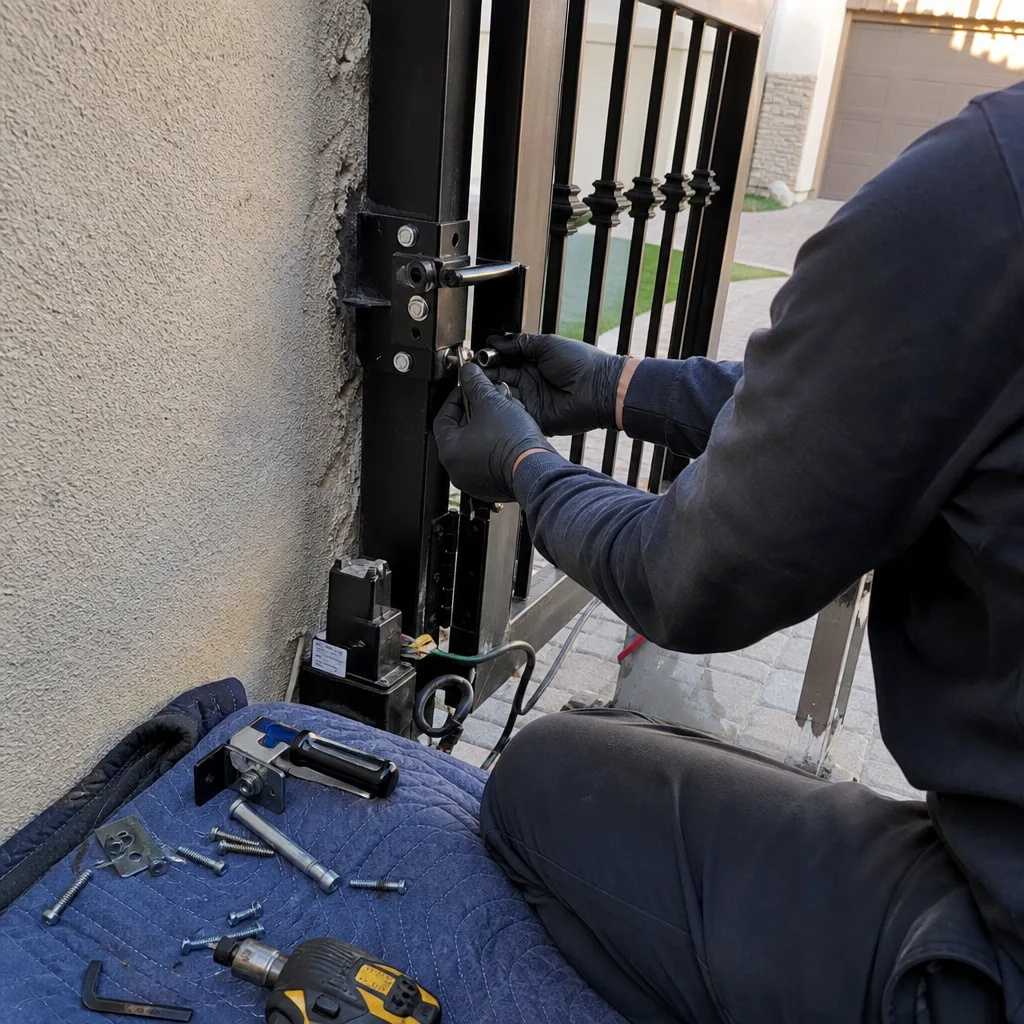
DIY gate repair looks cheaper because most homeowners price it at zero dollars for labor. Here’s the math that reveals the actual cost. A professional gate technician in Riverside charges between $85 and $145 per hour for residential work. Say a limit-switch adjustment takes a professional 45 minutes, and you’re quoted $110 flat. For most working homeowners, that’s roughly equivalent to 1.5 hours of your own income. But here’s where the comparison breaks down:
- Diagnosis time: The professional has seen this exact failure hundreds of times. You’ll spend two hours on YouTube and forums before touching a screwdriver. Those hours have an opportunity cost, even if you enjoy the learning.
- Tool acquisition: Gate repair often requires tools most homeowners don’t own: a multimeter, a specific-size socket set, or a capacitor discharge tool. A decent multimeter alone runs $40 to $100.
- Error correction: If your repair doesn’t work, you’ve spent your time and still need a professional. And if you’ve made the problem worse (undocumented limit changes, reversed wiring), the professional’s bill is now higher than if they’d done the original repair.
- The documentation burden: A professional leaves with the job documented. You need to create that documentation yourself, and if you don’t, the next repair becomes more expensive.
Our genuine recommendation, based on watching Riverside homeowners go through this cycle: the time-cost calculus favors DIY for preventive maintenance and simple mechanical adjustments, and favors professional work for anything involving wiring, springs, or safety systems. The surface-level savings of DIY disappear quickly when the project consumes a Saturday and ends with a service call anyway.
Partial DIY: Prep Work That Reduces Professional Hours
There’s a middle path that almost no one talks about, and it’s the most cost-effective option for many Riverside homeowners. You don’t need to choose between doing everything yourself and handing the whole job to a technician. Prep work is the category of work that reduces professional billable hours without requiring you to take on technical risk. Here’s what that looks like in practice:
- Complete the documentation checklist above before making the call. A homeowner who can describe symptoms precisely, provide the motor brand and model up front, and email photos of the current state has already reduced diagnosis time. What might have been a two-hour visit becomes a one-hour visit.
- Clear access to the gate motor and control panel: If your gate motor is behind overgrown landscaping or buried under stored items, clear the area before the technician arrives. Paying $110 an hour for someone to trim bushes is not a good use of money.
- Locate and organize your gate system paperwork: The original installation manual, the remote programming instructions, the prior repair records. If you don’t have them, that’s fine, but having them ready saves time.
- Make a written list of every symptom, including ones that seem unrelated: “The gate is slower in the morning” or “there’s a clicking sound when it starts” or “the remote only works from ten feet away.” These details help a technician diagnose in a fraction of the time it takes to discover them through testing.
- Note what you’ve already tried: “I replaced the remote battery” or “I tightened the hinge bolts” or “I cleaned the photo-eye lenses.” This prevents paying for work you’ve already done.
This partial-DIY approach is honestly the best value for most Riverside homeowners. You take on the work that’s genuinely cost-effective for you (documentation, prep, simple maintenance), and the professional takes on the work that’s genuinely cost-effective for them (diagnosis, technical repair, compliance testing). Both halves are doing the work they’re best suited for, and the total bill is lower than either full-DIY or zero-prep professional service.
Springs, Cables, and the Injuries That Come With Them
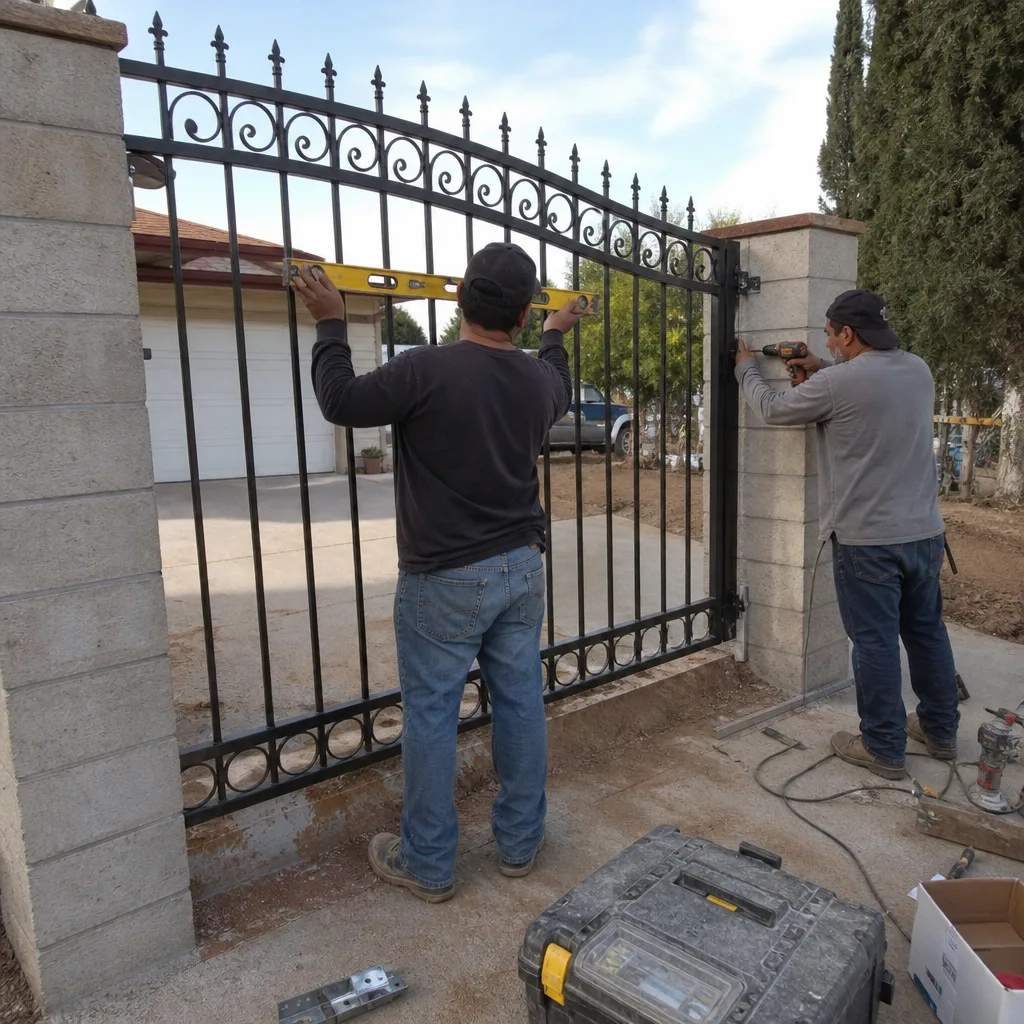
Let’s be direct about this: high-tension springs on gates and garage doors kill people. Not “cause injuries.” Kill. A wound torsion spring stores energy measured in hundreds of foot-pounds, and when that energy releases unexpectedly, it releases into whatever is in its path. Fingers, hands, faces. This applies to cantilever gates, which are common on larger Riverside properties, and to slide gates with counterbalance systems. It also applies to the cable-and-pulley systems on some older swing gates.
The specific danger with gate springs is that they don’t look dangerous. A garage door spring is visibly large and obviously under tension; a gate spring may be smaller, partially enclosed, and less visually intimidating. But the same failure mode applies: the spring is wound to store the energy needed to move a heavy gate, and that energy is not present when the gate is closed. If you release the tension incorrectly, you’ve just created a projectile or a crushing mechanism.
We’re not going to provide step-by-step spring adjustment instructions here. Not because they’re secret, but because written instructions without hands-on guidance give a false sense of confidence. The right advice is: if a gate spring is squeaking, binding, or visibly deformed, call a professional. The repair is typically a $150 to $300 job, and it’s done with proper tools and controlled tension. The injury it prevents doesn’t have a price.
Brand Reality: What You’re Actually Working On
Riverside driveways run a wide mix of gate automation brands. Linear is common on older installations, particularly in homes built through the 1990s and 2000s. Viking and DoorKing appear frequently on newer builds and on larger gates. Ghost Controls has gained traction recently as a retrofit brand, especially for homeowners adding automation to an existing manual gate. None of these brands make DIY-hostile products, but each has quirks that affect repair complexity.
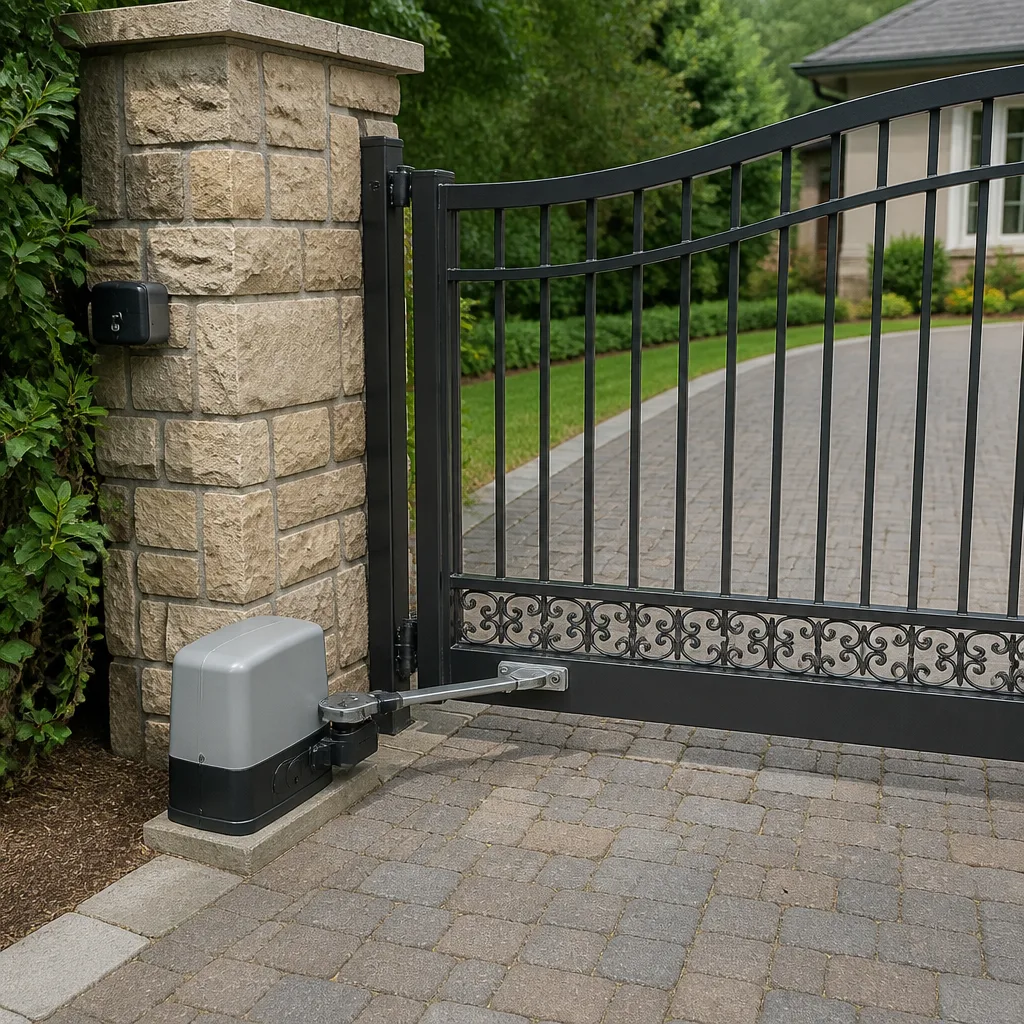
A Linear swing-gate operator from 2005 might have limit switches that are electrically simple but physically worn after two decades of Riverside sun. A DoorKing slide-gate system might have a control board with diagnostic LEDs that are genuinely useful if you know the blink codes. A Ghost Controls retrofit kit often runs on DC power with a battery backup, which changes the safety profile of electrical work. The point is not to memorize brand differences; it’s to recognize that the motor on your gate is a specific product with a specific history, not a generic “gate thing.” When you call a professional, naming the brand up front turns a fact-finding visit into a repair visit.
Vance Gate Repair services nine brands, including Linear, Viking, Ghost Controls, and DoorKing. The practical benefit for a Riverside homeowner is that we’re not steering you toward replacing a repairable motor because we don’t work on that brand. We work on what’s already installed. That matters when the alternative is a “replace everything” quote from a company that only sells one brand.
Gate Motor & Opener in Riverside details the full range of motor repair and replacement work with written pricing.
Common Mistakes to Avoid

- Adjusting a limit switch without marking the original position. This is the mistake from the opening of this guide, and it remains the single most expensive error we see in Riverside. A limit adjustment that drifts too far causes the gate to over-travel, which bends brackets, burns out motors, and forces a full recalibration. Mark every position before moving anything.
- Powering through a gate that’s struggling. When a gate slows down, grinds, or stalls, continuing to operate it turns a minor repair into a major one. A $85 roller replacement becomes a $400 motor rebuild when the stalled motor burns out. Stop and diagnose at the first sign of resistance.
- Bypassing a failed photo-eye instead of replacing it. Riverside homeowners sometimes jump the photo-eye wires to force the gate closed. This disables the entrapment protection required by UL 325 and creates the exact legal liability described earlier. A misaligned photo-eye is a five-minute fix; a bypassed one is a liability.
- Using the wrong lubricant. WD-40 is a solvent, not a lubricant. It strips existing lubrication and leaves moving parts dryer than before. Use a silicone-based or white lithium lubricant on hinge pins, rollers, and slides.
- Replacing a remote before checking the battery. This sounds obvious, but we replace remotes every month that would have worked fine with a $3 battery. It’s the gate repair equivalent of calling a tow truck for an empty gas tank.
- Ignoring the gate’s weight when “just tightening hinges.” A heavy iron gate on worn hinges can shift and bind when bolts are over-tightened. Torque matters. If a hinge is so worn that tightening doesn’t solve the sag, the hinge itself needs replacement, and that’s a job for a professional with the right lifting equipment.
- Documenting nothing and hoping for the best. The entire documentation section of this guide exists because this approach costs Riverside homeowners real money. A photograph before you touch anything is the cheapest insurance available.
When to Call a Professional
The decision threshold is simple on the other side of this guide: if the repair involves a spring under tension, any control board wiring, an entrapment protection device, or a motor that requires disassembly, you’re past the DIY line. If the gate is heavy, moving, or electrically powered in a way you don’t fully understand, the same applies. Riverside’s older neighborhoods have gates that predate modern UL 325 standards, and bringing those gates into compliance often requires more than a homeowner can reasonably tackle. Vance Gate Repair Riverside offers free estimates in Riverside, call (951) 934-7330, and we’ll give you a written price before any work starts. If you’ve already attempted a repair and it went wrong, we’ve seen that too, and we’ll work from whatever documentation you have.
Gate Installation in Riverside covers new installations and full replacements when repair isn’t the right path. Vance Gate Repair Riverside home has more on who we are and how we work.
Frequently Asked Questions
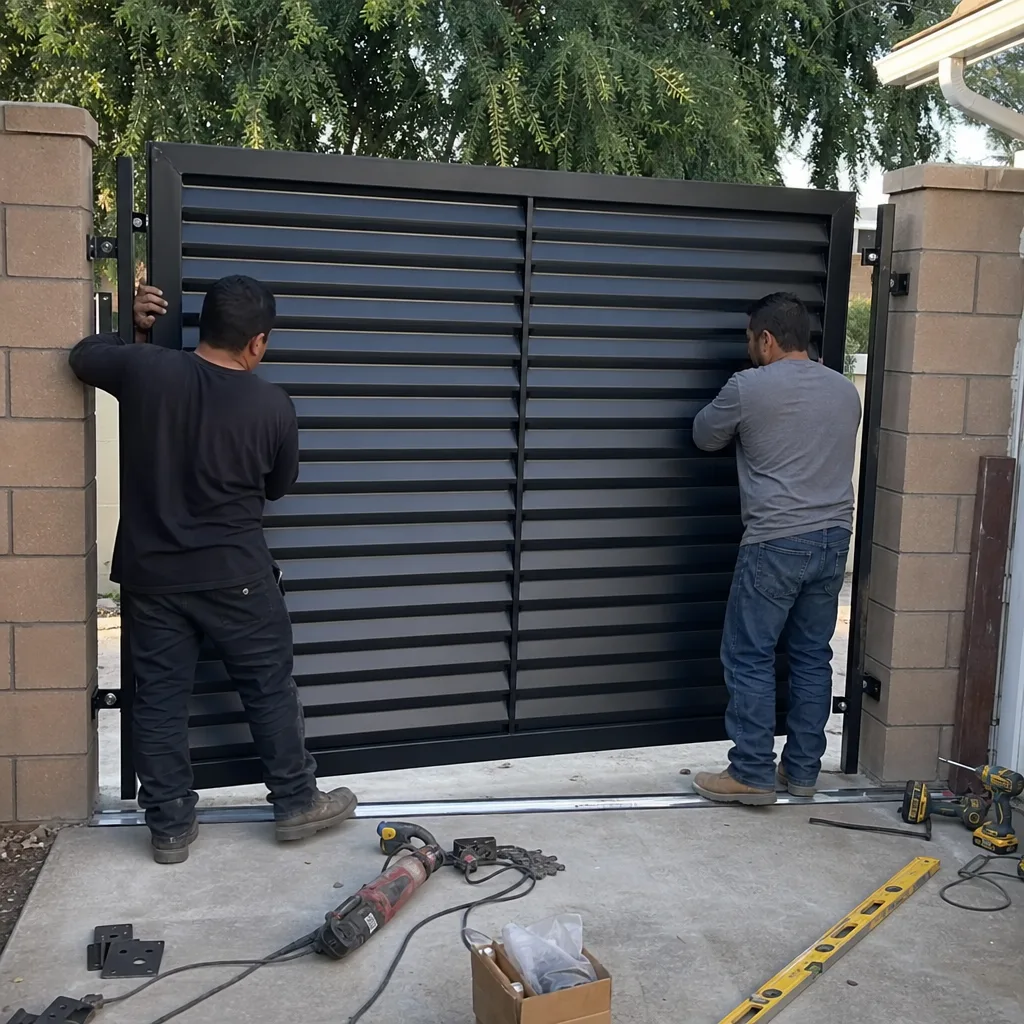
Cleaning photo-eye lenses, tightening visible hinge and bolt fasteners, lubricating rollers and tracks with silicone-based lubricant, replacing remote batteries, and clearing debris from slide-gate rails are all safe DIY repairs in Riverside. Any repair involving springs, wiring, or safety sensors should be handled by a professional.
Professional gate repair in Riverside typically runs $85 to $145 per hour for labor, with most common repairs (limit switch adjustment, photo-eye realignment, hinge tightening, roller replacement) falling between $110 and $350 total. Complex repairs like control board replacement or spring work run $400 to $900. Call (951) 934-7330 for a written price before any work starts at your Riverside property.
Yes, it’s legal to repair your own automatic gate in California, with a critical exception: repairs to entrapment protection systems (photo-eyes, reverse edges, obstruction detection) must result in a gate that meets UL 325 compliance standards. If your DIY repair leaves the gate non-compliant and someone is injured, you carry the liability. Professional gate technicians test and document compliance; most homeowners cannot.
Before touching anything, photograph the motor unit from three angles, photograph every wiring connection in macro detail, mark all limit switch positions with a permanent marker and photograph the marks, record the motor brand and model number, and write down all symptoms including when they started and what makes them worse. This documentation converts a potential failed DIY attempt into a faster, cheaper professional repair.
The most common and most expensive DIY gate repair mistake in Riverside is adjusting a limit switch without marking the original position. The homeowner can’t return to baseline, the gate over-travels or under-travels, and the professional who eventually arrives has no reference point and must spend extra time diagnosing from scratch. This single mistake turns a $110 adjustment into a $300-plus repair.
Yes, and this is often the most cost-effective approach. Complete the documentation checklist, clear access to the motor and control panel, organize your gate system paperwork, write down every symptom, and note what you’ve already tried. A well-prepared homeowner reduces professional diagnosis time significantly, which lowers the bill while leaving the technical work to someone qualified. Call (951) 934-7330 for a written estimate and we’ll work from your documentation.
The Bottom Line
The DIY-versus-professional question for gate repair in Riverside isn’t about skill level; it’s about which specific repair you’re attempting. Cleaning and tightening and lubricating: do it yourself, with documentation. Springs, wiring, safety sensors, and anything involving UL 325 compliance: call a professional, regardless of how confident you feel. The same homeowner who should absolutely adjust a gate hinge should absolutely not touch a control board without a wiring diagram in hand. And whatever path you choose, photograph everything before you start and keep a written record when you finish. A documented gate is a cheaper gate to own. We’ve been serving Riverside since 2014 with written pricing before any work starts and a photo record on every job. Call (951) 934-7330 for a free estimate, and you’ll get our written scope, written price, and documented work under the Haven Standard.
Written by Adrian Vance, Owner at Vance Gate Repair Riverside, serving Riverside since 2014.