
Last updated September 20, 2026
Free on-site gate assessment - hinges, posts, and your LiftMaster or Nice gate operator checked before anything is quoted
The assessment is free and the quote is the invoice.
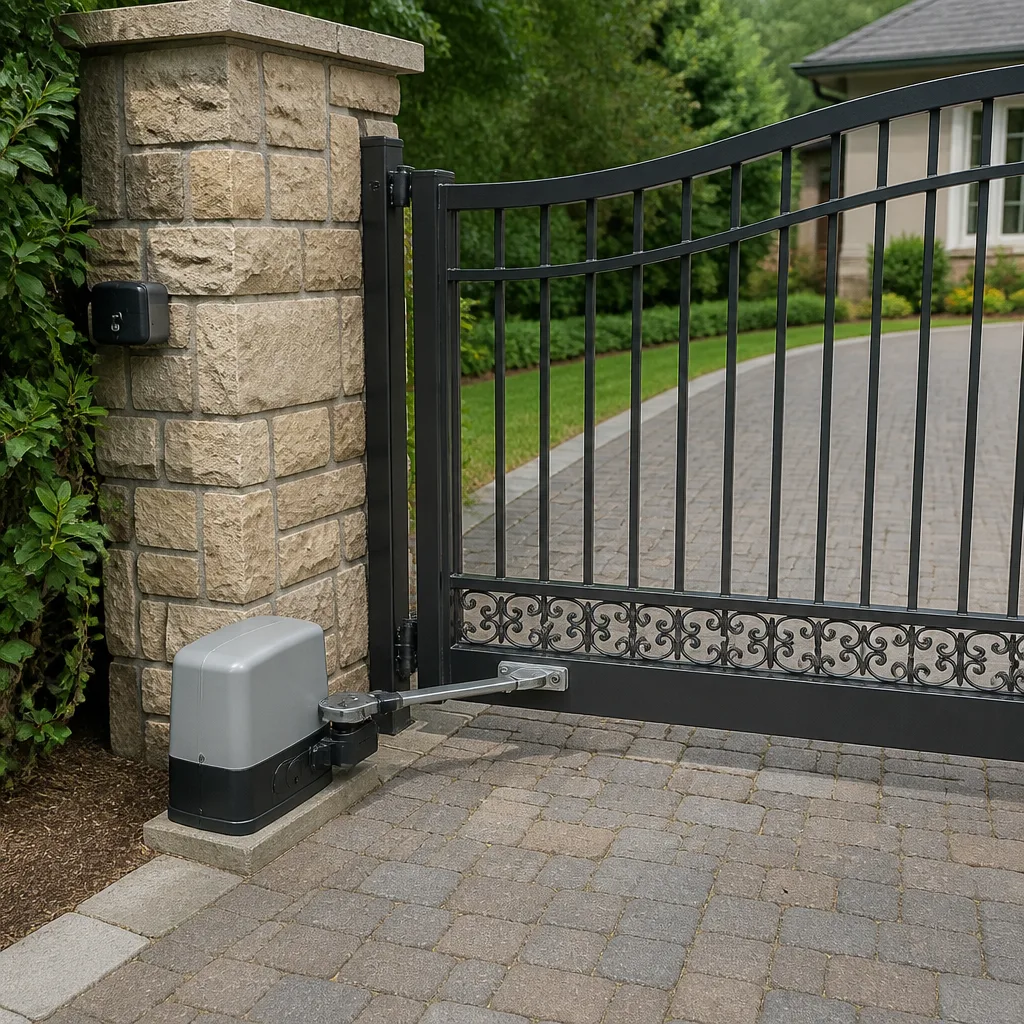
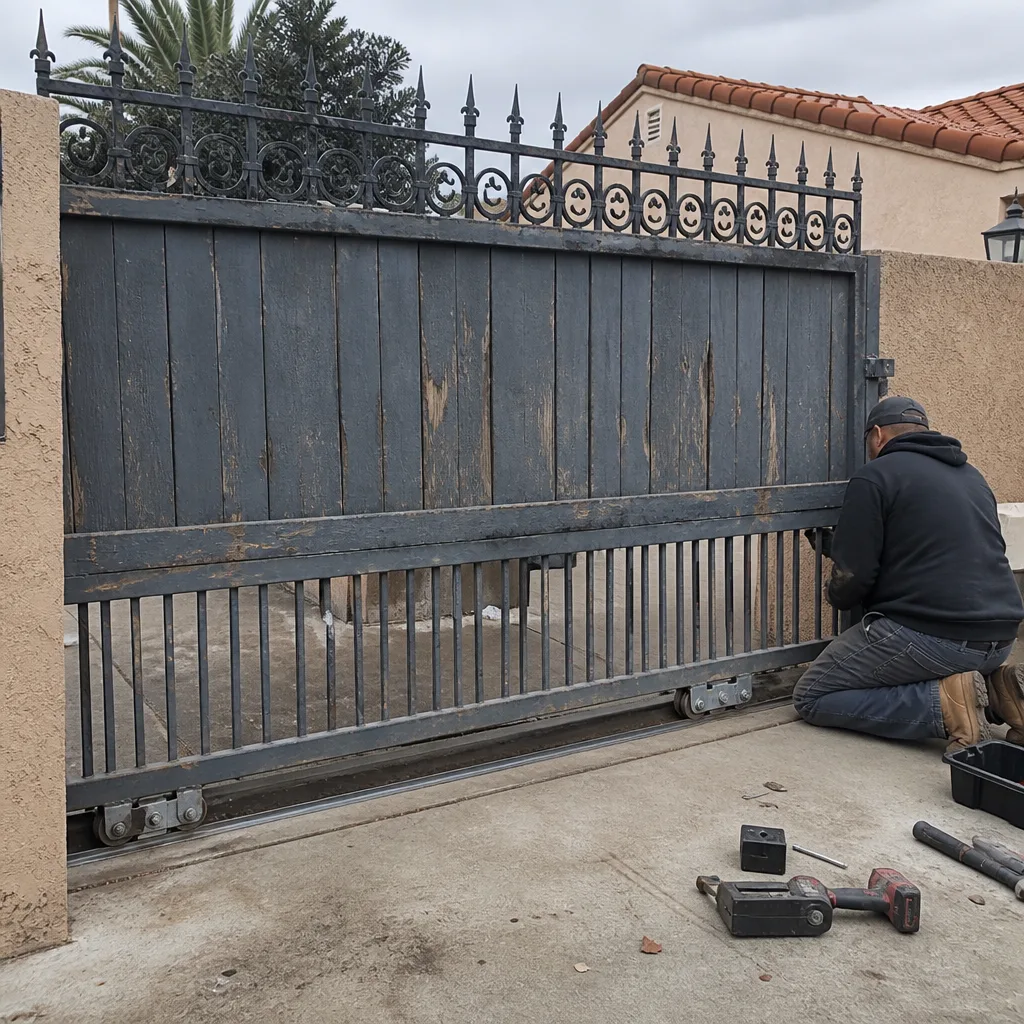 Before
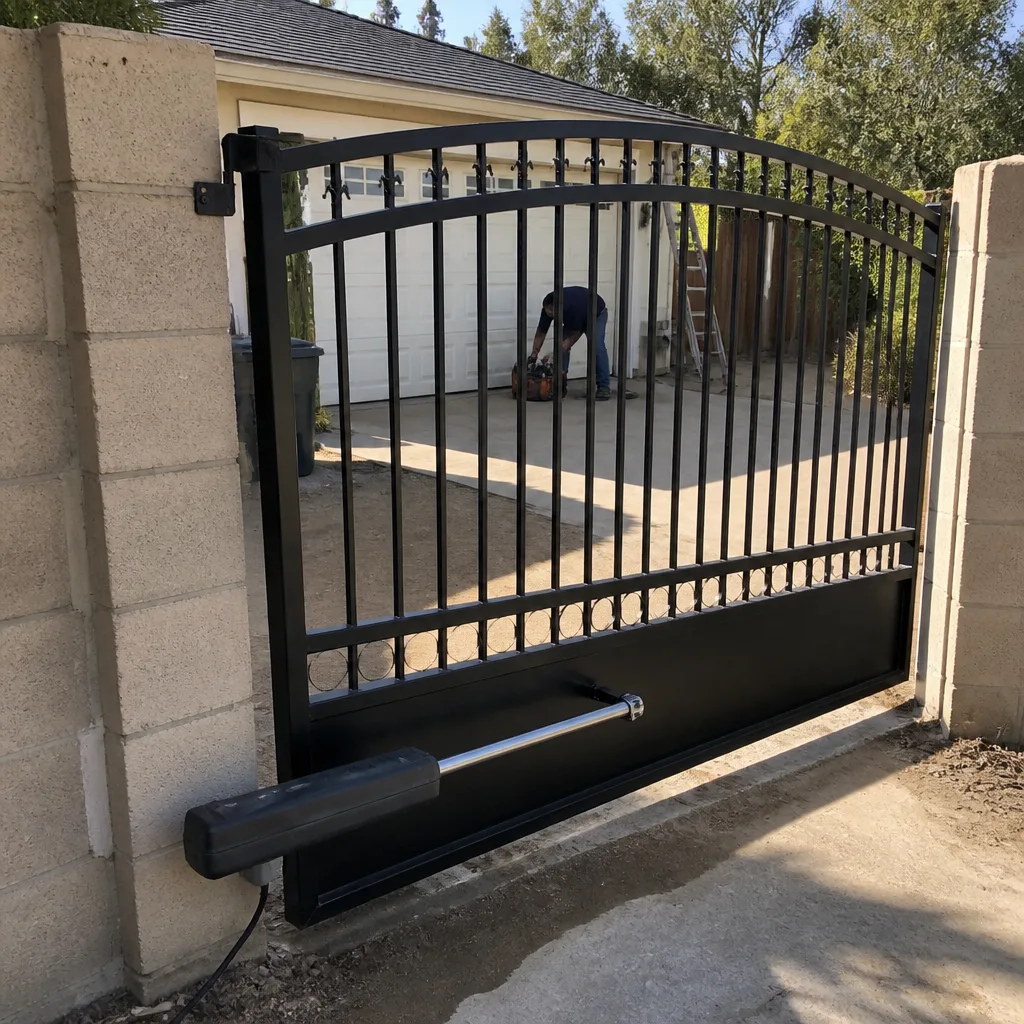 After
After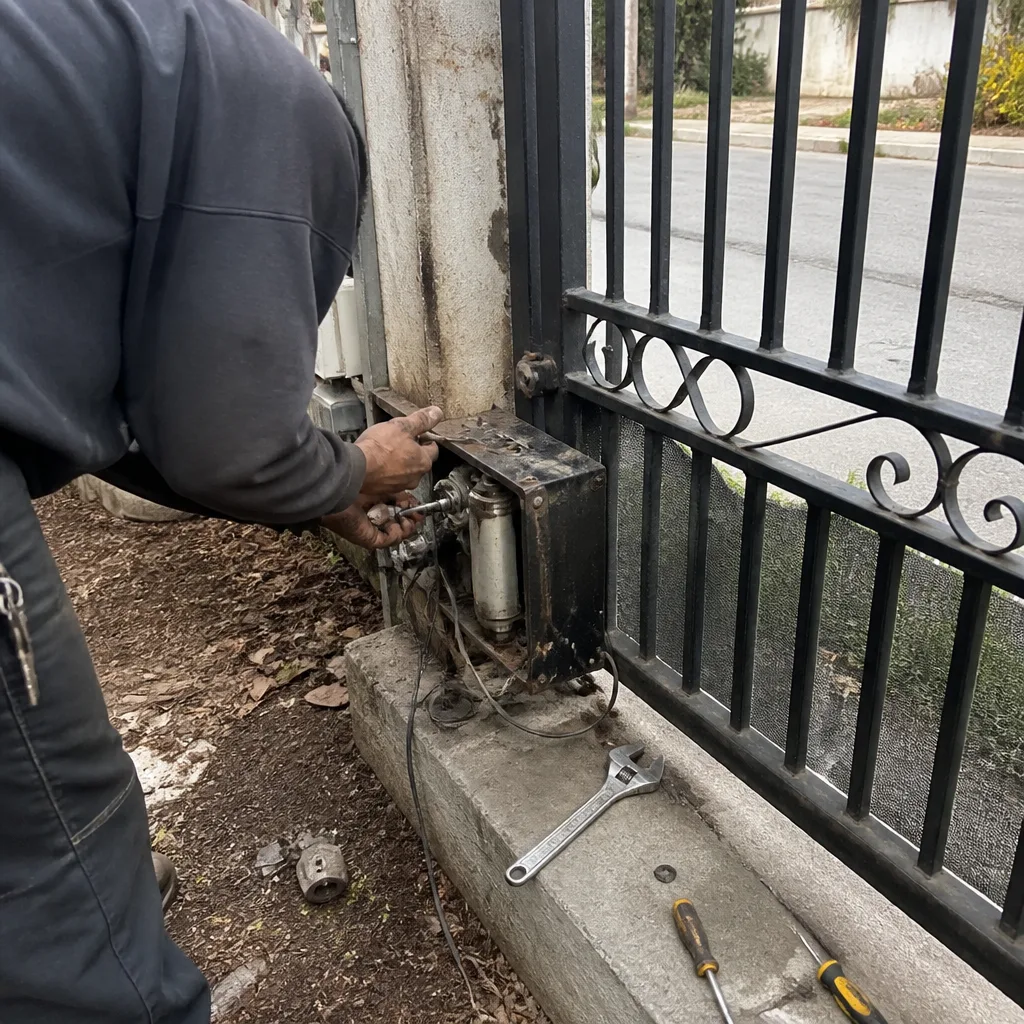 Before
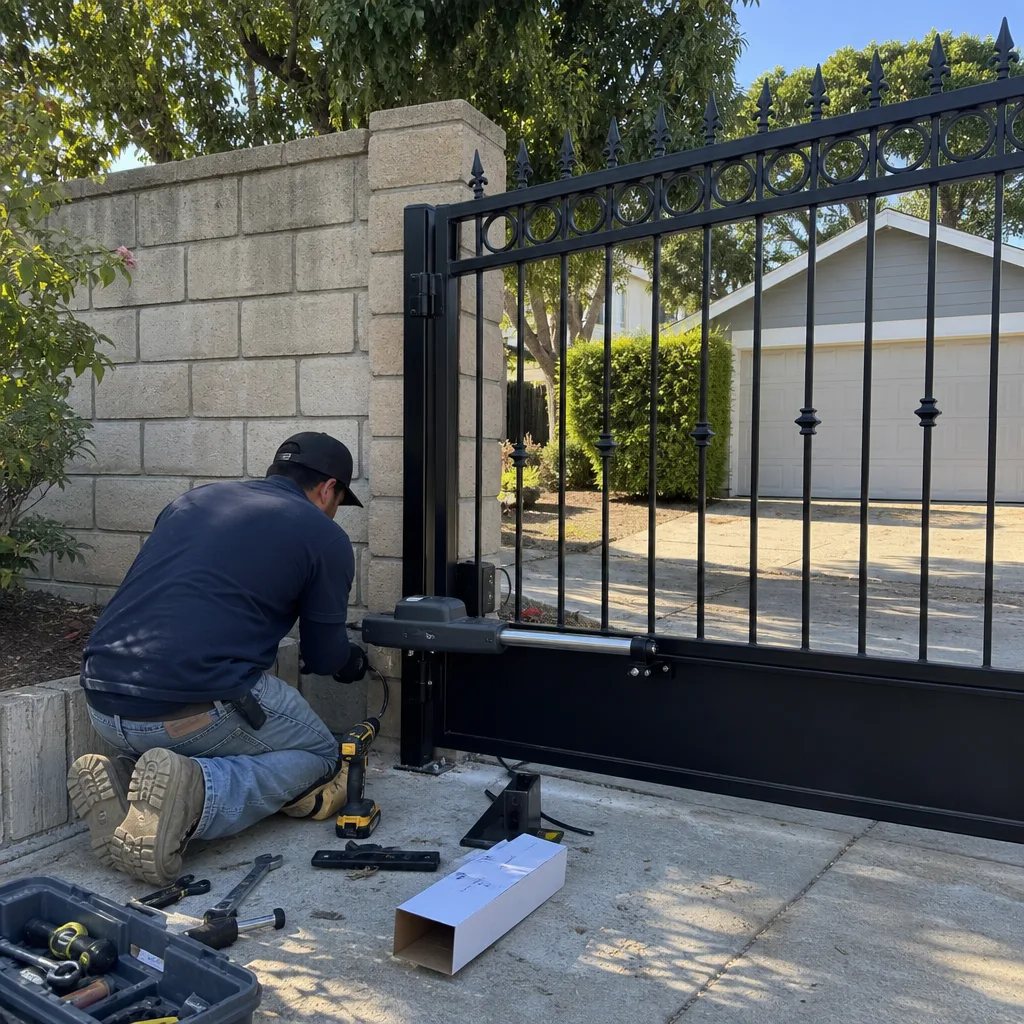 After
After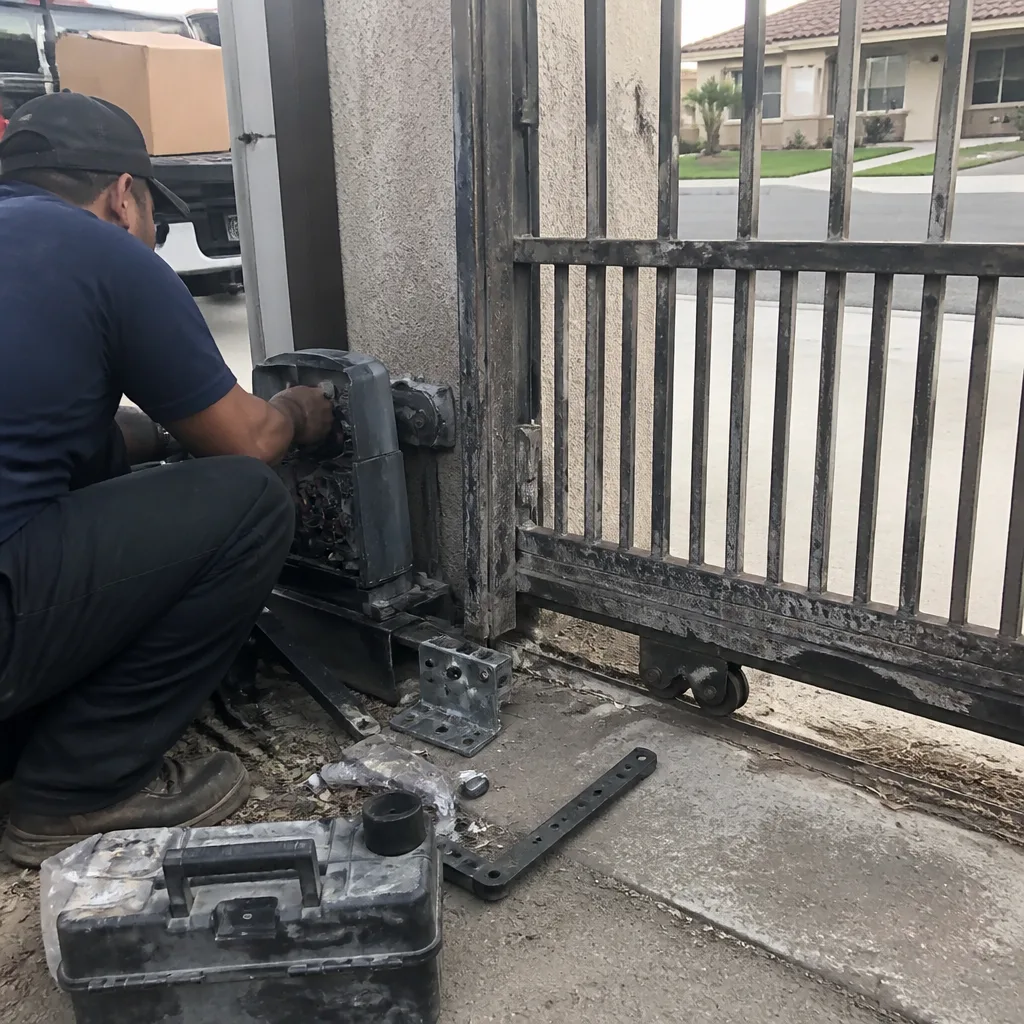 Before
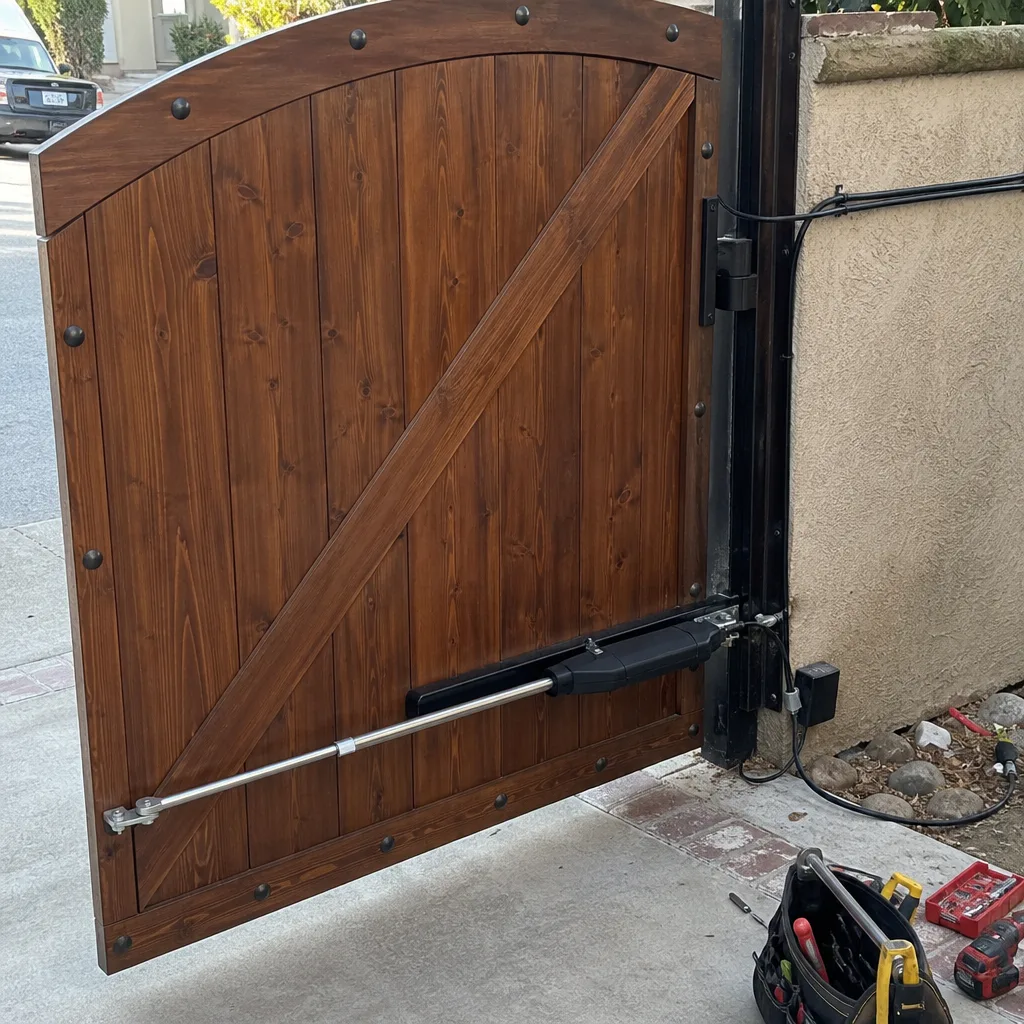 After
AfterThe Complete Guide to Gate Repair in Riverside
Most gate failures in Riverside trace back to one of four root causes, and knowing which one you have before calling anyone determines whether you spend $90 or $900. A gate that reverses before closing gets blamed on the motor nine times out of ten, but in Riverside’s summer heat, the real culprit is usually a miscalibrated limit switch that costs nothing to adjust and under $80 to replace. This guide maps every common gate symptom to the actual component responsible so you stop paying for parts that weren’t broken. You’ll learn how to read the failure, what a legitimate written quote looks like, and when the fix is genuinely a five-minute adjustment versus a full operator replacement.
Quick Answer
Gate repair in Riverside typically costs between $90 for a limit-switch adjustment and $900 for a full operator replacement, with most residential repairs landing in the $250-$450 range. The four root causes behind nearly every Riverside gate failure are: failed limit switches, worn capacitors, misaligned photo-eyes, and low-voltage wiring faults. Before you call anyone, watch one full cycle of your gate and note whether it won’t move, moves partway, reverses, grinds, or ignores the remote, because that observation alone narrows the problem to a specific component and keeps you from paying for a motor you don’t need.
Table of Contents
- How Your Riverside Gate Actually Works
- The Four Root Causes Behind Most Riverside Gate Failures
- Symptom-to-Component Map: What Each Failure Is Telling You
- Why Riverside Gates Fail Differently: Heat, Wind, and Santa Ana Season
- What a Legitimate Written Scope Looks Like Before Work Begins
- The Difference Between a Gate Repair and a Gate Patch
- Documentation You Should Receive After Every Visit
- What Gate Repair Actually Costs in Riverside
BeforeAfterHow Your Riverside Gate Actually Works
Before you can diagnose a failing gate, you need to know what’s supposed to happen when you press the remote. A residential swing gate in Riverside runs on a surprisingly small number of components, and most of them wear out on predictable schedules. The operator (the motor and its control board) sits inside a metal box mounted on a post or a pad. It receives a signal from your remote, drives an arm or a screw mechanism, and moves the gate leaf through its arc. Two limit switches, small mechanical or magnetic sensors, tell the operator where the open and closed positions are. A photo-eye, the infrared beam that stops the gate if something crosses the path, sends a constant safety signal back to the board. A capacitor gives the motor its starting kick, and a low-voltage transformer feeds the whole system.
That’s the entire machine. When one component drifts out of spec, the symptom you see at the driveway is usually downstream of the actual failure. A gate that stops two feet short of closed is not a motor problem; it’s a limit switch that has shifted. A gate that hums but won’t start is not a control board problem; it’s a dead capacitor. In our experience servicing Riverside gate systems, the majority of calls we run are corrections of misdiagnoses, where a previous company replaced a motor when the actual fault was a $12 pair of photo-eye lenses or a limit switch that needed two turns of a screwdriver.
The Four Root Causes Behind Most Riverside Gate Failures
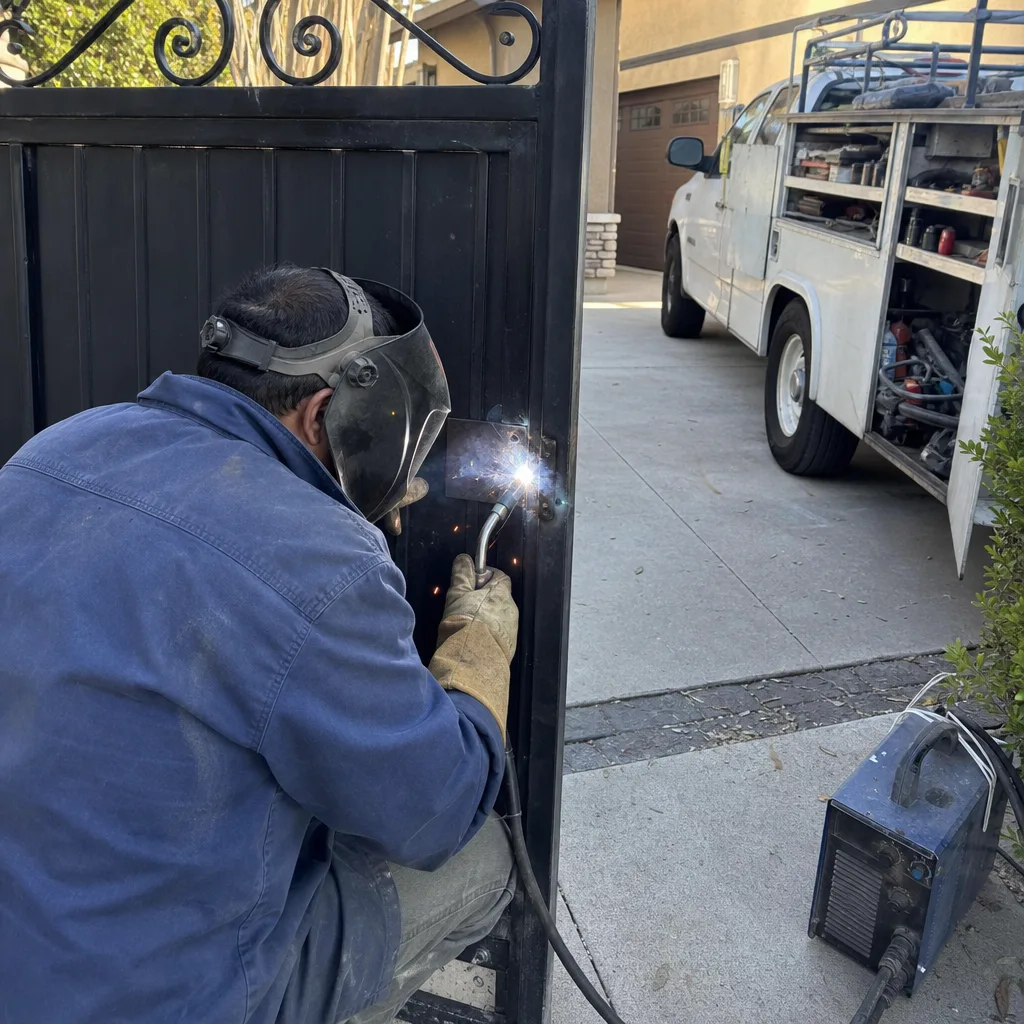
After eleven years of gate repair across Riverside, we can reduce nearly every residential gate failure to one of four mechanical or electrical faults. This is the taxonomy most homeowners never see, because it requires documenting what was found, not just what was replaced.
- Failed or drifted limit switches. These small sensors tell the operator where the gate should stop. Heat expansion, vibration, and repeated slamming knock them out of position. The symptom is almost always a gate that reverses before closing, stops short, or slams into the end stop. When we find a limit switch set 12 degrees past travel, we reset it and photograph the new position, a two-minute fix that costs less than a service call minimum at most shops.
- Worn start capacitors. The capacitor stores the electrical kick that starts the motor. Riverside summers push capacitor temperatures past their rated limits, and they degrade over three to five years. The symptom is a gate that hums but doesn’t move, or moves only when manually pushed. A new capacitor runs $25-$60 and takes fifteen minutes to install.
- Misaligned or sun-blinded photo-eyes. The photo-eye, the infrared beam that stops the gate if something crosses the path, drifts out of alignment when the gate post shifts or when wind loads flex the mounting bracket. Riverside’s sustained Santa Ana winds accelerate this. The symptom is a gate that starts, moves a few inches, and reverses, or one that refuses to close at all. If the beam is misaligned by roughly two inches, the fix is a realignment and tightening, no parts required.
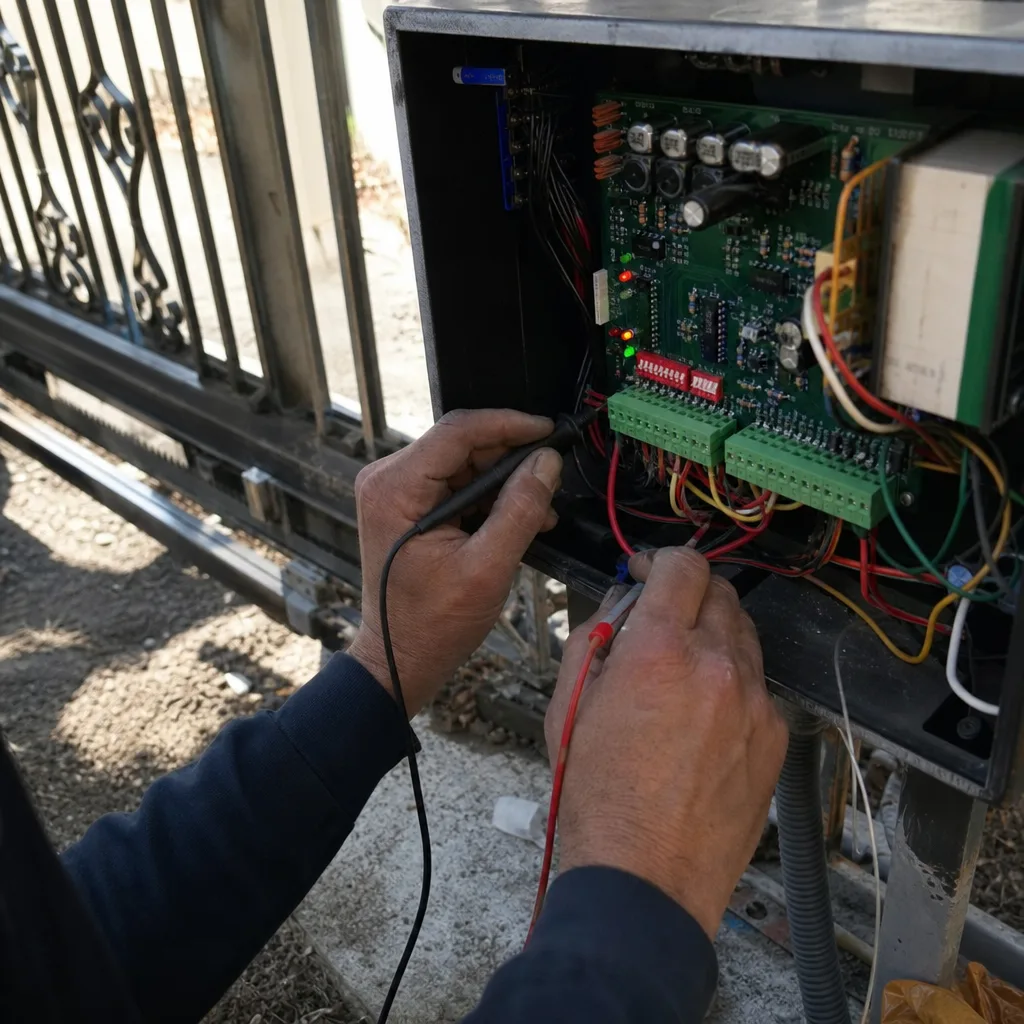
- Low-voltage wiring faults. Over time, the low-voltage wire running from your house or transformer to the operator corrodes at the splice points, gets nicked by landscape equipment, or simply fatigues. The symptom is intermittent operation: the gate works in the morning, fails in the afternoon heat, or responds only from ten feet away. This is the one fault that genuinely requires a technician with a multimeter and a wiring diagram, because guessing at it means cutting into conduit and hoping.
Every one of these four faults can masquerade as a “bad motor” to someone who doesn’t test before replacing. That’s why the diagnostic sequence matters more than the part.
Symptom-to-Component Map: What Each Failure Is Telling You
Before you pick up the phone, run one full cycle of your gate and note exactly what happens. The specific behavior is a fingerprint that points to a specific component. Here is the map we use on every gate repair call in Riverside.
- Gate won’t move at all, no sound. Check the breaker, then suspect the transformer or the control board fuse. If the breaker is fine and the operator box shows no indicator lights, you likely have a low-voltage feed problem. Cost range: $80-$250.
- Gate hums but doesn’t move. This is the classic dead capacitor. The motor is getting power but has no starting kick. Cost range: $25-$60 for the part, $90-$180 installed.
- Gate moves partway, then reverses. In Riverside, this is usually a misaligned photo-eye or a limit switch that has drifted. If the gate reverses immediately after starting, suspect the photo-eye. If it reverses after traveling most of its arc, suspect the limit switch. Cost range: $90-$140 for adjustment, $60-$80 for a new limit switch if the old one is worn.
- Gate grinds, squeals, or shudders. Mechanical wear in the hinge, the wheel track, or the arm bracket. This is rarely the motor. A grinding swing gate is usually a hinge bearing that has gone dry or a gate that has sagged and is dragging. Cost range: $120-$300 depending on whether the hinges need replacement or just service.
- Gate ignores the remote from far away, works up close. Receiver antenna problem or low battery in the remote. Check the remote battery first, then suspect the receiver board. Cost range: $5 for a battery, $90-$200 for a receiver replacement.
- Gate opens on its own or cycles randomly. Stray signal interference or a failing control board. In Riverside, we see this near cell towers and in neighborhoods with older garage door remotes on adjacent frequencies. Cost range: $150-$350 if the board needs replacement.
Write down what you observed. When you call a company for Gate Repair services, that one sentence of description, “it reverses about two feet before closed,” is worth more than twenty minutes of a technician guessing.
Why Riverside Gates Fail Differently: Heat, Wind, and Santa Ana Season
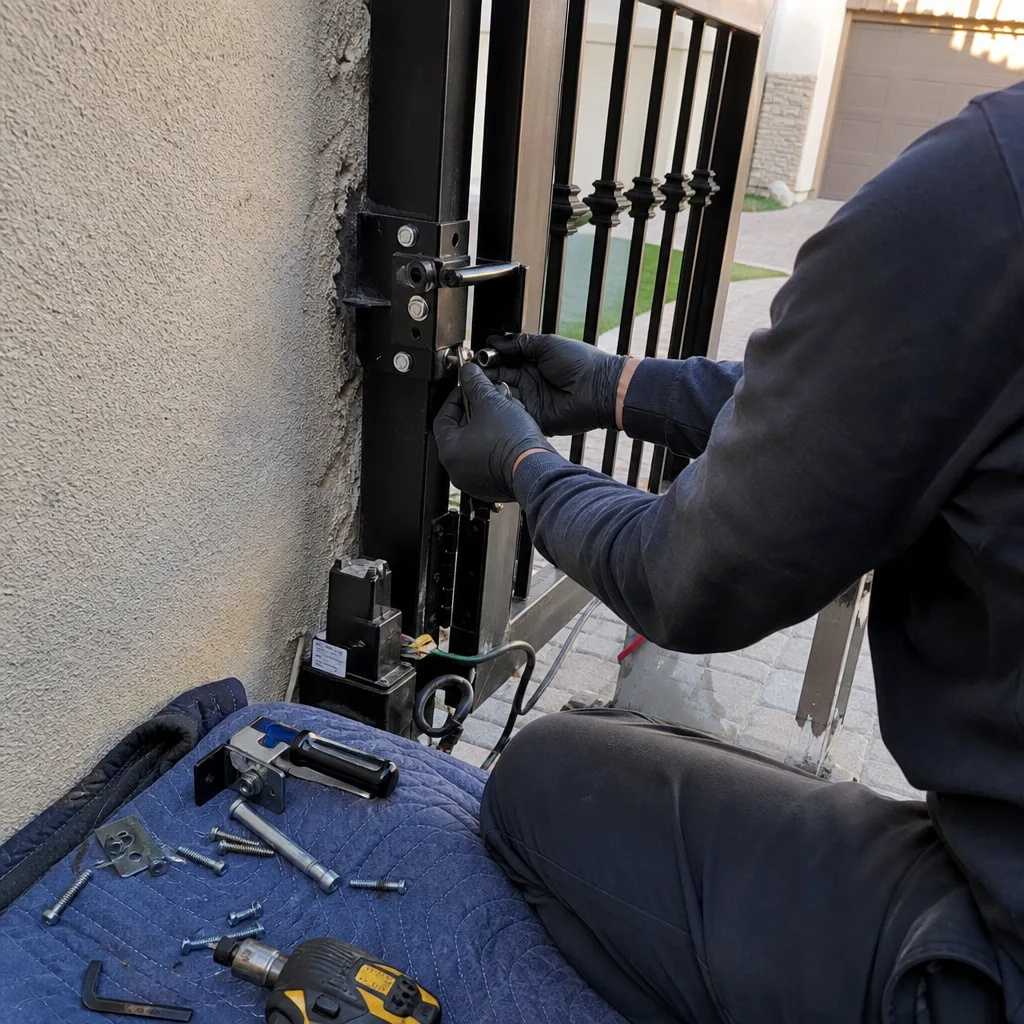
Riverside gate failures do not look like gate failures in Costa Mesa or San Diego. The inland climate creates a specific failure profile that coastal technicians never see, and that out-of-town gate companies often misdiagnose.
The summer heat above 100°F is the single biggest factor. Capacitors are rated for specific operating temperatures, and the inside of a gate operator box in direct Riverside sun can exceed 140°F on a 105°F day. That heat shortens capacitor life from a theoretical seven years to a practical three or four. It also causes thermal expansion in the metal gate leaf itself, which shifts limit switches and changes the gate’s resting position relative to its stops. A gate that closed perfectly in February may bind, sag, or stop short in August because the metal has expanded.
The Santa Ana wind events add a second failure mode. Sustained winds of 30 to 50 miles per hour push against the full face of a swing gate, flexing the post, the hinge, and the arm bracket. Over several wind seasons, that cyclical loading loosens the bracket bolts and shifts the photo-eye alignment. We routinely see gates in the Alessandro Heights and Canyon Crest areas where the photo-eye has drifted two to three inches out of alignment purely from wind load. The owner assumes the motor is failing. The motor is fine.
Dust is the third Riverside-specific factor. The dry inland air suspends fine particulate that coats the photo-eye lenses and the limit switch contacts. A photo-eye that is simply dirty will behave exactly like one that is broken: the gate refuses to close because the beam can’t see itself. We clean lenses on almost every visit. It’s a five-minute task that restores function, and it’s the kind of thing a homeowner can do between professional services.
What a Legitimate Written Scope Looks Like Before Work Begins
A verbal estimate is a handshake. A written scope is a document. The difference matters, because the written scope is the only thing that protects you when the technician finds “additional work” halfway through the job and the price doubles.
Under Clause 1 of the Haven Standard, which is how Vance Gate Repair Riverside operates on every job, the flat price is written and handed over before any work starts. This is not a courtesy. It’s the mechanism that keeps the job honest. Here is what a legitimate written scope should contain, line by line.
- The exact symptom you reported, in your words. “Gate reverses two feet before closed.” If it’s not written down, the technician can later claim they fixed a different problem.
- The diagnosed component, not the symptom. “Limit switch out of adjustment; reset to manufacturer spec.” A scope that says only “fix gate” is not a scope.
- The specific part number, if a part is being replaced. A real technician knows the part number before they quote the job. A scope that says “replace opener parts” is not specific enough to enforce.
- The flat price for the entire job, labor and parts. Not an hourly rate with an open-ended estimate. Flat. Written. Agreed before tools come out.
- The warranty term for the repair. Under the 365-Day Done Right Promise, if the repair is not right within a full year, it gets made right at no additional charge, no argument, no expiration date within that window.
- The documentation you will receive when the job is done. Photos of what was found, what was adjusted, and what was replaced, plus the limit-switch readings and the wiring diagram if electrical work was done.
A company that won’t put the price in writing before starting work is not protecting you from surprise invoices. They’re protecting their ability to issue one. Insist on Clause 1. Every legitimate gate repair company in Riverside will comply.
The Difference Between a Gate Repair and a Gate Patch
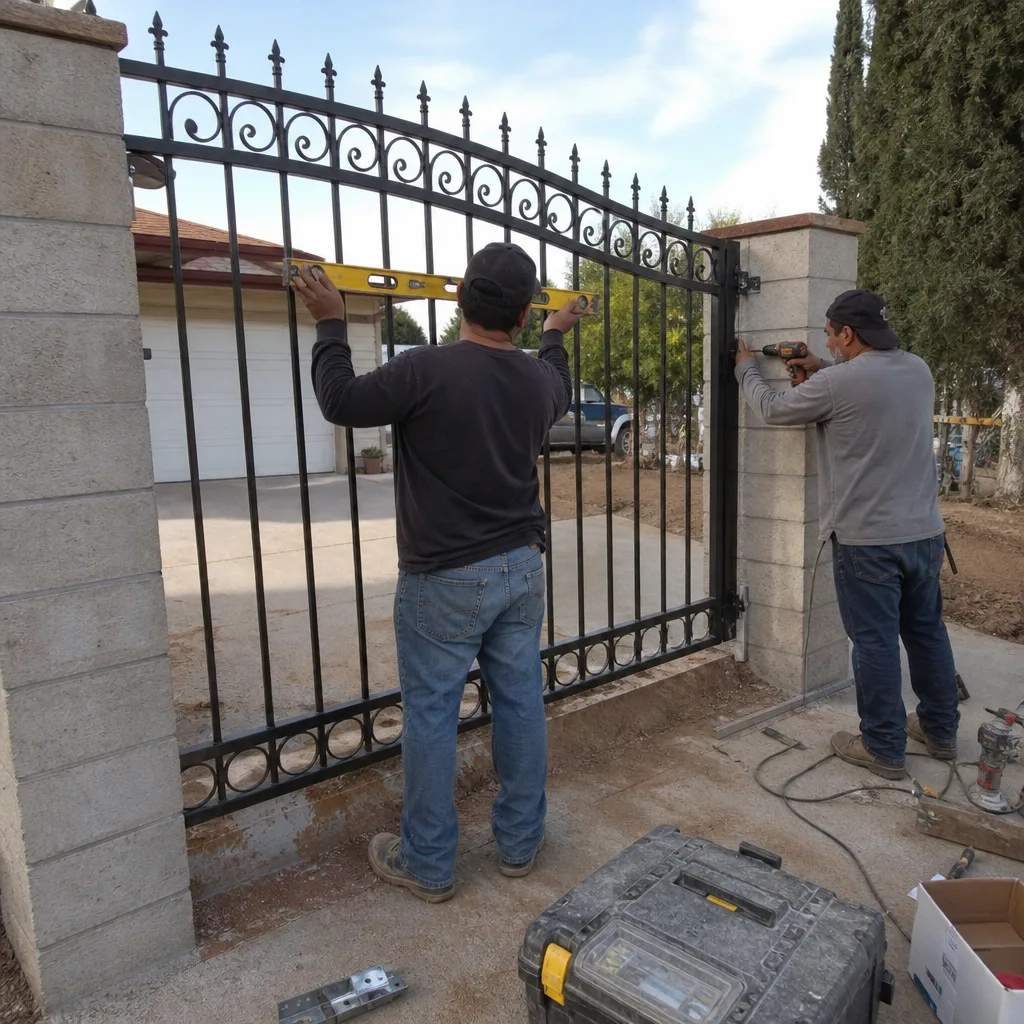
“Fixed today” and “broken again in 60 days” look identical at the moment the technician drives away. The difference is in what was actually done, and whether the underlying cause was addressed or just the visible symptom.
A gate patch is what happens when a technician adjusts the symptom without touching the cause. The classic Riverside example: a gate that keeps drifting out of limit adjustment. The patch is to reset the limit switch and leave. The gate works for a month until the same heat expansion or wind load pushes it out of spec again. The repair is to find out why the limit switch is drifting, replace the worn switch or the loose bracket, and document the new setting so the next technician has a baseline.
Another example: a photo-eye that keeps going out of alignment. The patch is to realign it and collect the service fee. The repair is to tighten the mounting bracket to the post, replace the corroded screws, and note on the work record that the bracket was the failure point. If the bracket is solid, the photo-eye won’t drift again in the same way.
We follow a simple rule on every Riverside gate service visit: the job is not done until we can name what failed and what we changed to keep it from failing the same way. If a technician can’t tell you what they actually fixed, in component terms, they patched it. A documented photo record, required under Clause 4 (Evidence on every job), is what separates a repair from a patch. You can see what was found and what was left behind.
Documentation You Should Receive After Every Visit
Most homeowners have never seen a work record from a gate company, because most gate companies don’t leave one. This is a failure of the trade, not a courtesy you should have to ask for. Every gate repair visit should end with a folder of documentation that identifies what was wrong, what was done, and what the new baseline is. Here is what that folder should contain.
- Photos of what was found. At minimum, the failure point as it appeared before work. A cracked hinge, a drifted limit switch, a corroded wire nut. You should be able to see the problem with your own eyes.
- Photos of what was adjusted or replaced. The same component after the work. The new limit switch position. The clean photo-eye lens. The new capacitor installed. This is not a vanity shot; it’s evidence.
- The limit-switch readings, if applicable. The manufacturer’s spec for travel, and the measured position before and after. A limit switch set 12 degrees past travel that is reset to 0 degrees is a documented correction, and every future technician now has a baseline.
- A wiring diagram, if electrical work was done. Not a schematic of the entire industry; a simple, drawn-in-five-minutes map of which wire goes where on your specific operator. This is the same wiring-diagram habit Adrian Vance developed on commercial access-control sites starting in 2014, and it’s the single most useful document a homeowner can have when a different technician comes out three years later.
- The part number installed, written on the work order. Not just “capacitor.” The actual part number. If the same part fails again, you know exactly what to order, and you can verify that the warranty replacement is the same spec.
- The written price you agreed to, with the final price matching it. The quote you signed before work started should be the invoice you sign after work is done. If those numbers don’t match, you need an explanation in writing for the difference.
This documentation habit is not standard in residential gate repair. It should be. It’s the only way to ensure that when a gate fails in the future, the next technician doesn’t start from zero. Vance Gate Repair Riverside provides this documented photo record on every visit, at no additional charge, because a gate system without documentation is a gate system that costs more to maintain over its life.
What Gate Repair Actually Costs in Riverside

Riverside gate repair pricing follows the component, not the symptom. Here are realistic ranges for the most common residential gate repairs in this market, based on what we see across the city.
- Limit switch adjustment or replacement: $90-$140 for adjustment (no parts), $60-$80 for the part plus labor if the switch is worn.
- Capacitor replacement: $25-$60 for the part, $90-$180 installed depending on the operator model.
- Photo-eye realignment or cleaning: $80-$120 for realignment and tightening; $60-$100 for a lens cleaning with no parts.
- Hinge service or replacement: $120-$300 depending on the gate weight and whether the hinges need to be re-welded or replaced entirely.
- Control board replacement: $150-$350 depending on brand (DoorKing, Elite, LiftMaster, Mighty Mule boards all price differently).
- Full operator replacement: $600-$900 for a residential swing-gate operator, including the arm bracket if intact. A gate motor and opener service is the most expensive single repair because the operator is the most expensive single component.
These are flat ranges, not open-ended hourly estimates. The price you are quoted before work starts should match the price you pay when the work is done. If a company quotes you a vague range and then bills you at the top of it plus “unexpected complications,” that’s not a scope; that’s a fishing expedition. For a complete breakdown of what’s involved in a new system, see our guide to gate installation in Riverside. For specifics on operator brands and replacement options, read our motor and opener page.
Common Mistakes to Avoid
- Replacing the motor before testing the limit switch. We see this constantly in Riverside. A homeowner pays $700 for a new operator when the actual fault was a $0 limit-switch adjustment. Always get a component-level diagnosis before authorizing an operator replacement.
- Accepting a verbal estimate without a written scope. Under Haven Standard Clause 1, your price should be written and handed over before any work starts. A verbal estimate has no enforceability, and the technician knows it.
- Ignoring a gate that reverses or stutters. A gate that’s showing intermittent symptoms is telling you something is drifting out of spec. Waiting until it fails completely turns a $90 adjustment into a $900 operator replacement.
- Lubricating the wrong parts. Spraying lubricant on a photo-eye or a limit switch solves nothing and creates dust adhesion problems that make the gate fail faster. Mechanical parts get lubricated; electrical parts get cleaned.
- Calling a garage door company for a gate repair. Garage door companies in Riverside are not gate companies. The operators, the safety systems, and the code requirements are different. The technician who is excellent at garage door springs may have never touched a FAAC or a BFT operator.
- Accepting a patch and calling it a repair. If the technician can’t name the component that failed and what they did to prevent it from failing again, you got a patch. It will fail again, and you will pay again.
- Not keeping the documentation. That photo log, wiring diagram, and written work order are your service history. Toss them and the next technician starts from zero, which means you pay for diagnostic time you already paid for once.
When to Call a Professional
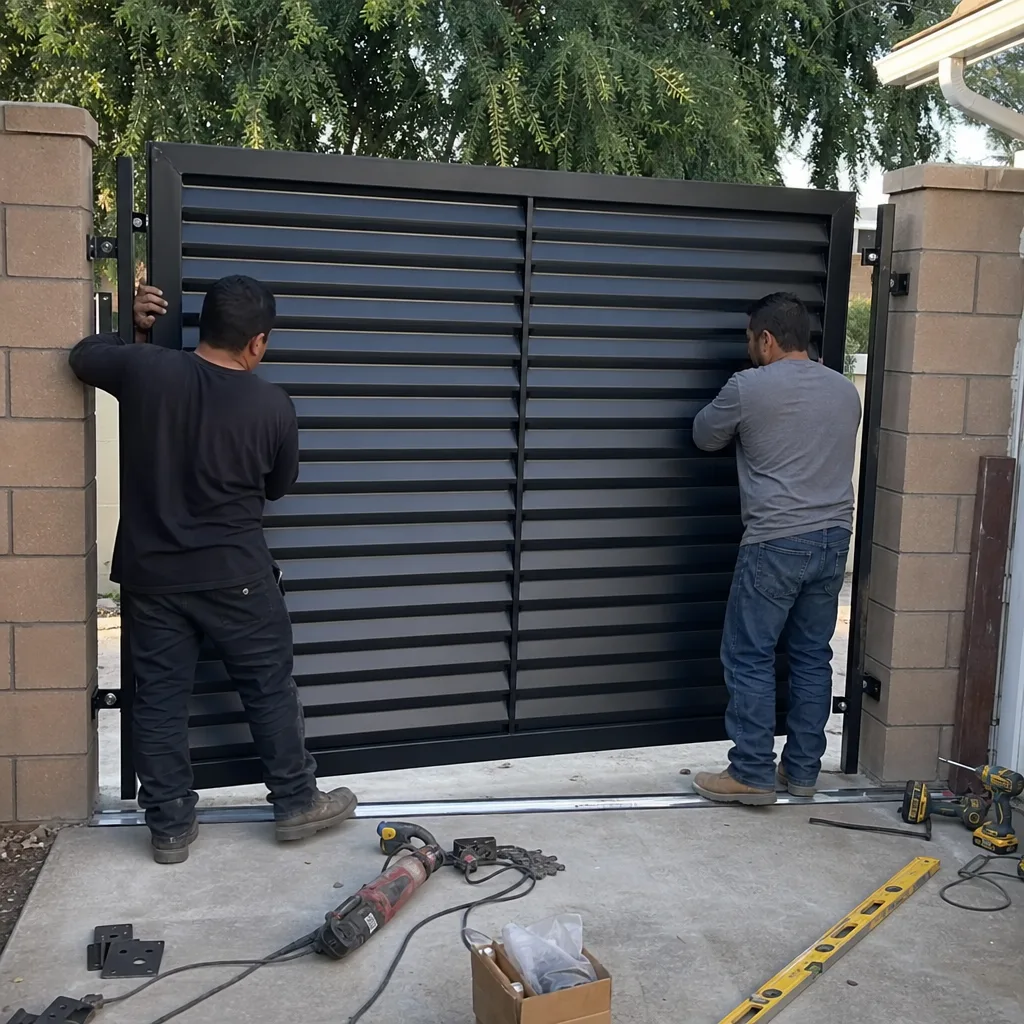
You can observe the symptom, check the breaker, and clean a photo-eye lens. You should not open the operator box, touch the capacitor, or attempt any wiring repair. The capacitor stores a charge even when the power is off, and the low-voltage circuit is easy to damage in ways that create intermittent failures that are harder to diagnose than the original problem. If your gate is grinding, binding, sparking, or failing intermittently, call a professional who will diagnose the component, write the price, and document the work. Vance Gate Repair Riverside offers free estimates in Riverside. Call (951) 934-7330 and describe what you observed. A live person answers, any hour, any day. We’ll give you a written price before any work starts.
Frequently Asked Questions
Gate repair in Riverside typically costs between $90 and $450, with most residential repairs falling in the $250-$400 range. The price depends on the specific component: a limit-switch adjustment runs $90-$140, a capacitor replacement $90-$180 installed, and a full operator replacement $600-$900. The price is quoted and agreed in writing before any work starts. Call (951) 934-7330 for an exact quote, estimates are free.
A gate that reverses before closing in Riverside is usually caused by a drifted limit switch or a misaligned photo-eye, not a failing motor. Summer heat expansion shifts the limit switch, while Santa Ana wind flex shifts the photo-eye bracket. The fix is often a simple realignment or reset, and it’s the most common service call we run. Call (951) 934-7330 and we’ll diagnose it over the phone from your description.
We answer the phone 24/7 with a live person, and we schedule repair visits on the same day whenever the call comes in early enough for a technician to reach your Riverside neighborhood. Most limit-switch, capacitor, and photo-eye repairs are completed in under an hour on site. Call (951) 934-7330 to check current availability.
We service nine major gate-automation brands: LiftMaster, FAAC, BFT, Linear, Viking, Ghost Controls, DoorKing, Elite, and Mighty Mule. We don’t steer you toward a replacement just because we have a relationship with a particular manufacturer. If your existing DoorKing, Elite, Mighty Mule, or LiftMaster operator can be repaired, we repair it. Call (951) 934-7330 with your operator brand and model number for a written estimate.
Yes, and Vance Gate Repair Riverside will review any written estimate from another company at no cost. Bring the paperwork, we’ll go through it line by line and tell you whether the diagnosis matches the symptom and whether the price matches the market. Free second opinions are part of how we earn trust in Riverside. Call (951) 934-7330 to schedule a review.
A full gate motor and opener replacement includes removing the old operator, mounting the new operator, connecting the low-voltage power supply, wiring the photo-eyes and edge sensors, setting the limit switches, programming remotes and keypads, and testing the full safety cycle. You should receive a written price, a photo log of the installation, and a wiring diagram before the technician leaves. Our gate motor and opener page covers the process in detail.
The Bottom Line
Riverside gate repair doesn’t have to be a mystery expense. The failure patterns are predictable, the components are identifiable, and the fix is usually specific and affordable when the diagnosis happens before the parts order. The four root causes, failed limit switches, worn capacitors, misaligned photo-eyes, and low-voltage wiring faults, account for the vast majority of residential gate failures in this city. Riverside’s heat, wind, and dust accelerate each of them, but they don’t make the diagnosis harder; they make observation more important. Watch your gate through one full cycle, note what it does, and call a company that will put the price in writing and leave you a documented record of what was found and what was changed. For DIY vs Professional Gate Repair: The Riverside Homeowner’s Decision Guide, see our detailed comparison. That’s how gate repair should work, and that’s the only way you’ll know you paid for a repair and not a patch.
Written by Adrian Vance, Owner at Vance Gate Repair Riverside, serving Riverside since 2014.