
Last updated September 20, 2026
Free on-site gate assessment - hinges, posts, and your LiftMaster or Nice gate operator checked before anything is quoted
The assessment is free and the quote is the invoice.

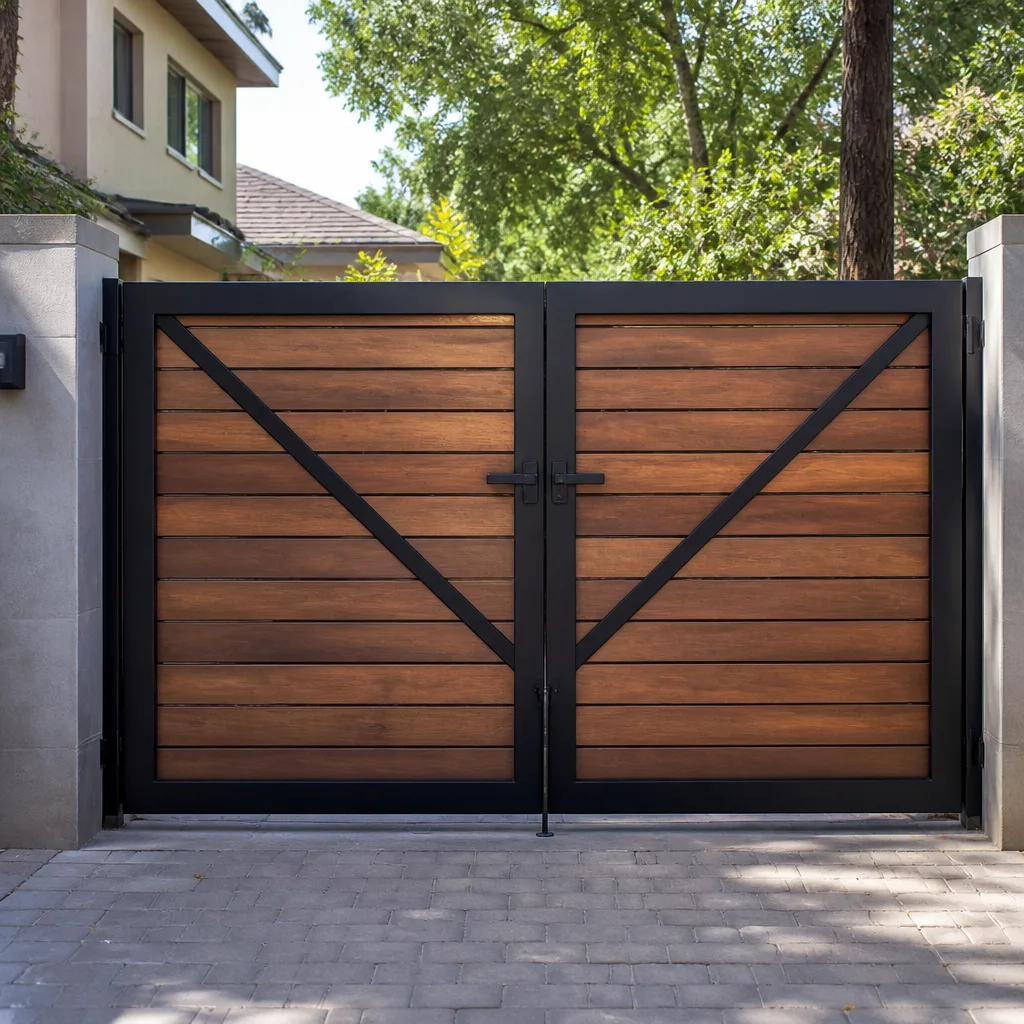

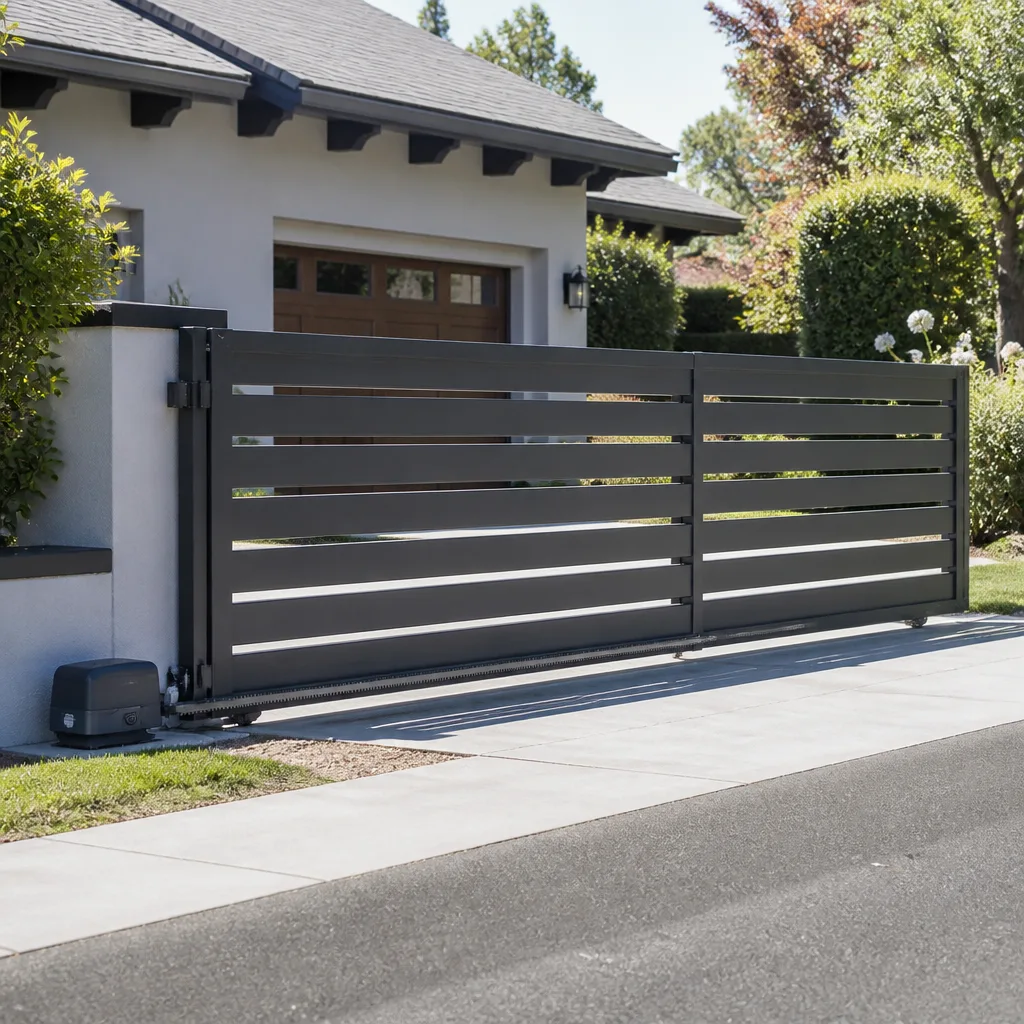
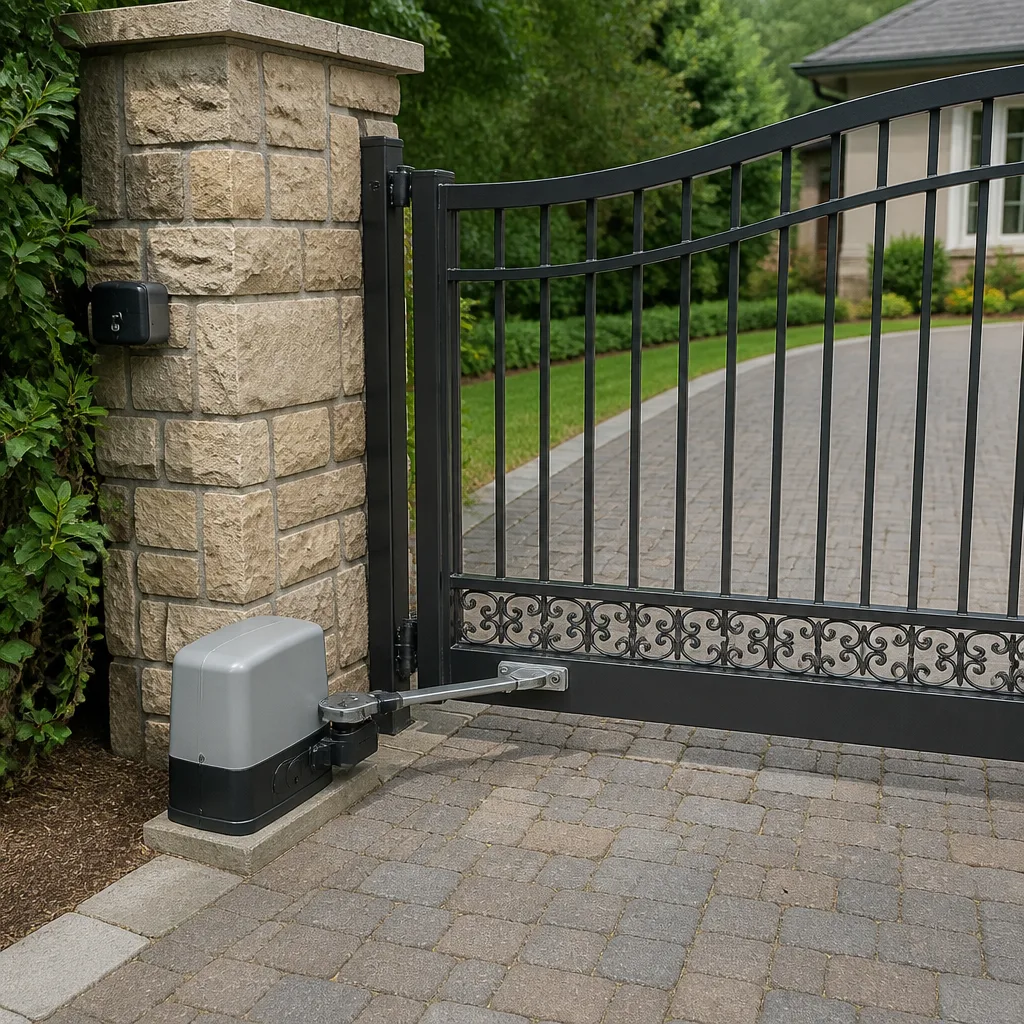
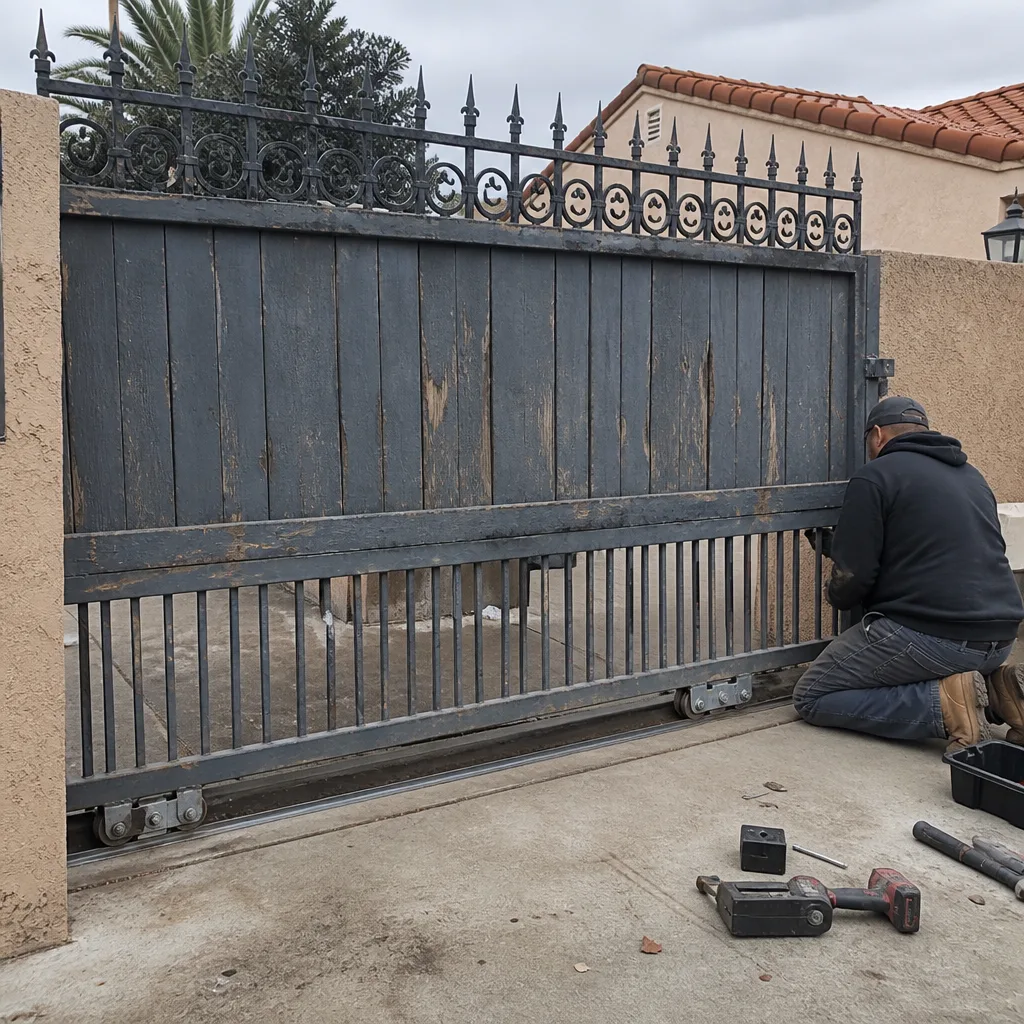 Before
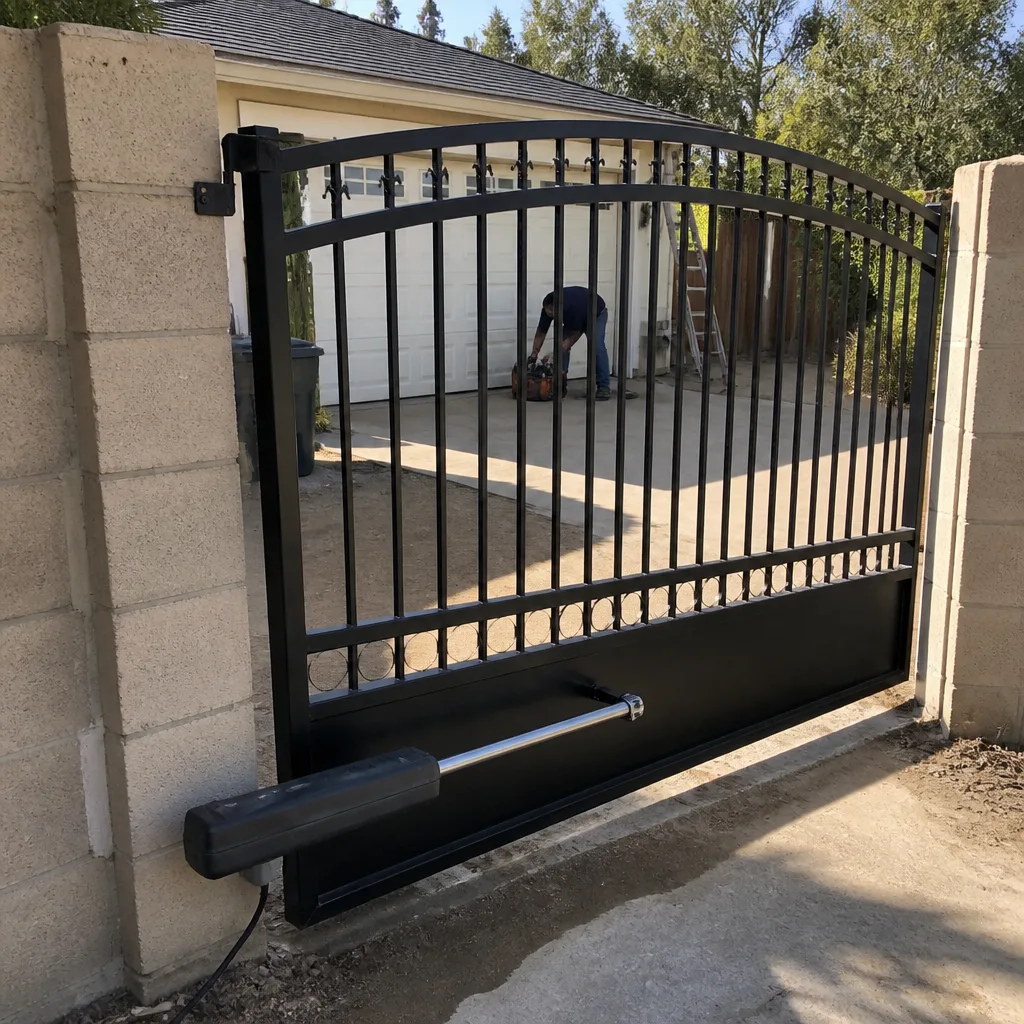 After
After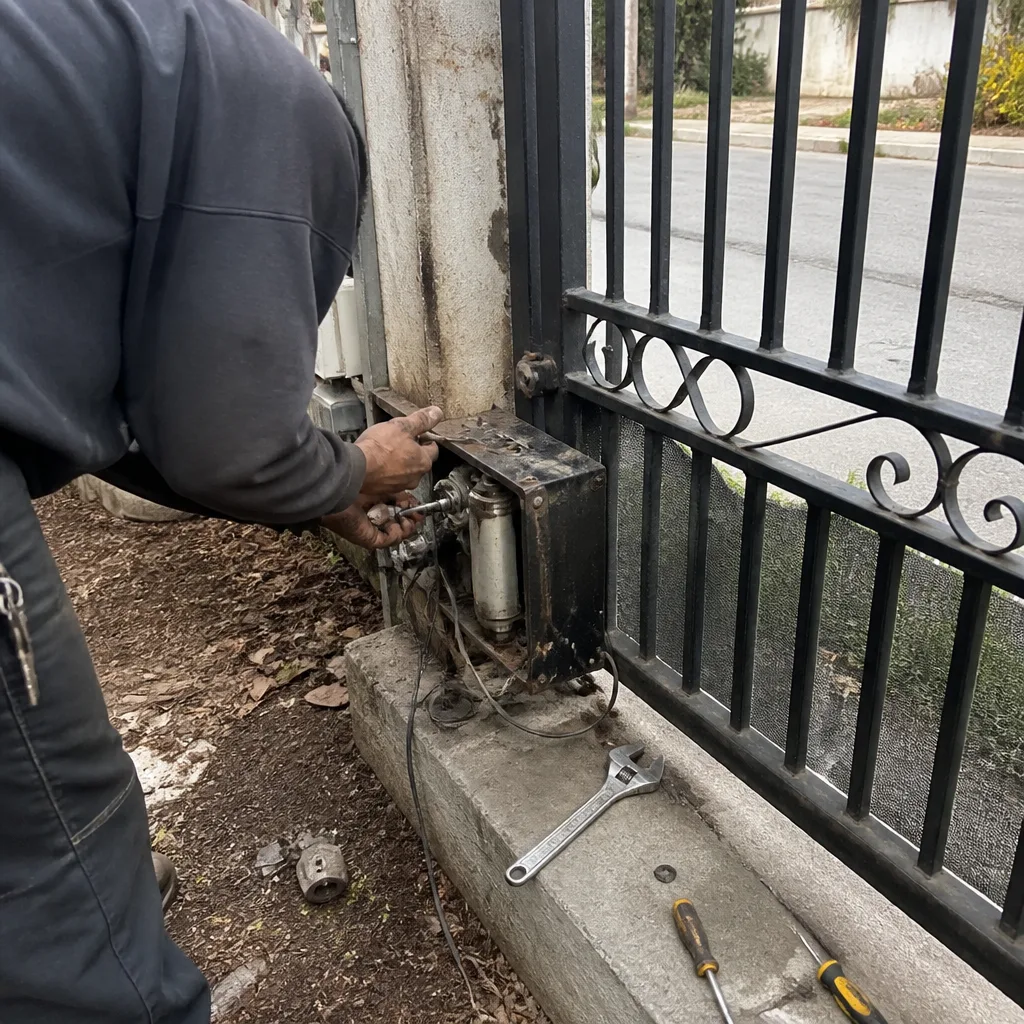 Before
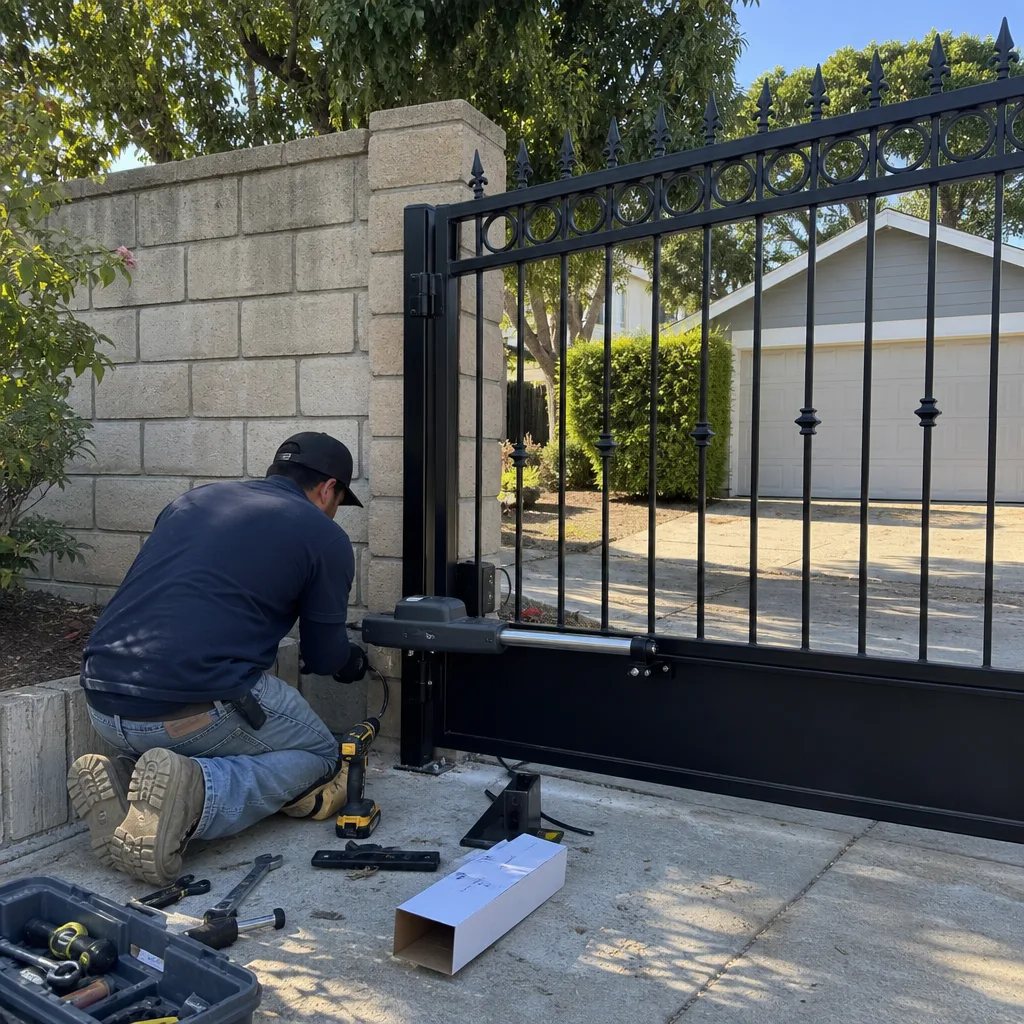 After
After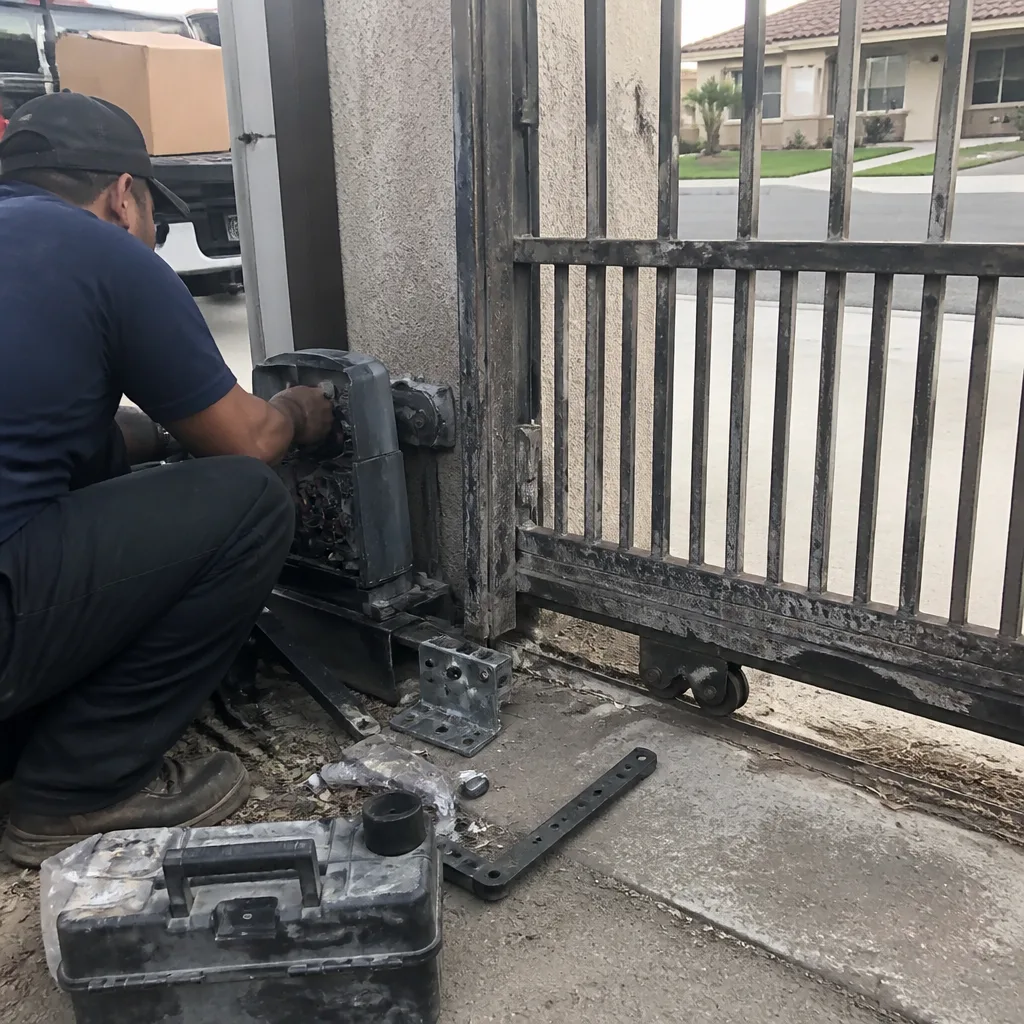 Before
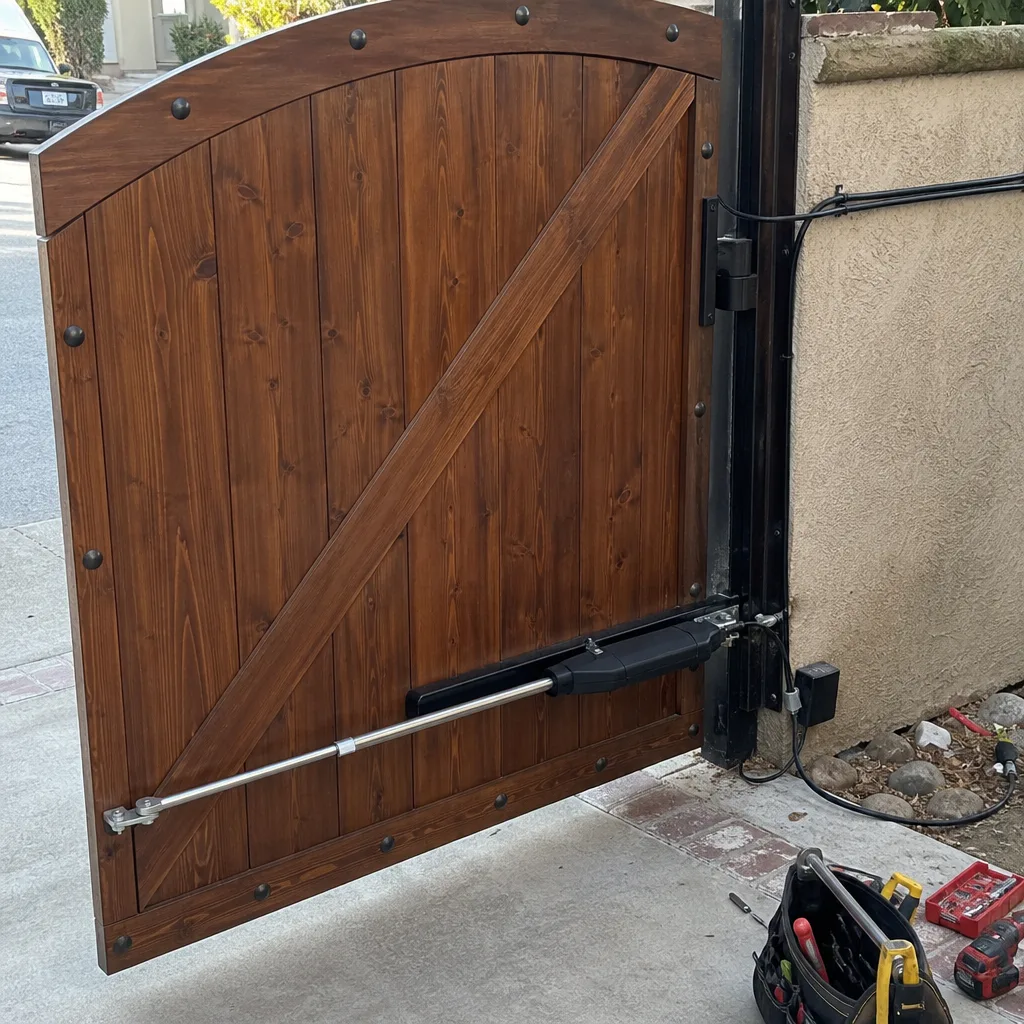 After
AfterGate Repair Maintenance Checklist for Riverside Homeowners
Lubricating a gate hinge with WD-40 in Riverside’s dry heat is one of the most common DIY mistakes local gate technicians reverse. It strips existing grease, evaporates within weeks, and by the following summer you have metal-on-metal contact and a gate that groans like a freight train. This guide is not a generic maintenance PDF. It is built around what actually degrades here: triple-digit summers, single-digit humidity, Santa Ana wind debris, and the fine dust that works its way into every limit switch and gearbox in Riverside.
What follows is a month-by-month maintenance calendar, exact product recommendations by component type, measurable inspection thresholds, warranty pitfalls to avoid, and a simple logging system that will make every future repair visit faster and cheaper. You will also learn which five-minute checks prevent the two failures we see most often in this city: fried control boards and sheared hinge welds.
Quick Answer
A Riverside gate maintenance checklist should follow a seasonal rhythm: pre-summer heat prep in May, post-Santa Ana debris clearing in October and November, and winter moisture checks in January. The essentials include cleaning and lubricating hinges with a dry-film or moly-based grease (never WD-40), testing photo-eye alignment, checking battery voltage on solar and backup systems, and clearing the track or rack of wind-blown debris. Our Gate Repair services in Riverside average $180 to $340 for most component fixes, but the same failures cost under $40 a year to prevent with consistent monthly attention.
Table of Contents
- The Riverside Month-by-Month Maintenance Calendar
- Exact Lubricants by Component Type
- Measurable Inspection Thresholds That Signal Problems
- Which Maintenance Mistakes Void Manufacturer Warranties
- How to Keep a Gate Maintenance Log That Saves You Money
- Common Mistakes to Avoid
- When to Call a Professional
- Frequently Asked Questions
BeforeAfterThe Riverside Month-by-Month Maintenance Calendar
Riverside’s climate does not beat on a gate evenly. Heat arrives in May and stays through October. Wind picks up in the fall. Winter brings the only meaningful moisture of the year. A maintenance calendar that ignores those rhythms will have you greasing hinges in February when the real problem is a rain-soaked control board. Here is the schedule we use when we set up a new homeowner on a maintenance plan in this city.
January: Moisture Check Month
Riverside’s winter rain is light by most standards, but it is enough to expose bad seals and corroded connections. Walk the gate after the first significant rain and look for water pooling at low points along the track or near the motor housing. Open the control box and inspect for condensation, corrosion on terminals, or any sign of water intrusion. If the box is mounted on a post that gets direct rain, check the gasket seal around the lid. A desiccant pack inside the box is a cheap fix; a corroded terminal strip is a service call waiting to happen.
March: Battery and Solar Check
Solar panel output drops during winter’s shorter days and lower sun angle. By March, many Riverside solar gate batteries are running at reduced capacity without the homeowner noticing. Test the battery voltage at the terminals with a multimeter. A healthy 12-volt battery should read between 12.5 and 13.0 volts at rest after a full charge cycle. Anything below 12.2 volts means the battery is not holding charge and should be replaced before the summer heat finishes it off completely. Clean the solar panel face with a damp cloth. Riverside dust cuts panel efficiency by 10 to 15 percent when left uncleaned through the dry season.
May: Pre-Summer Heat Prep
This is the most important maintenance window in Riverside. The first triple-digit day will push every component to its thermal limit, and failures happen fast when the temperature swings from 70 to 105. Before the heat arrives, check the following:
- Limit switches: Heat causes metal to expand. A gate that stops perfectly in May may overtravel by half an inch in August and slam against the post stop. Verify both open and close limits are accurate.
- Hinge lubrication: Apply fresh grease before the dry season begins. Rivulets of old grease will have hardened over winter and need to be cleaned first.
- Motor run time: Time a full open and close cycle. Compare it to the manufacturer’s spec. A 15 percent increase in run time under no load is an early warning that the motor is working harder than it should.
- Capacitor inspection: Start capacitors are the component most likely to fail in extreme heat. If the motor hums for a second before starting, the capacitor is weak and should be replaced now, not in July when the gate refuses to open at all.
July and August: Thermal Load Checks
During Riverside’s hottest stretch, run the gate cycle and listen. A gate motor that struggles at 105 degrees may be fine at 80, which means a winter test would have caught nothing. The failure is thermal, not mechanical. If you hear a change in pitch, a hesitation on startup, or a grinding that only appears on hot days, schedule a diagnosis before the component fails completely. Also check that the gate does not bind when the metal expands. A gate that moves freely in January and binds in July has a clearance problem, not a motor problem.
October: Post-Santa Ana Debris Clearing
Santa Ana winds begin in October and bring with them a load of palm fronds, eucalyptus bark, and fine dust. Slide gates are especially vulnerable because debris collects in the track. Here is the clearing routine:
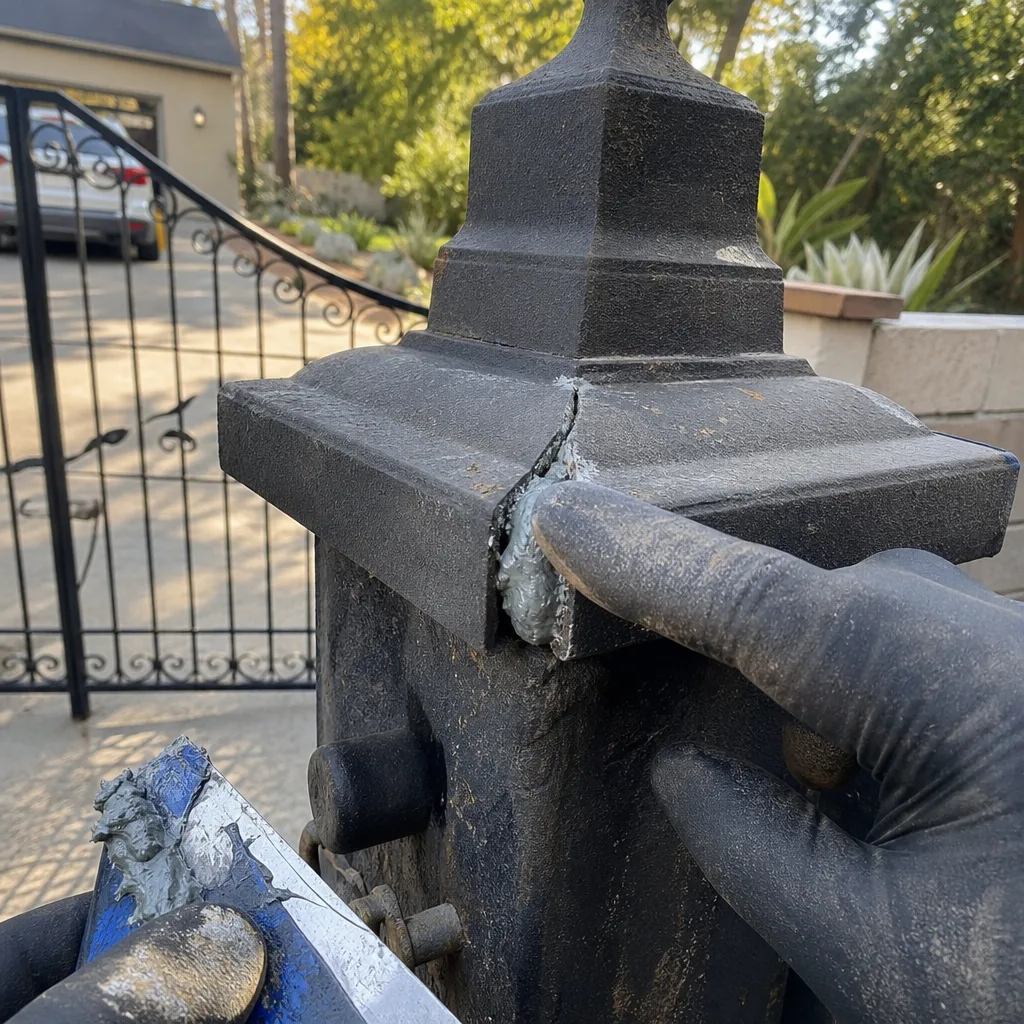
Remove the track cover if one is installed. Sweep out the entire length of the track with a stiff brush. Pay attention to the rack (the toothed rail on the gate itself) and remove any packed debris between the teeth. Check the drive gear on the motor. Debris packed into the gear teeth can cause the gate to jump or stall mid-cycle. For swing gates, wind-driven branches can bend hinge brackets slightly. Inspect for any visible deflection or new gaps at the hinge point.
November: Weatherstripping and Sensor Checks
After the Santa Ana season, check the photo-eye (the infrared beam that stops the gate if something crosses the path) for alignment. Wind vibration can shift the mounting bracket by a fraction of an inch, which is enough to cause a false reading and a gate that refuses to close. Verify the beam is level and the receiving eye’s indicator light is steady. Also inspect any weatherstripping on the gate frame and replace cracked or brittle material. Riverside’s UV exposure hardens rubber quickly.
December: Full System Audit
Run a complete system check before the new year. Open and close the gate five times in succession and note any inconsistencies. Test the safety features: the photo-eye, the edge sensor if installed, and the manual release. And document everything. If you have been keeping a maintenance log, December is the month to review it and plan any corrective action before the calendar resets. For more guides & resources, see our blog.
Exact Lubricants by Component Type
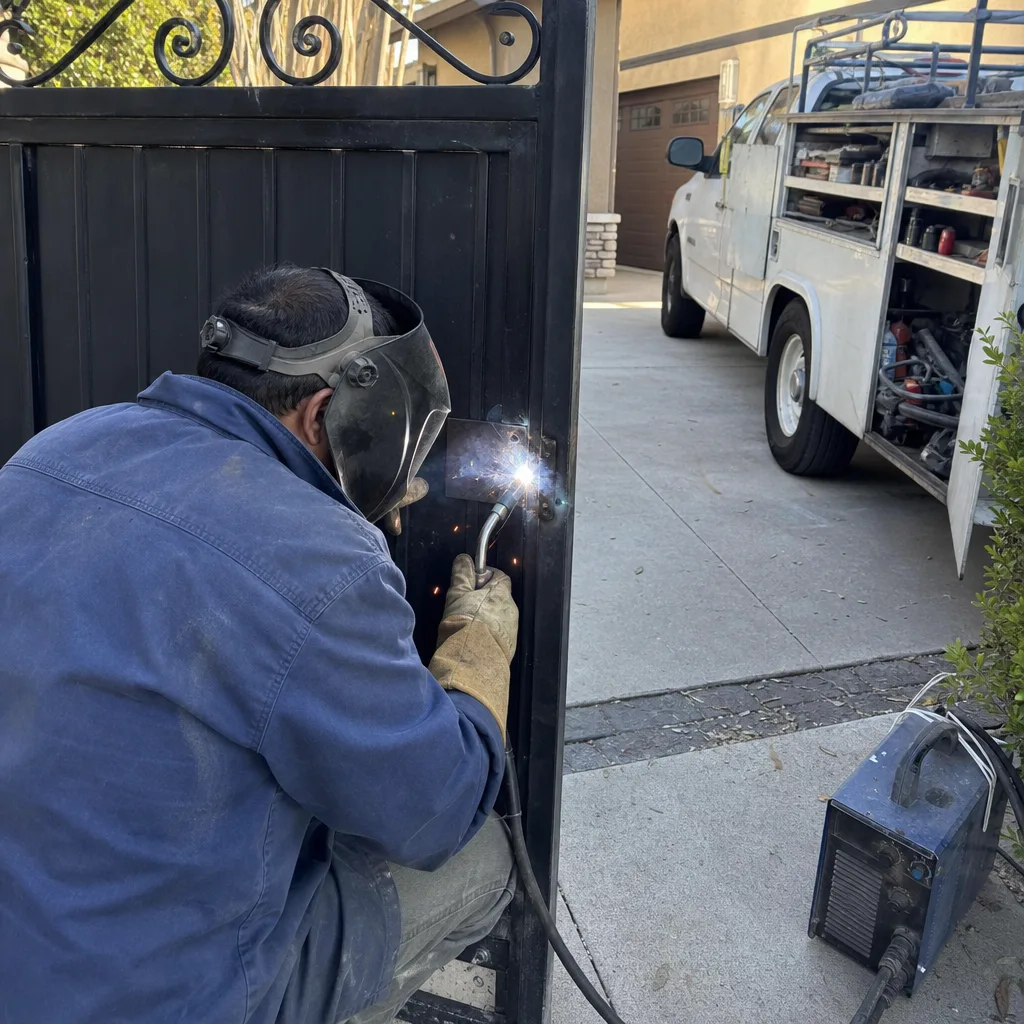
Generic advice to “lubricate the gate” is worthless. Different components need different products, and using the wrong one creates problems that did not exist before. Here is the exact breakdown based on what we install and service on Riverside gates every week.
Hinges: Moly-Based Heavy Grease
Hinges need a grease that stays put in Riverside’s dry heat and does not run off or harden. A moly-based heavy grease (such as Lucas Oil Heavy Duty Grease or a lithium-moly compound) works well for most pivot-style swing gate hinges. Apply grease to the pin and work the gate back and forth to distribute it. Clean old grease with a dry rag or solvent before applying fresh. Do not use spray lubricants here. They are too thin and wash out of the bearing surface within weeks.
Chain Drives: Chain Lube, Not Grease
A chain drive uses a roller chain similar to a motorcycle chain. Spray-on chain lube (aerosol or squeeze bottle, such as a product designed for roller chains) is the right choice. It penetrates the pins and rollers and leaves a film that does not fling off. Grease is too heavy and collects dust, which turns into a grinding paste in Riverside’s dry conditions. Lubricate the chain lightly, wipe off excess, and do it every two months on gates that cycle more than ten times a day.
Rack-and-Pinion: Dry Film Lubricant
Rack-and-pinion systems (the toothed rack on a slide gate and the gear on the motor) should not be greased. Grease on the rack collects dust and creates the exact jamming problem you are trying to prevent. Use a dry-film lubricant with PTFE or graphite. The product goes on wet, dries to a non-tacky coating, and does not attract dust. Reapply every three months. This is a specific recommendation for Riverside’s dust conditions; coastal installers can get away with grease, but here it causes problems.
Roller Tracks: No Lubricant
Slide gate rollers and tracks should run clean and dry. Adding lubricant here is a mistake. It attracts dust, creates sludge, and makes the rollers slide rather than roll, which flat-spots them. Clean the track with a stiff brush and leave it dry. If a roller is noisy, the fix is replacement of the roller bearing, not lubrication.
Wheel Bearings: Occasional Bearing Grease
If your gate uses caster-style wheels at the bottom, the sealed bearings inside those wheels eventually wear out. Some are serviceable with a grease gun; most are sealed units that need replacement. A noisy wheel is usually a spent bearing. Repacking is a short-term fix if the bearing is serviceable, but replacement is the honest fix. We typically see bearing failures on Riverside gates after five to seven years of daily cycling.
Measurable Inspection Thresholds That Signal Problems
Inspection checklists that say “look for wear” are not helpful. Wear is always present. The question is whether the wear has reached a point that requires action. Here are the specific thresholds we use when we evaluate a Riverside gate, along with what each one means in practical terms.
Hinge Gap at the Post: 1/8 Inch Is the Limit
On a swing gate, measure the gap between the top hinge knuckle and the post with the gate in the closed position. A gap wider than 1/8 inch on either hinge means the hinge pin or bushing is worn and the gate is sagging. You can also measure sag directly: with the gate open at 90 degrees, measure the height of the free end from the ground. Compare both sides. A drop of more than 1/4 inch on the latch side means the hinges need attention now, not next season.
Battery Voltage: Below 12.2 Volts at Rest
For any gate running on battery power (solar or backup), voltage is the single most useful diagnostic number. A healthy 12-volt deep-cycle battery reads between 12.5 and 13.0 volts at rest after a full charge. Below 12.2 volts means the battery is failing to hold charge. Below 11.8 volts means it will not operate the motor reliably. Test at the battery terminals with a multimeter, not at the control board.
Motor Noise: A 10 dB Change Is the Warning Line
You do not need a decibel meter for this, but the principle is useful. Record a baseline sound level of your gate motor running normally (a phone app is fine). A sustained increase of roughly 10 dB, or a change in sound character (smooth hum to grinding, rhythmic to irregular), is a mechanical problem in progress. Motor noise does not gradually get louder for no reason. Something is wearing, binding, or failing.
Cycle Time: 15 Percent Slower Is a Red Flag
Time a full open and close cycle the day the gate is working correctly. Write it down. A 15 percent increase in cycle time under the same load conditions means the motor is laboring. Causes include low voltage, worn bearings, a binding hinge, or debris in the track. All are fixable if caught at the 15 percent mark. Most are expensive if you wait until the motor stalls.
Track Gap on Slide Gates: Max 1/4 Inch at Any Point
Check the distance between the gate’s vertical frame members and the track along the full length of travel. If the gap varies by more than 1/4 inch from one end to the other, the track has shifted or settled. Riverside’s clay-heavy soil expands and contracts with the small amount of moisture it receives, and this is enough to move an improperly compacted track base over a few seasons.
Which Maintenance Mistakes Void Manufacturer Warranties
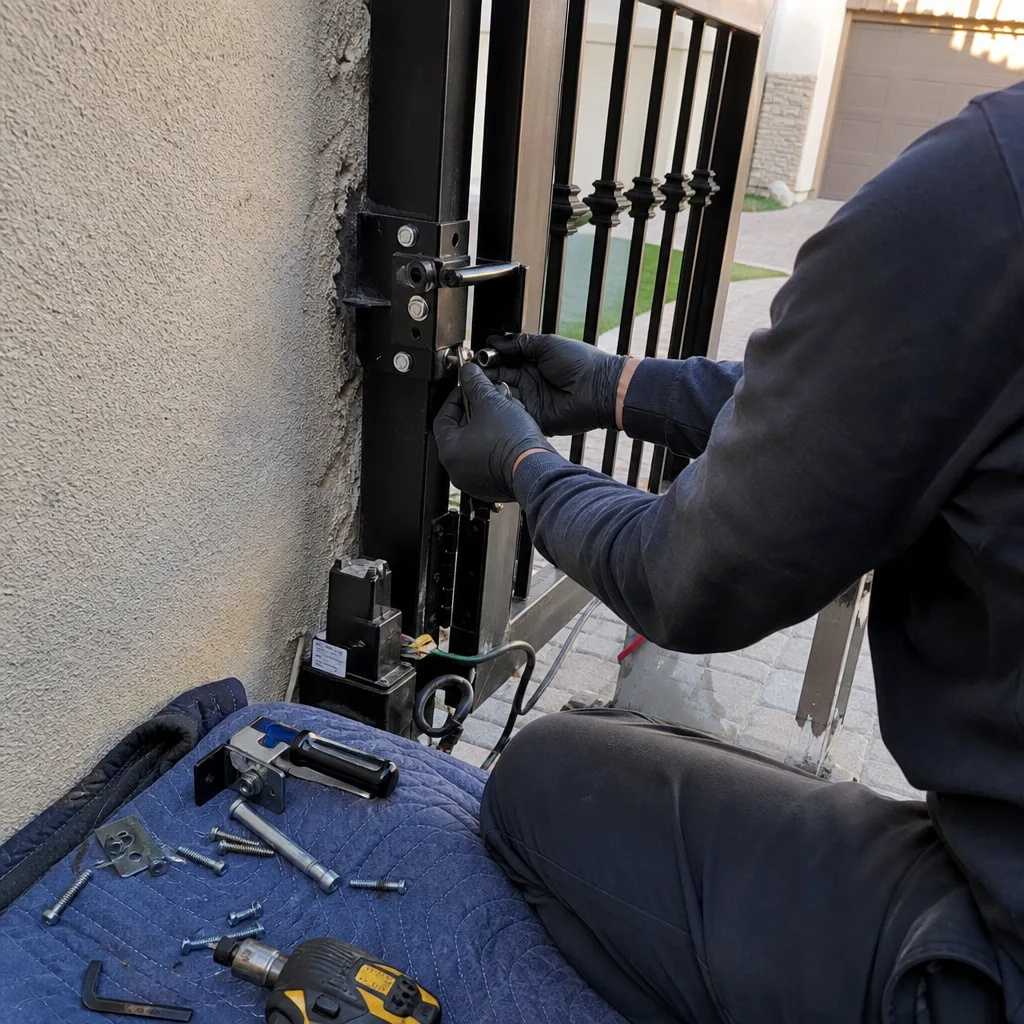
This is the section most homeowners never read, and it costs them real money when a warranty claim is denied. Before we dive in, see Gate Repair Permits, Codes & Inspections in CA: What You Need to Know for regulatory context. Gate motor manufacturers, including brands like Linear, Viking, Ghost Controls, and DoorKing, write maintenance requirements into their warranty language. Skipping those requirements, or doing the wrong thing and documenting it, gives the manufacturer a reason to decline the claim. Here are the specific pitfalls we see in Riverside.
Using the Wrong Lubricant on the Drive System
If a manufacturer specifies a dry lubricant for the rack-and-pinion and the homeowner greases it, the grease collects dust, the gear wears prematurely, and the warranty claim for the stripped gear is denied. The lubricant type is part of the product specification. Document what you use and when you use it. A maintenance log entry that reads “greased rack” on a system that requires dry lube is evidence against you, not for you.
Skipping the Annual Limit Switch Adjustment
Limit switches control travel distance, and travel distance changes as metal wears and shifts. Manufacturers require periodic limit verification as part of normal maintenance. If the gate slams against the post stop and damages the gearbox, the claim will be denied if the maintenance history shows no limit checks. This is not a theoretical denial. It is one of the most common warranty decline reasons in the gate industry.
Ignoring Photo-Eye Alignment
A misaligned photo-eye causes the gate to reverse unexpectedly or refuse to close. If a vehicle or person is hit by the gate and the photo-eye was out of alignment, the manufacturer is not liable, and the homeowner’s insurance may not cover the damages either. Testing photo-eye alignment is a five-minute task that belongs in every maintenance cycle, and the test result belongs in the log.
Battery Neglect on Solar Systems
A solar gate system’s battery is a consumable item, but the manufacturer’s warranty covers the charger and controller. A failed battery that takes the charger with it is a denied claim if the battery was never tested or replaced. Document every voltage reading. Show that the battery was maintained. The record is the difference between a covered repair and a $400 out-of-pocket controller replacement.
How to Keep a Gate Maintenance Log That Saves You Money
A maintenance log is the single highest-value habit a Riverside homeowner can develop for a gated property. It costs nothing to create and pays back in three specific ways. First, it shows warranty compliance when a claim is filed. Second, it gives any future technician a history of the gate’s behavior, which cuts diagnostic time and billable hours. Third, it prevents the expensive cycle of paying a new technician to rediscover what the last technician already knew.
Here is the exact structure we recommend:
- Date and time of every maintenance action or observed anomaly.
- What was done, with the exact product used if lubrication was involved.
- What was observed before and after: voltage readings, cycle times, noise changes, gap measurements.
- Part numbers of anything replaced, if applicable.
- Technician name if a service call occurred, and a summary of the diagnosis and fix.
A simple spiral notebook next to the control box works fine. A notes app on your phone works better because you can photograph voltage readings and add them to the entry. The point is consistency, not format. A Riverside homeowner who can show a service technician two years of monthly voltage readings is going to get a faster diagnosis and a cheaper bill than one who shrugs and says “it stopped working yesterday.”
And when you do call a technician, ask for the same documentation from them. We leave every Riverside job with a written record of what was found, what was adjusted, and what was installed, with photos. That is the standard we work to under our own Haven Standard: a written price before work starts, a documented photo record on every visit, and a one-year promise that if the repair is not right, we make it right at no additional charge. Your own log and your technician’s log should match. If they do not, something is missing.
Common Mistakes to Avoid
- Using WD-40 on hinges or bearings. WD-40 is a water displacer, not a lubricant. It strips existing grease and evaporates quickly, leaving the surface drier than it was before. In Riverside’s low humidity, this is a fast path to metal-on-metal wear.
- Greasing the rack on a slide gate. Grease on the rack-and-pinion attracts Riverside’s fine dust, which turns into an abrasive paste that accelerates gear wear. Use a dry-film lubricant only.
- Ignoring a slight motor noise change. Motor noise is a diagnostic signal, not a personality trait. A change in pitch or a new grinding sound means something is happening mechanically, and catching it early typically means a $50 bearing instead of a $600 gearbox.
- Skipping pre-summer limit checks. Riverside’s summer heat causes enough metal expansion to shift travel limits and cause slamming. The fix is a simple adjustment. The consequence of skipping it is a cracked post stop and a bent gate frame.
- Testing the battery only when the gate fails. By the time a solar battery cannot open the gate, it has been declining for months. Monthly voltage checks catch the decline while the battery is still under warranty.
- Clearing debris without checking the drive gear. Clearing the track but leaving packed debris in the drive gear teeth only moves the problem. The gear is what transmits motor power to the gate, and packed debris causes slipping and stalling.
- Not documenting anything. An undocumented maintenance routine does not help with warranty claims and does not help the next technician. A two-minute log entry is the cheapest insurance you will ever buy for your gate.
When to Call a Professional
Most of the checks in this guide are safe for a homeowner to perform. Some are not. If your gate uses high-tension springs or the motor is wired into a 240-volt line, do not attempt adjustments yourself. The springs on a slide gate counterbalance system are under serious tension and can cause injury if released incorrectly. The same goes for any work inside the control box beyond visual inspection and voltage testing: miswiring a board can damage the motor and create a shock hazard. If the gate is stuck mid-cycle, bind is severe, or the motor makes a grinding noise on startup, call a technician. See Gate Repair Warning Signs: A Riverside Homeowner’s Reference Guide for earlier indicators.
Vance Gate Repair Riverside offers free estimates in Riverside and can diagnose what your gate needs before you pay a dollar. Call (951) 934-7330 and a live person answers, any hour, any day.
Frequently Asked Questions

A one-time gate maintenance visit in Riverside typically runs between $120 and $200, which covers lubrication, limit verification, safety sensor testing, and a written condition report. Most homeowners who sign up for a quarterly maintenance plan pay $250 to $400 per year for scheduled service and priority response. The cost of skipping maintenance is higher: a replacement motor for a DoorKing or Linear system typically runs $500 to $900 installed. Call (951) 934-7330 for an exact quote based on your gate type and condition; estimates are free.
Yes, same-day emergency service is available in Riverside for gate failures that leave the property unsecured or block vehicle access. A live person answers the phone 24/7 at (951) 934-7330, and a technician can be scheduled without going through a voicemail or callback queue. Most emergency repairs, including motor resets and hinge replacements, are completed the same day.
A full maintenance package includes hinge and track cleaning, component-specific lubrication, limit switch verification, photo-eye alignment and testing, battery voltage reading, motor sound and cycle time evaluation, and a written report with photos of every component inspected. The report documents what was found, what was adjusted, and what was left alone, so no future technician has to guess.
Yes, when we install a new gate in Riverside we can handle the full power run from the panel to the operator, including conduit, wiring, and any required disconnect. This is quoted as part of the written installation scope before work begins, so the electrical work is covered under the same upfront price rather than being a surprise line item later.
We service nine major gate-automation brands including Linear, Viking, Ghost Controls, DoorKing, and five others. That coverage means we work on whatever motor is already on the property rather than steering you toward a replacement. If the motor is repairable, we repair it and document the work with a photo record.
In Riverside’s climate, a monthly homeowner check and a professional service every six months is the minimum for a gate that cycles daily. The summer heat and Santa Ana dust load mean components wear faster here than in coastal areas. A gate that is used ten or more times a day should be on a quarterly professional schedule, with the homeowner doing monthly checks in between. Call (951) 934-7330 to set up a plan that fits your gate and your usage.
The Bottom Line
A Riverside gate maintenance checklist is only as good as its fit to the local climate. Triple-digit summers demand pre-season limit checks and capacitor inspection. Santa Ana winds demand post-season debris clearing and photo-eye alignment. Winter moisture demands control box inspection and terminal cleaning. The lubricants matter by component type: moly-based grease for hinges, chain lube for chains, dry film for racks, nothing for roller tracks. And the entire routine matters more when it is documented, because a written log is what makes a warranty claim stick and a future repair visit faster and cheaper. For every check that makes you uneasy or every reading that comes back out of spec, Vance Gate Repair Riverside is one call away at (951) 934-7330. A live person answers, any hour, any day.
Written by Adrian Vance, Owner at Vance Gate Repair Riverside, serving Riverside since 2014.