
Last updated September 20, 2026
Free on-site gate assessment - hinges, posts, and your LiftMaster or Nice gate operator checked before anything is quoted
The assessment is free and the quote is the invoice.

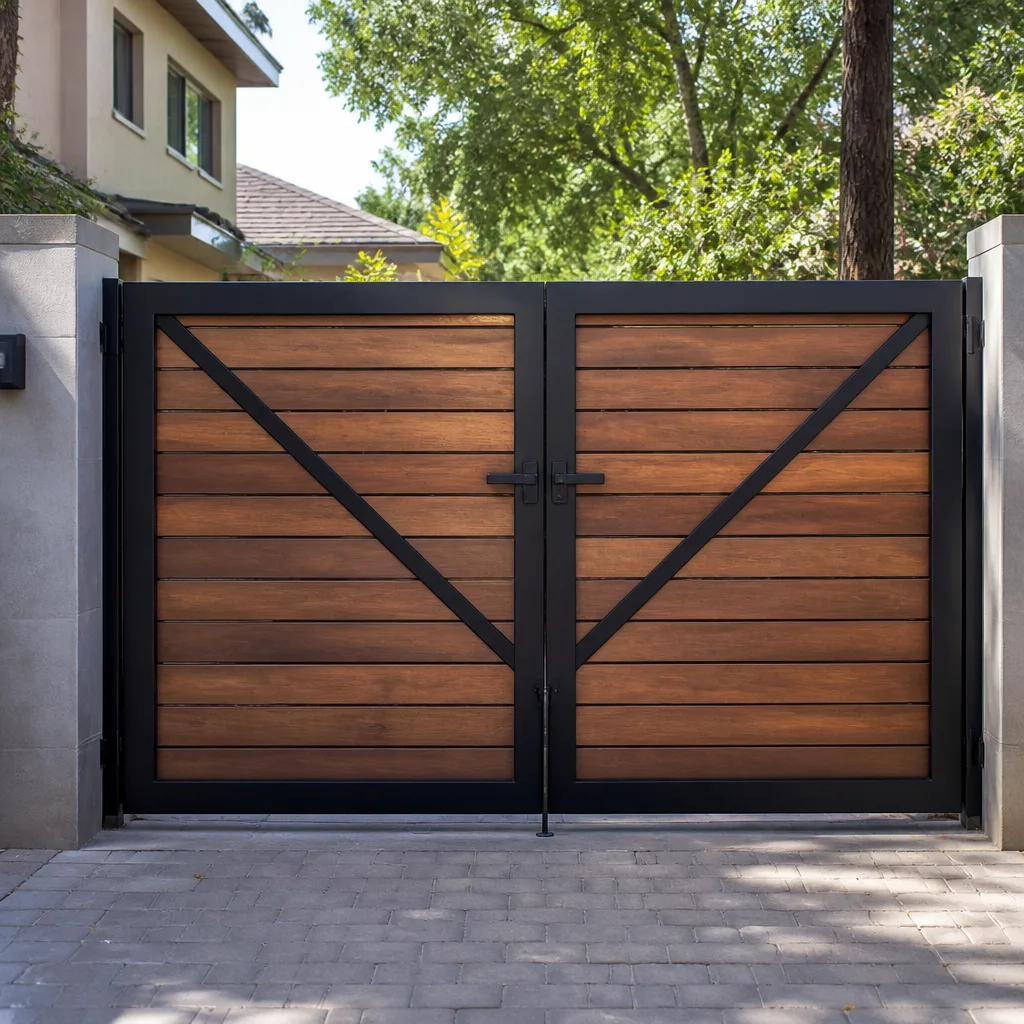

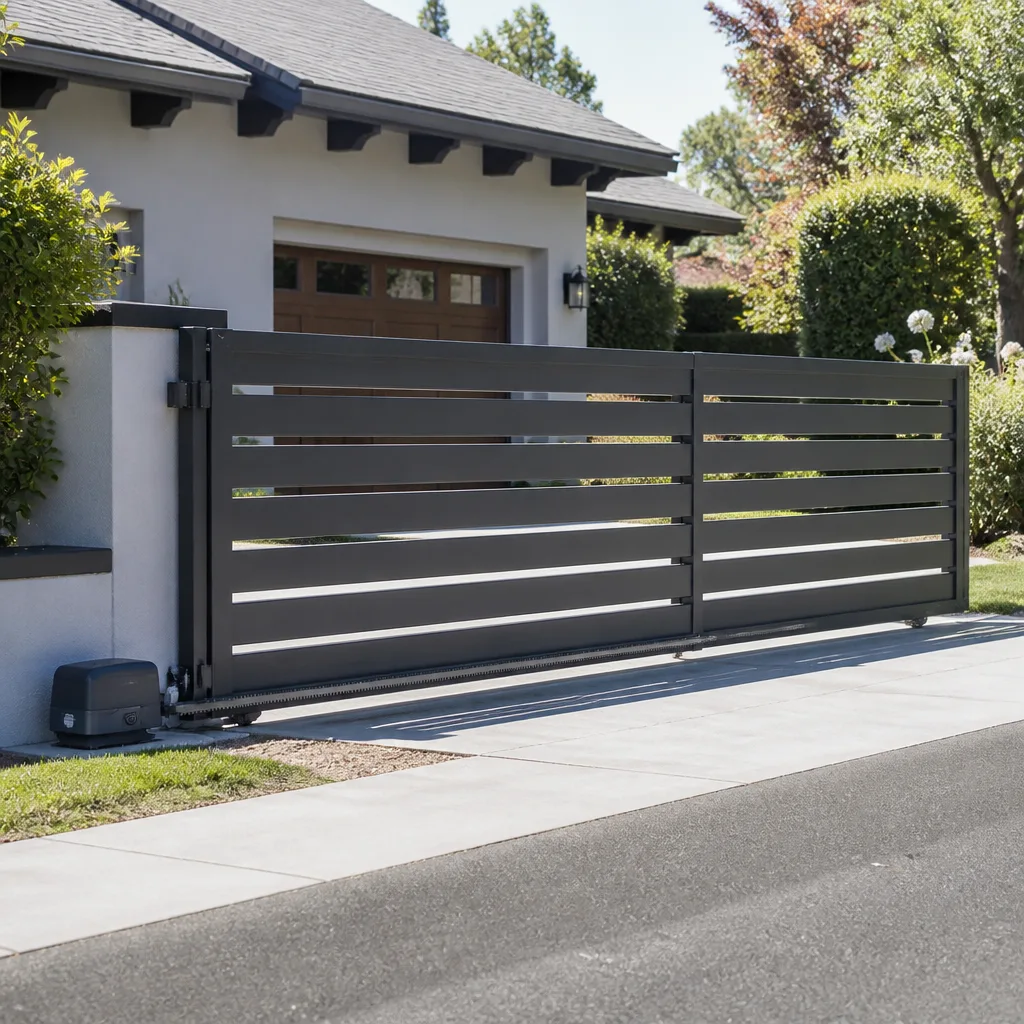
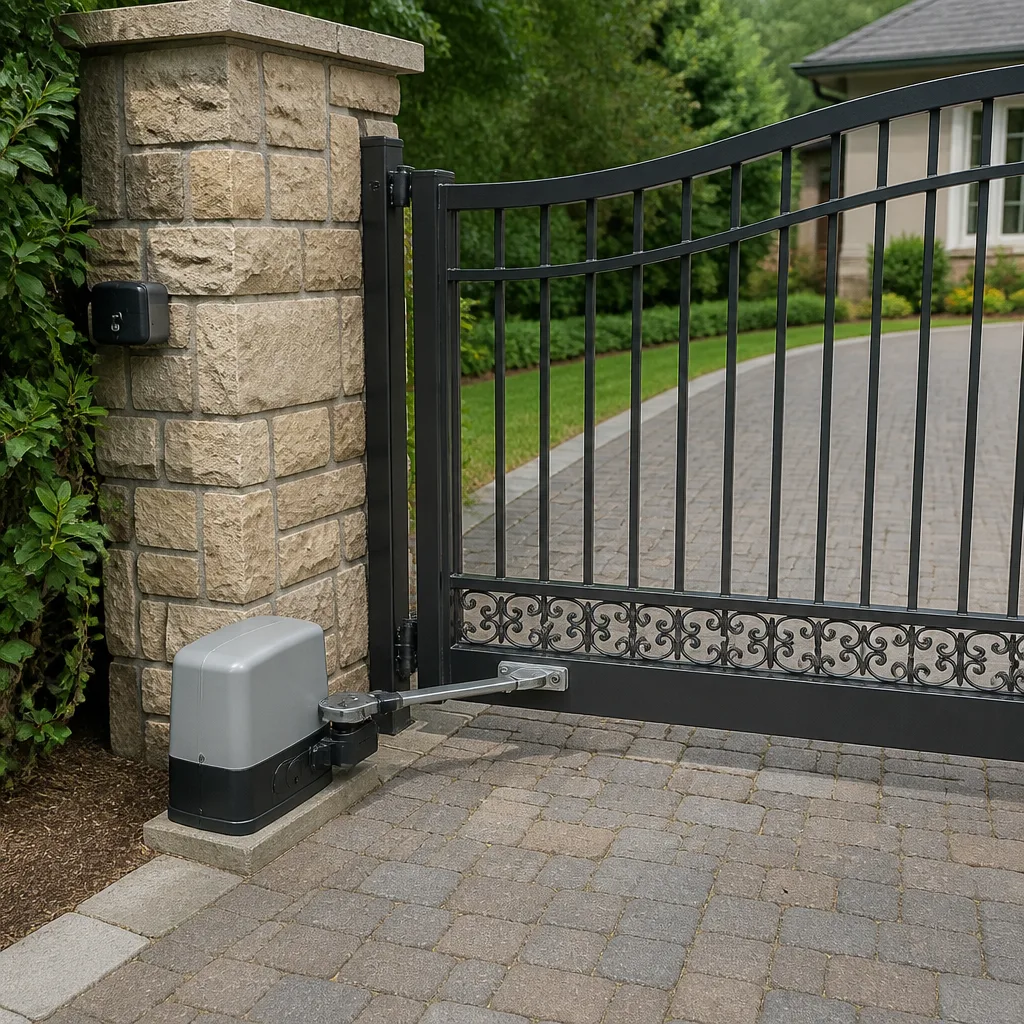
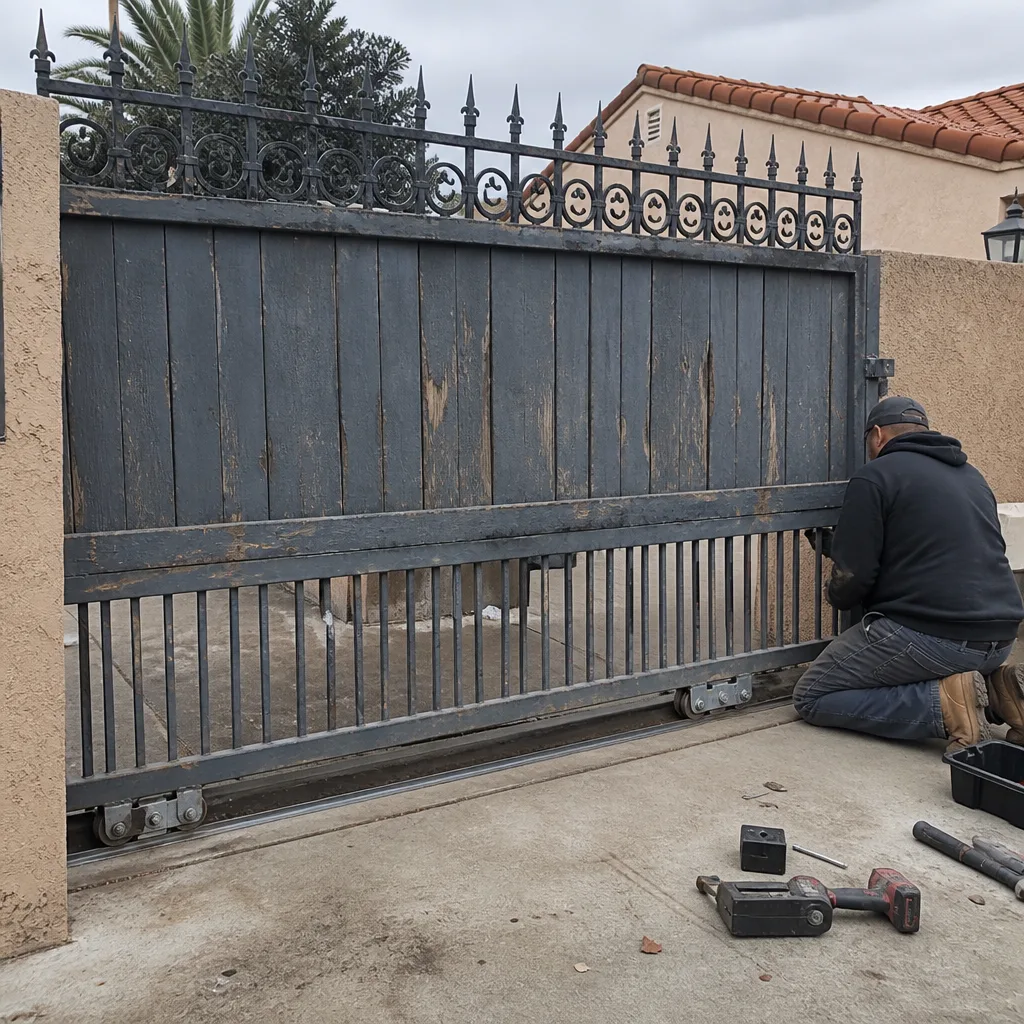 Before
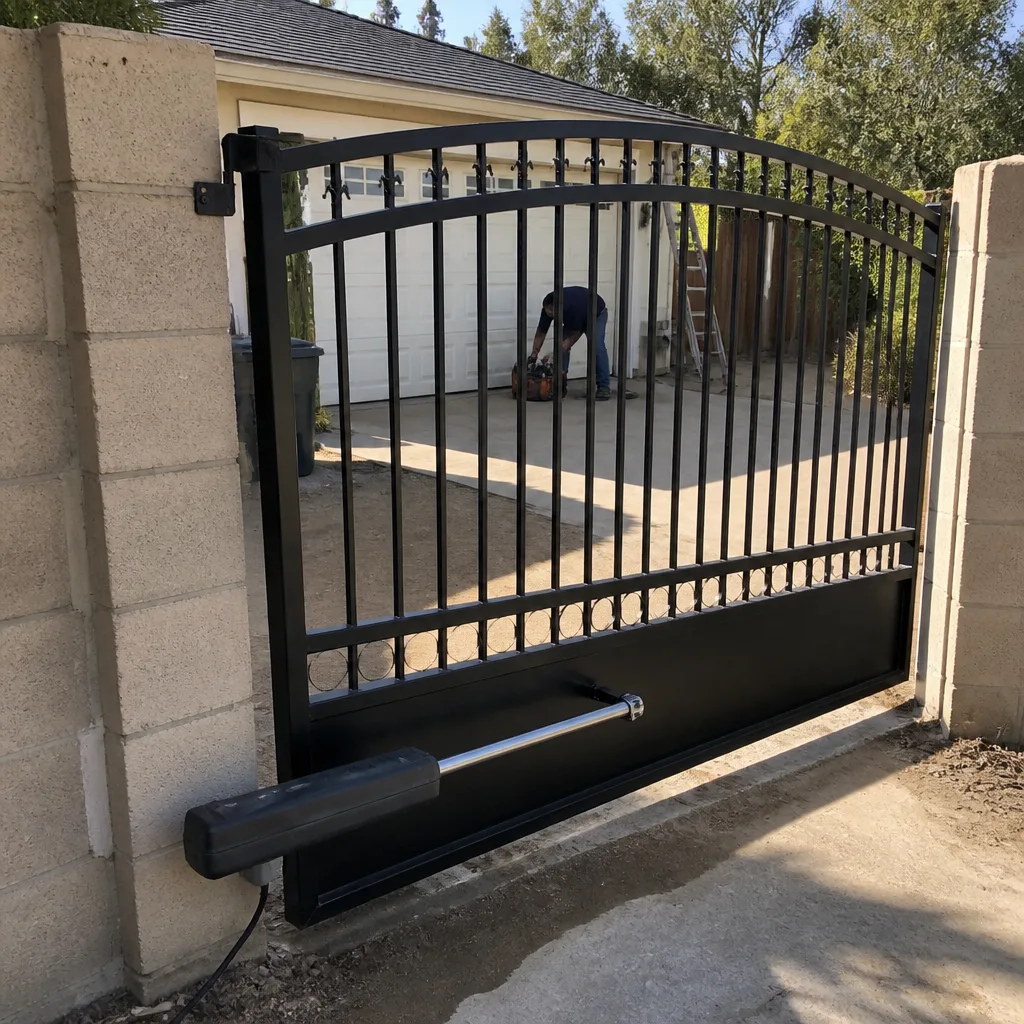 After
After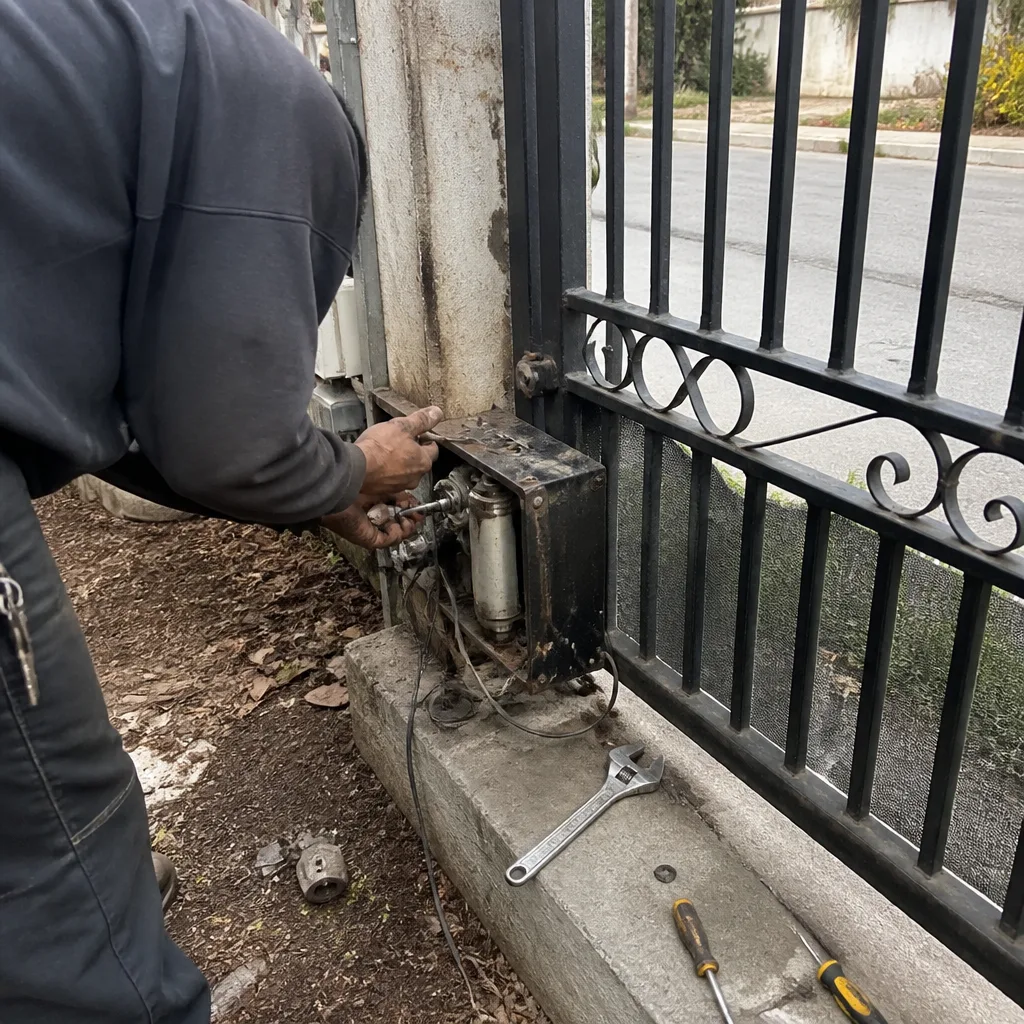 Before
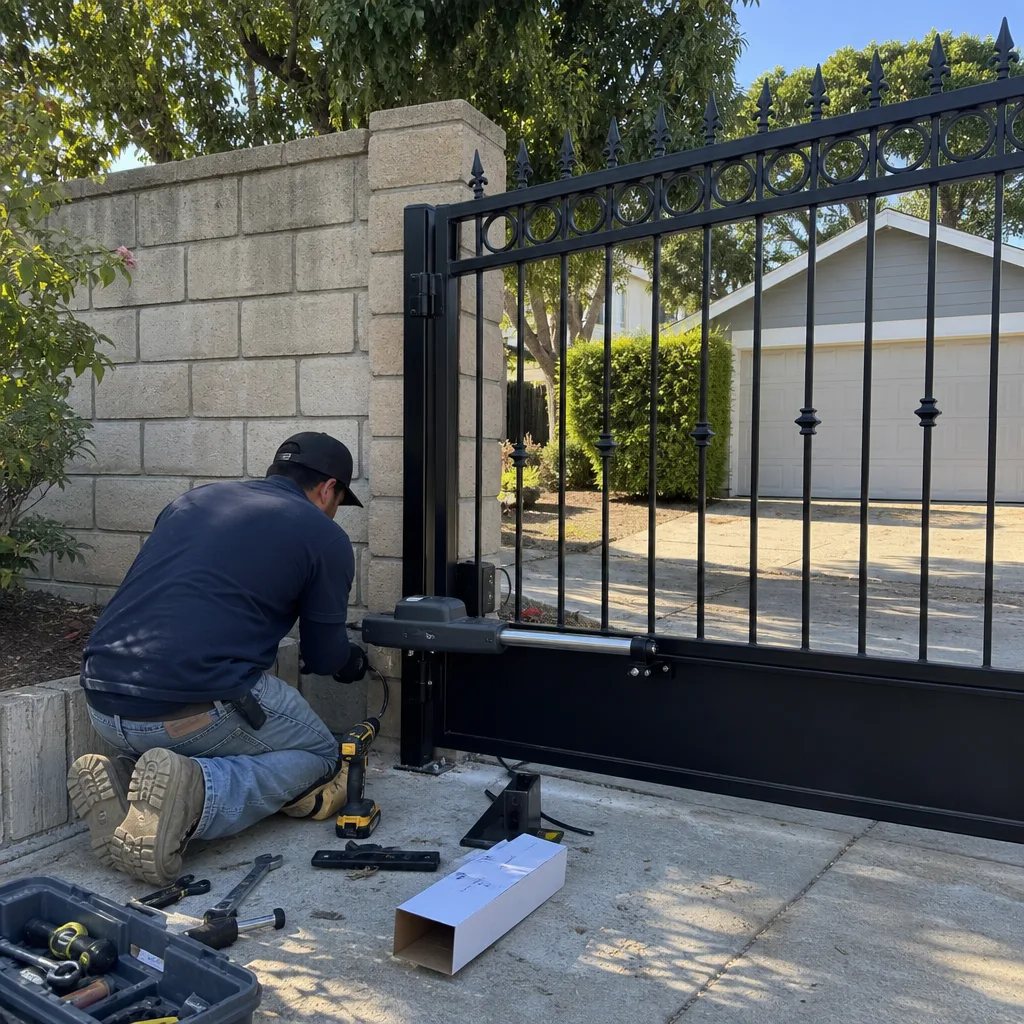 After
After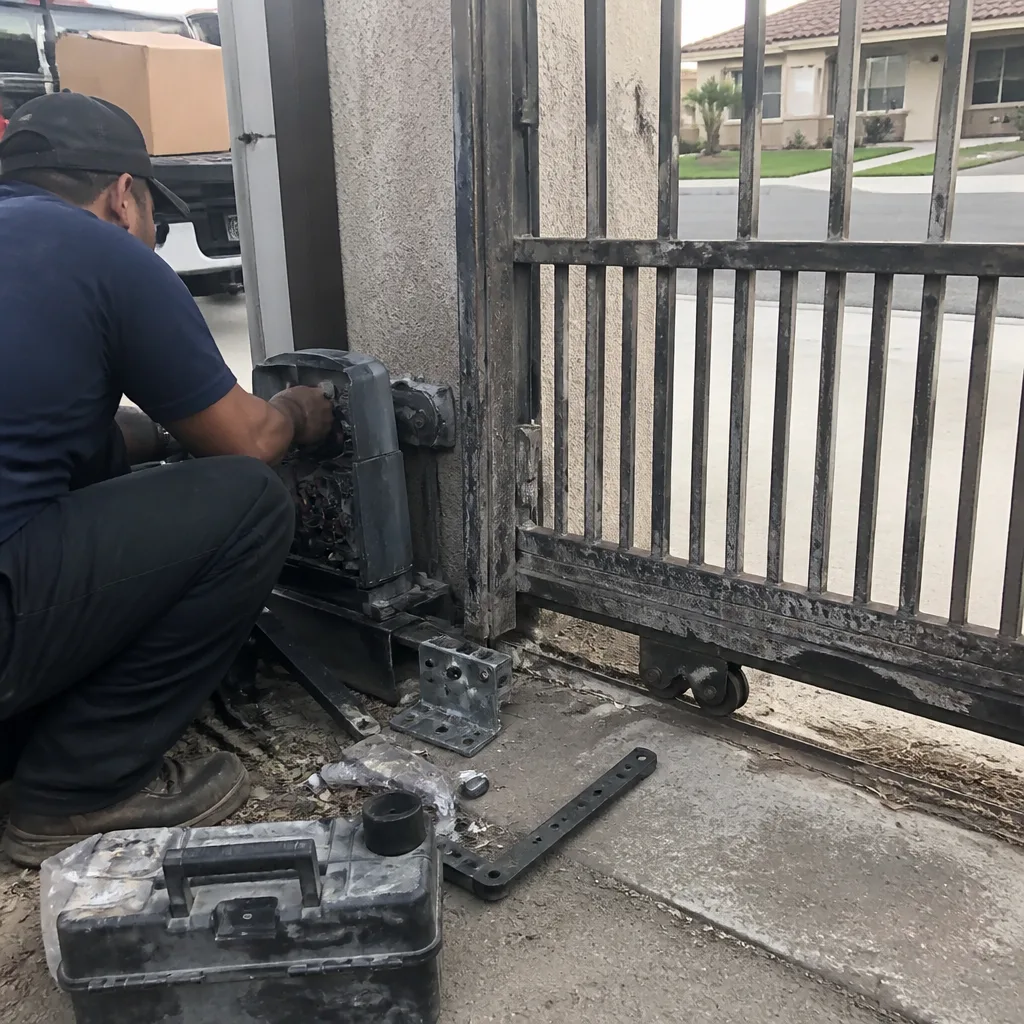 Before
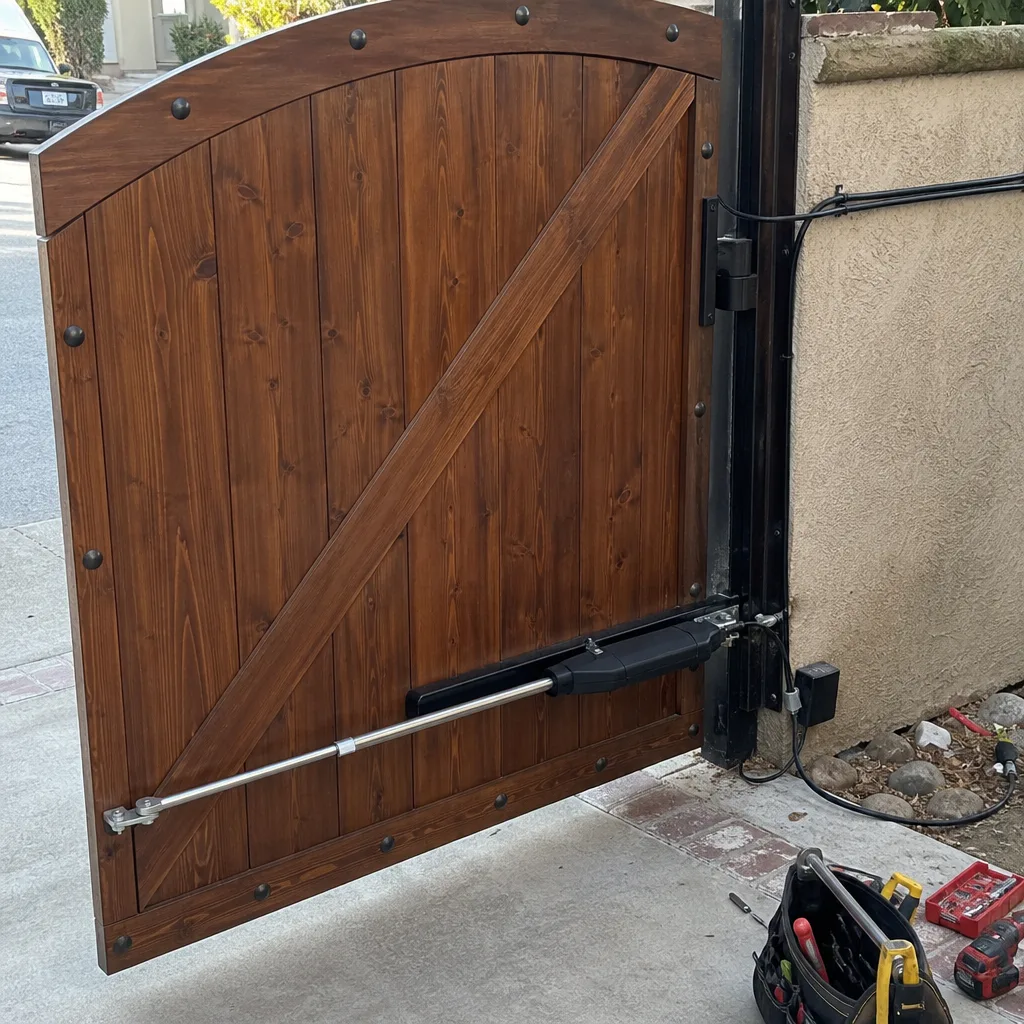 After
AfterGate Repair Permits, Codes & Inspections in CA: What You Need to Know
A gate installer replaced a swing gate operator in a Riverside HOA community without pulling a permit. Two years later, the homeowner’s real estate attorney found the unpermitted work in escrow. The repair itself cost $340. Correcting the missing permit cost $1,100, and the home sale was delayed by 19 days while the city re-inspected the operator’s entrapment sensors. What most Riverside homeowners don’t realize is that a simple operator swap, the same repair that takes a technician two hours, can sit on the wrong side of California code depending on one detail: whether the old unit is being repaired or replaced. This guide draws that line precisely, explains what UL 325 actually requires for residential gates, and shows you which paperwork to keep so a future buyer never has to ask questions you can’t answer. For related reading, see our Gate Repair Warning Signs: A Riverside Homeowner’s Reference Guide.
Quick Answer
In California, repairing an existing gate operator (replacing a circuit board, limit switch, or capacitor) generally does not require a permit. Replacing the operator itself, or altering the gate’s electrical feed, often does trigger a Riverside building permit and a UL 325 entrapment-protection compliance review. The written scope of work matters more than the size of the invoice: a $180 circuit board repair is typically permit-free, while a $1,400 operator replacement can require permit filing, entrapment-zone testing, and a final inspection through our Gate Repair services.
Table of Contents
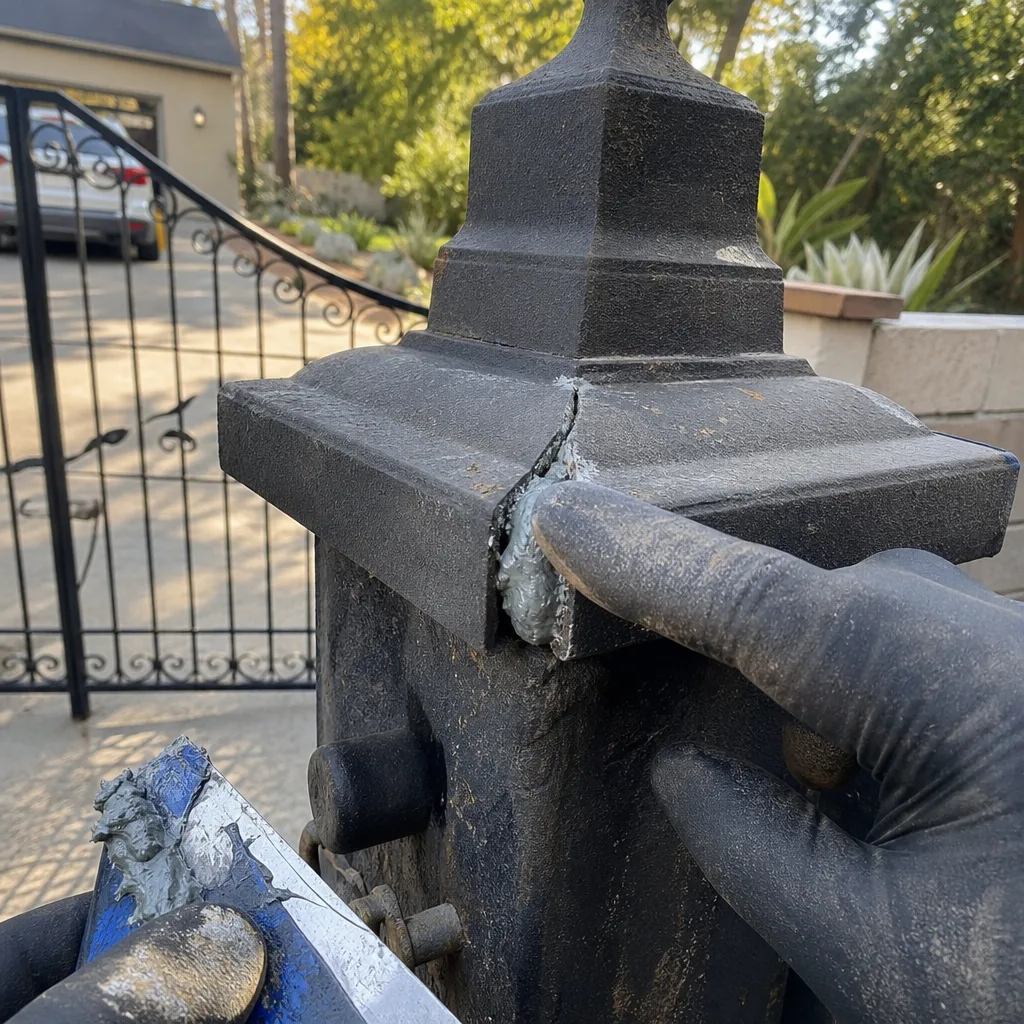
- Repair vs. Replacement: Where the Permit Line Actually Sits
- What UL 325 Requires for Residential Gate Operators
- The Riverside Permit Process: Forms, Fees, and Timeline
- HOA Overlay: When Your CC&Rs Are Stricter Than City Code
- What Documentation to Keep After Permitted Work Closes
- Consequences of Unpermitted Gate Work in Riverside
- What Permits and Compliance Add to the Job Cost
- Common Mistakes to Avoid
BeforeAfterRepair vs. Replacement: Where the Permit Line Actually Sits
The California Building Code (Title 24, Part 2) does not use the word “repair” the way a homeowner does. To the city, a repair restores something to its prior condition using like materials. A replacement removes something and puts a new unit in its place. For gate operators, that distinction determines whether a permit is required.
Here is the practical line we use on job sites across Riverside:
- No permit required: replacing a circuit board, limit switch, capacitor, remote receiver, photo-eye alignment, hinge lubrication, arm bracket tightening, or a worn drive belt. These are repairs because the operator housing, motor, and electrical feed stay in place.
- Permit required: swapping the entire operator (motor and control board as a unit), installing a new operator on a gate that previously had none, relocating the operator to a different gate leaf, running new conduit or a new electrical circuit, or converting a manual gate to automated. Each of these crosses into replacement territory under Riverside’s mechanical permit classification.
- Gray zone worth calling about: replacing a swing-arm operator when only the arm assembly is bad but the motor is functional. Some Riverside inspectors treat this as repair; others ask for a permit because the UL 325 listing is tied to the operator-arm combination. We advise clients to ask the city before the part is ordered.
The trigger is not the price tag. We’ve replaced $800 worth of parts inside a Viking swing operator under a repair classification, and we’ve pulled a permit for a $600 FAAC operator swap because the old unit was being removed in its entirety. When in doubt, the Riverside Building & Safety Division accepts a simple phone call with a work description. A quick permit inquiry costs nothing and prevents an escrow problem later.
For homeowners in the Wood Streets, Canyon Crest, or Mission Grove areas, the same rule applies citywide: the scope description on the permit application needs to say “repair, like-for-like” or “replacement of gate operator” in plain language. Vagueness invites an inspector to flag the work.
What UL 325 Requires for Residential Gate Operators
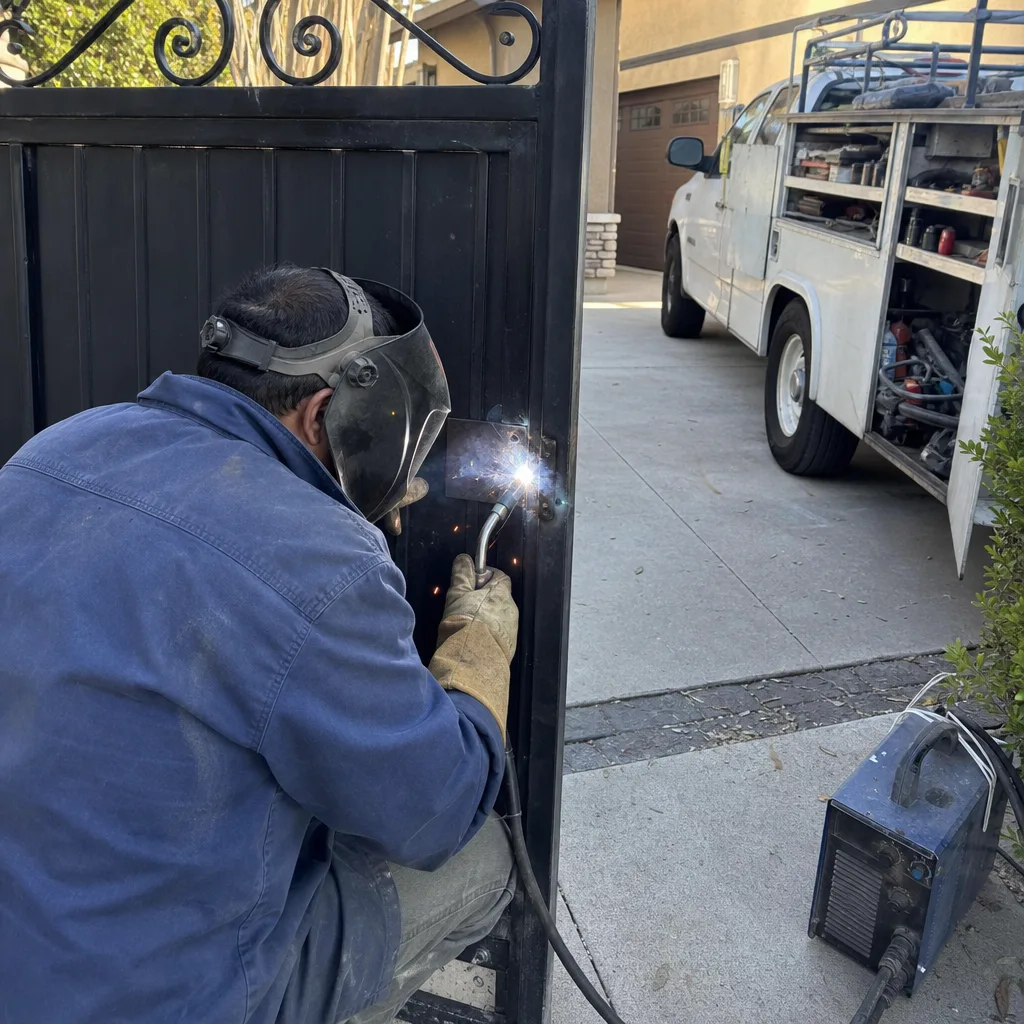
UL 325 is a safety standard, not a law, but California building code incorporates it by reference for any gate operator that runs on line voltage. If you are pulling a permit in Riverside, the final inspection will include a UL 325 compliance check on the operator and the gate it moves.
Here is what the inspector is actually looking at, in plain terms:
- Entrapment protection on the gate edge. A swing gate needs a physical edge sensor or an equivalent device that reverses the gate if it contacts a person or object. The sensor must cover the entire leading edge and any pinch points where the gate meets the post.
- Photo-eyes on both sides of the gate opening. The infrared beam (commonly called a photo-eye) must be positioned so that anything crossing the gate path during travel stops or reverses the operator. On a Riverside driveway gate, that means one eye on the street side and one on the property side, mounted no higher than 6 inches off the ground for pedestrian detection.
- Force limitation. The operator’s internal clutch or force-setting must not exert enough pressure to hold a 100-pound person against a fixed object. The inspector may test this with a force gauge, and in our experience, most older BFT and Linear units fail this test because the force dial was cranked up years ago to overcome a sagging gate leaf.
- Warning signage. Two placards are required on the gate: one warning against pedestrian traffic through a vehicle gate, and one identifying the gate as automatic and equipped with entrapment protection. These signs must be visible from both sides of the gate.
- Compatibility of operator to gate. The operator’s UL 325 rating must match the gate weight, width, and cycle frequency. Installing a light-duty operator on a solid steel gate is a compliance failure even if the wiring is clean.
Who can certify compliance? A licensed electrical or general contractor, or a gate-automation specialist working under a contractor’s license. The homeowner can install the gate and operator themselves, but once a permit is on file, the final inspection is done by the city, and only the city signs it off. In Riverside, unpermitted UL 325 work is not something a third party can retroactively “certify” without reopening the permit with the city.
One Riverside-specific note: many homes in the Alessandro Heights and Hawarden Hills neighborhoods have long driveway gates on slopes. The entrapment-protection requirements are more demanding on a gate that travels uphill because gravity adds force on the downstroke. If the gate leans or binds, the photo-eyes can’t reliably stop the leaf mid-travel, which is exactly the condition an inspector will flag.
The Riverside Permit Process: Forms, Fees, and Timeline
Riverside’s Building & Safety Division handles gate operator permits under the mechanical permit category. The process is not complicated, but it requires the person doing the work to be specific about what is being installed and where.
Here is the typical flow, based on what we file for clients in Riverside:
- Determine if a permit is needed. Use the repair-versus-replacement test above. If the operator is being replaced, a new circuit is going in, or the gate is becoming automated for the first time, proceed to step 2.
- Prepare the application. You will need the property address, a brief description of work, the operator manufacturer and model, the gate dimensions and weight, and the electrical load. A contractor can file this on your behalf, or you can file as the homeowner if you are doing the work yourself.
- Pay the permit fee. Mechanical permit fees in Riverside for gate operator work typically run between $150 and $400 depending on job value and electrical scope. The exact fee is calculated at the counter or online after the application is reviewed.
- Schedule the rough inspection (if electrical is new). If new conduit or a new circuit is part of the job, the city inspects the rough electrical before the operator is wired. This can add three to five business days to the timeline.
- Complete the installation. The operator goes in, entrapment protection is set, photo-eyes are aligned, and warning placards are mounted.
- Schedule the final inspection. The inspector verifies UL 325 compliance, checks the electrical connections, confirms the signage is in place, and signs off. A typical final inspection takes 15 to 30 minutes.
- Keep the signed final inspection card. This is the document that proves the work was permitted and passed. More on that in the documentation section below.
The total timeline in Riverside for a straightforward operator replacement is usually one to two weeks from application to signed final inspection, mostly waiting on inspection appointments. Express permits for certain mechanical work can be issued same-day at the counter, though gate operator replacements with electrical scope typically require plan review, which adds a few days.
If you’re working with Riverside gate motor and opener service, confirm that the contractor is pulling the permit in the correct name and that the final inspection is scheduled before you pay the final invoice. A permit that was pulled but never finaled is the same as no permit at all in the eyes of a future escrow.
HOA Overlay: When Your CC&Rs Are Stricter Than City Code
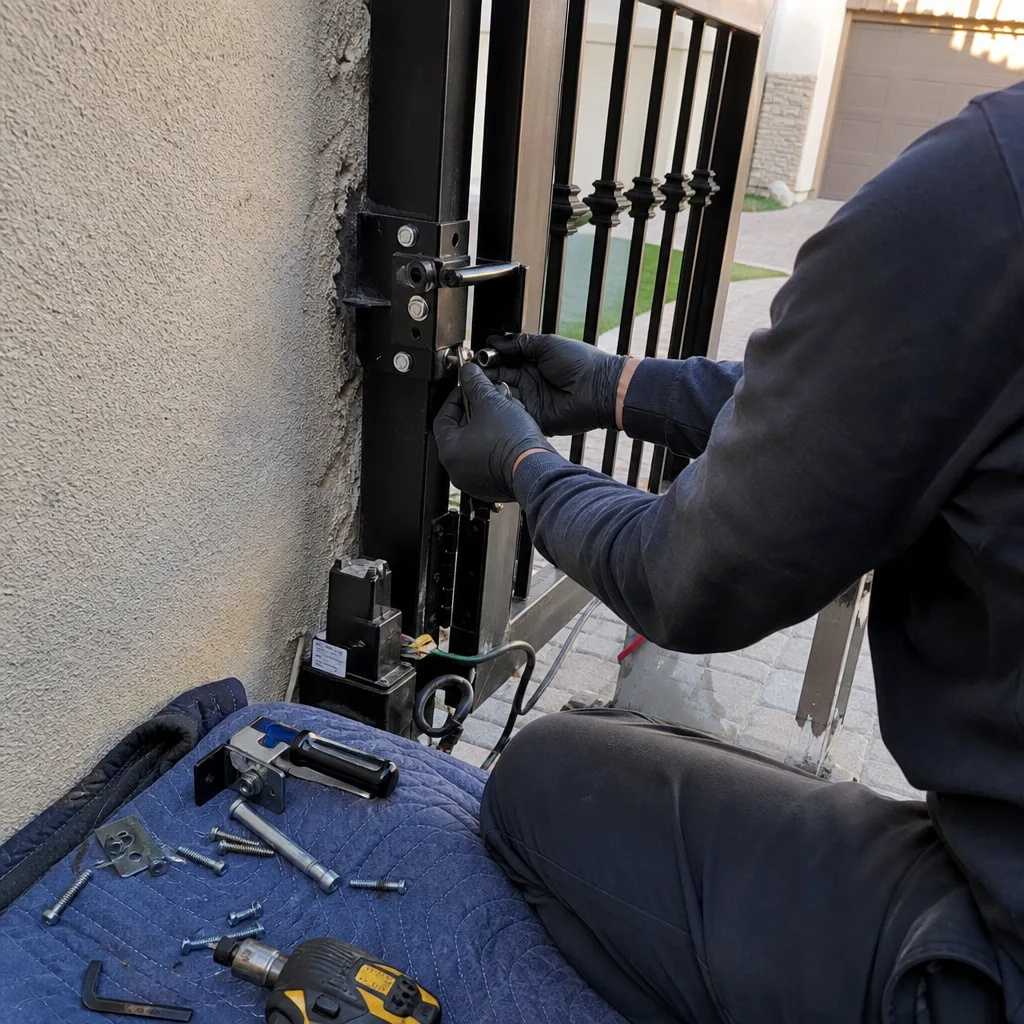
Riverside has dozens of HOA-governed communities: Canyon Crest, Orangecrest, Mission Ranch, Whitegate, and many older tract neighborhoods with architectural review committees. Your CC&Rs can require approvals that the city does not care about, and in some cases, the HOA review is slower and more expensive than the city permit.
Here is what an HOA overlay typically adds to a gate project:
- Architectural approval before the gate or operator changes appearance. If the operator swap changes the gate’s look (new arm, new post mount, new control box), the HOA may need a formal submission. Many Riverside HOAs run on 30-day review cycles.
- Approved materials and colors. Some associations restrict operator housing colors to match the existing fence or require that control boxes be concealed behind landscaping or masonry piers.
- Noise restrictions. Gate operators make noise. A few Riverside HOAs have decibel limits that effectively eliminate certain AC-powered models and require DC-powered swing operators with soft-start features.
- Shared driveway complexities. If the gate serves multiple homes, the HOA may be a co-owner of the infrastructure. Work on a shared gate may require board approval and a maintenance agreement among all parties.
Who enforces HOA requirements? The association, not the city. A city inspector will not check your CC&Rs, and an HOA board member will not issue a building permit. But both can stop the work: the city can red-tag an unpermitted electrical install, and the HOA can levy fines or require reversal of unapproved changes. In the escrow scenario from the opening of this guide, the HOA had no record of the operator swap, which is how the buyer’s attorney flagged it during document review. Learn How to Hire a Gate Repair Contractor in Riverside: A Step-by-Step Guide to avoid similar issues.
For any project in a Riverside community governed by a CC&R, pull a copy of the design guidelines before spending money on hardware. The conversation with the HOA is usually faster than the city permit process, but only if you start early.
What Documentation to Keep After Permitted Work Closes
The final inspection card is the most important piece of paper you will own from any permitted gate job. Here is the complete documentation set we recommend every Riverside homeowner keep in a single folder, digital or physical:
- Signed final inspection card from Riverside Building & Safety. This proves the work was permitted, inspected, and passed. Without it, the permit record in the city database may show as “issued” but not “finaled,” which is the status that causes problems in escrow.
- Operator installation manual and UL 325 listing page. Keep the page that shows the model number, the UL mark, and the class rating (Class I, II, III, or IV). The inspector checked it, and a future buyer’s inspector may check it again.
- Entrapment protection test record. If your installer performed a force test or photo-eye sensitivity calibration, a written record of the results is worth having. Most installers do not provide this automatically; ask for it.
- Photos of the completed install. Date-stamped photos of the operator, the electrical connections, the photo-eye placement, and the warning signage. If a question ever comes up about whether the sidewalk-side photo-eye was actually installed, the photos answer it.
- Invoice with scope language that matches the permit. If the permit says “replacement of gate operator,” the invoice should say the same thing. Mismatched language between the permit application and the payment record creates confusion in a disclosure review.
- HOA approval letter, if applicable. Many escrow companies ask for architectural approvals as part of the HOA document package. The city permit does not substitute for it.
Under Clause 4 of The Haven Standard (Evidence on every job), every visit with us includes a documented photo record of what was found, what was adjusted, and what was installed, left with the homeowner and filed in the job record. That documentation habit makes the permit conversation easier because the written trail already exists.
Consequences of Unpermitted Gate Work in Riverside
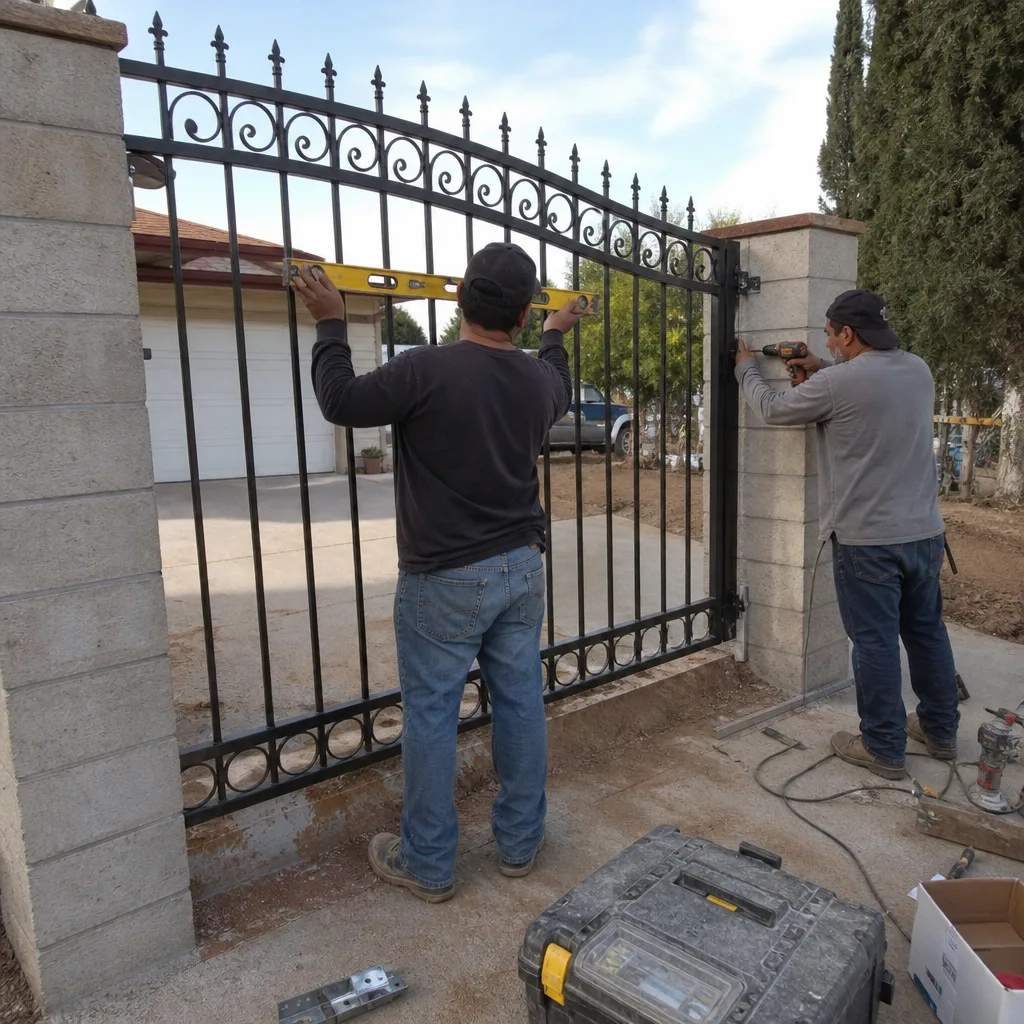
Unpermitted work does not become visible immediately. It becomes visible during a resale inspection, a refinance appraisal, an insurance claim, or an HOA document review. In Riverside, the consequences fall into four practical categories:
- Escrow delay or cancellation. A home sale can stall for weeks while an unpermitted operator installation is either permitted after the fact or removed. Buyers with a good attorney will ask for the permit history on any automated gate, especially if the gate was installed after the original construction.
- Insurance claim denial. If a gate operator causes property damage or personal injury, the insurer may deny the claim if the operator was installed without a permit and the lack of inspection contributed to the failure. Entrapment injuries are not hypothetical: UL 325 exists because people have been seriously hurt by gates.
- City citation. Riverside Building & Safety can issue a citation for work done without a permit, which typically carries a fine equal to a multiple of the original permit fee. The city can also require the work to be brought up to current code even if it was compliant with an older version of the UL standard.
- Liability transfer to the homeowner. If a contractor installed an operator without a permit and later disappears, the permit responsibility rests with the property owner. The city does not care who did the work; it cares that the work is permitted and compliant.
The $1,100 correction in our opening story included the after-the-fact permit fee, the penalty multiplier, two inspections, and the attorney’s time to negotiate the credit. The original $340 repair was legal work; the problem was that the operator was swapped later under the same invoice, and nobody filed.
If you suspect unpermitted gate work on a Riverside property you own or are buying, the fix starts with a call to Riverside gate repair to assess what’s there, followed by an after-the-fact permit application with the city. The path is slower than a normal permit, but it closes the liability.
What Permits and Compliance Add to the Job Cost
Here is a realistic picture of what permit and compliance lines add to a gate operator project in Riverside, based on job types we see regularly. These are ranges, not quotes; the exact numbers depend on job scope, operator brand, and city fee schedule at filing time.
- Riverside mechanical permit fee: $150 to $400 for a gate operator replacement with electrical scope.
- Final inspection: typically included in the permit fee; re-inspections run $50 to $120 each if the first visit fails.
- Entrapment protection hardware (if missing): $80 to $250 per photo-eye set, $120 to $400 per edge sensor, depending on gate length and sensor type.
- Force-limit testing and adjustment: $60 to $150 as a standalone service; often included in the install labor when a permit is part of the job.
- Warning signage: $10 to $40 for the required placard set.
- Contractor permit filing service: $50 to $150 to prepare, file, and schedule the inspection, if you want the contractor to handle the paperwork end-to-end.
Total compliance add-on for a typical operator replacement where the gate already has functional photo-eyes: roughly $200 to $500 on top of the operator and labor. Where the gate lacks entrapment protection entirely, that number can rise to $700 or more. If you’re weighing a repair against a replacement, the permit cost is part of the replacement decision, not a surprise line at the end.
Any reputable operator working Riverside writes the permit and compliance lines into the estimate before work starts. If a contractor won’t put the permit scope in writing, that’s a signal to get a second opinion. We review written estimates from other companies at no cost: bring the paperwork and we’ll tell you what’s reasonable, what’s missing, and what the permit implications are. That free review includes any Riverside gate installation quote, not just operator swaps.
Common Mistakes to Avoid

- Treating an operator replacement as a repair on the invoice. The city classifies the work by what happens physically, not what the invoice calls it. Swapping a complete FAAC or BFT operator and labeling it a “repair” in the scope description is the single most common source of escrow problems we see in Riverside.
- Pulling a permit but never scheduling the final inspection. An unfinaled permit is nearly as bad as no permit. The city database shows it open indefinitely, and a buyer’s escrow inquiry will flag it.
- Skipping the HOA review because the city said no permit is needed. HOA design guidelines are a parallel track. A city “no permit required” answer does not override your CC&Rs.
- Installing the operator before checking the gate’s mechanical condition. A gate that sags, binds, or scrapes the driveway will defeat any UL 325 force-limit setting. The inspector’s force gauge will fail the install, and the correction means more labor, not a sensor tweak.
- Keeping no documentation after the work closes. The final inspection card is the proof that matters at resale. Without it, the next owner inherits your paperwork problem.
- Hiring a contractor who won’t write the permit scope into the estimate. If the permit and compliance lines are not in writing before work starts, they tend not to happen. That’s the exact scenario that produced the $1,100 correction in the opening hook.
- Assuming an old gate is grandfathered out of UL 325. Grandfathering applies to the gate’s construction, not to a new operator. The moment a new operator goes on, full UL 325 compliance is required regardless of the gate’s age.
When to Call a Professional
If your gate operator is dead, noisy, or reversing on its own, most Riverside homeowners can handle basic troubleshooting: check the breaker, confirm the photo-eyes are aligned, and inspect the arm bracket for play. But when the issue involves a permit-grade replacement, line-voltage electrical work, entrapment-sensor testing, or an HOA approval path, the right move is a licensed professional who has filed this paperwork before. High-tension gate springs, underground conduit runs, and 240-volt operator feeds are not DIY territory, and the force generated by a moving gate leaf is enough to cause serious injury if the reversing sensors are not correctly set. Vance Gate Repair Riverside offers free estimates in Riverside and will walk the permit boundary with you before any work begins. Call (951) 934-7330 and a licensed technician will tell you what the job requires in plain language.
Frequently Asked Questions
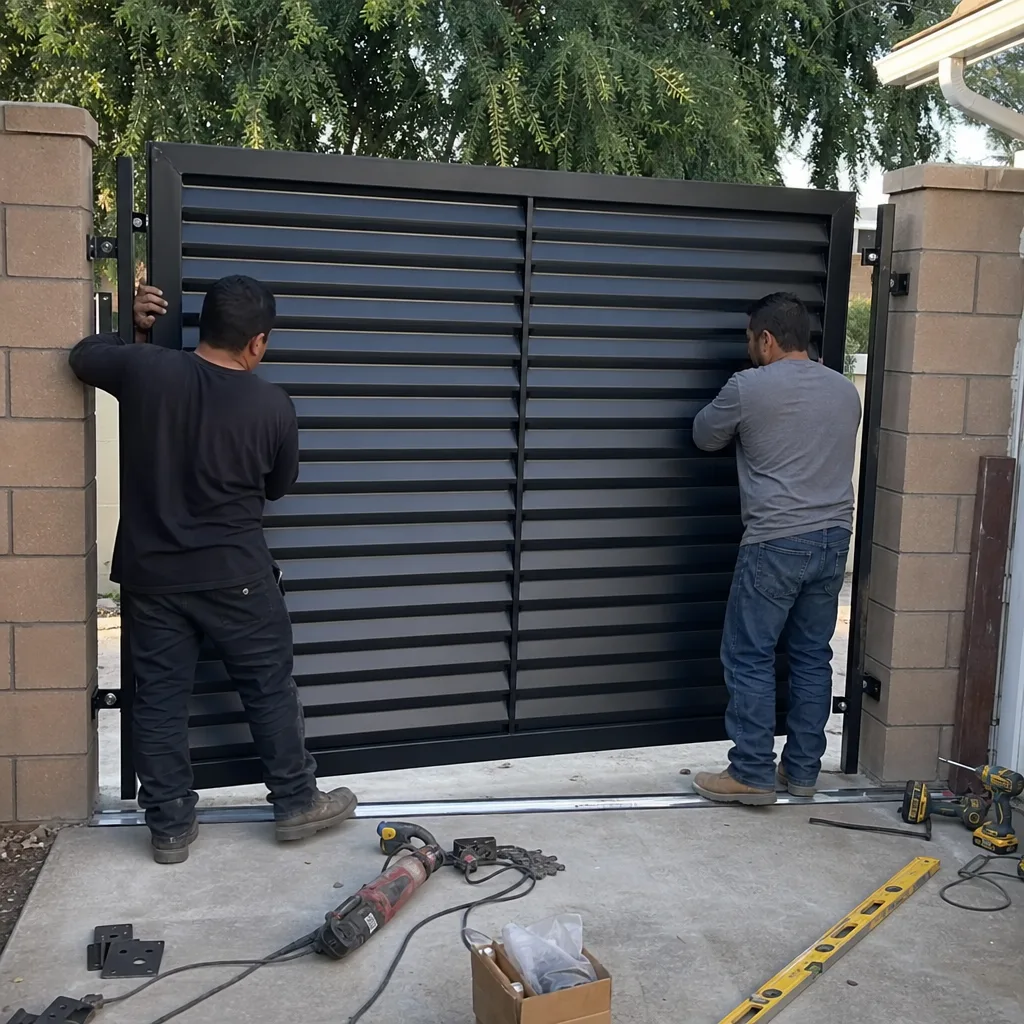
Yes, in most cases. Replacing the operator unit itself, rather than repairing a component inside it, triggers a Riverside mechanical permit and a UL 325 entrapment-protection inspection. Component-level repairs like circuit boards, limit switches, and capacitors usually do not require a permit. If you’re unsure which category your job falls into, call Riverside Building & Safety or get a written assessment from a Vance Gate Repair Riverside technician before you buy the hardware.
UL 325 requires entrapment protection on the gate’s leading edge or pinch points, photo-eyes on both sides of the gate opening, force limitation on the operator, and warning placards mounted on the gate. These requirements apply to any new operator installation, including replacements on older gates. If the operator was installed without these protections, it will not pass a Riverside final inspection.
Mechanical permit fees for gate operator work in Riverside typically run between $150 and $400 depending on the electrical scope and job value. Re-inspections, if the first visit fails, add approximately $50 to $120 per return visit. The license fee is separate from any hardware needed to bring the gate into UL 325 compliance; call (951) 934-7330 to get a written estimate that includes the permit line before work starts.
Yes. Your CC&Rs are a private contract that can impose design approvals, material restrictions, and noise limits stricter than Riverside city code. The city enforces building code; the HOA enforces its governing documents. Both tracks run in parallel, and failing either one can stall a home sale. If your community has an architectural review process, start there before buying hardware.
The seller is typically required to disclose the unpermitted work, and the buyer may demand it be permitted after the fact, removed, or credited against the sale price. After-the-fact permits in Riverside carry penalty multipliers on the original fee and require a full UL 325 compliance inspection. The process can add two to four weeks to escrow and cost several times the original permit fee.
Keep the signed final inspection card, the operator’s UL 325 listing page, any entrapment-protection test records, photos of the completed install, the invoice with scope language that matches the permit, and the HOA approval letter if one was required. This set of documents answers every question a future buyer’s inspector or escrow officer will ask. For more guides & resources, visit our blog.
The Bottom Line
The difference between a $340 repair and a $1,100 permit correction in Riverside comes down to one thing: whether the work was documented as a repair or executed as a replacement. In California, an operator swap crosses a code threshold that triggers Title 24 and UL 325 compliance, a Riverside mechanical permit, and a final inspection. HOA overlays can impose additional requirements. The paperwork you keep after a final inspection is the thing that protects you at resale. If you’re planning gate work in Riverside and want a written scope that says exactly what the job is, what it costs, and what the permit path looks like, call (951) 934-7330. A licensed technician will answer, walk you through the repair-versus-replacement line, and give you a written price before anything gets touched.
Written by Adrian Vance, Owner at Vance Gate Repair Riverside, serving Riverside since 2014.