
Last updated September 20, 2026
Free on-site gate assessment - hinges, posts, and your LiftMaster or Nice gate operator checked before anything is quoted
The assessment is free and the quote is the invoice.


 Before
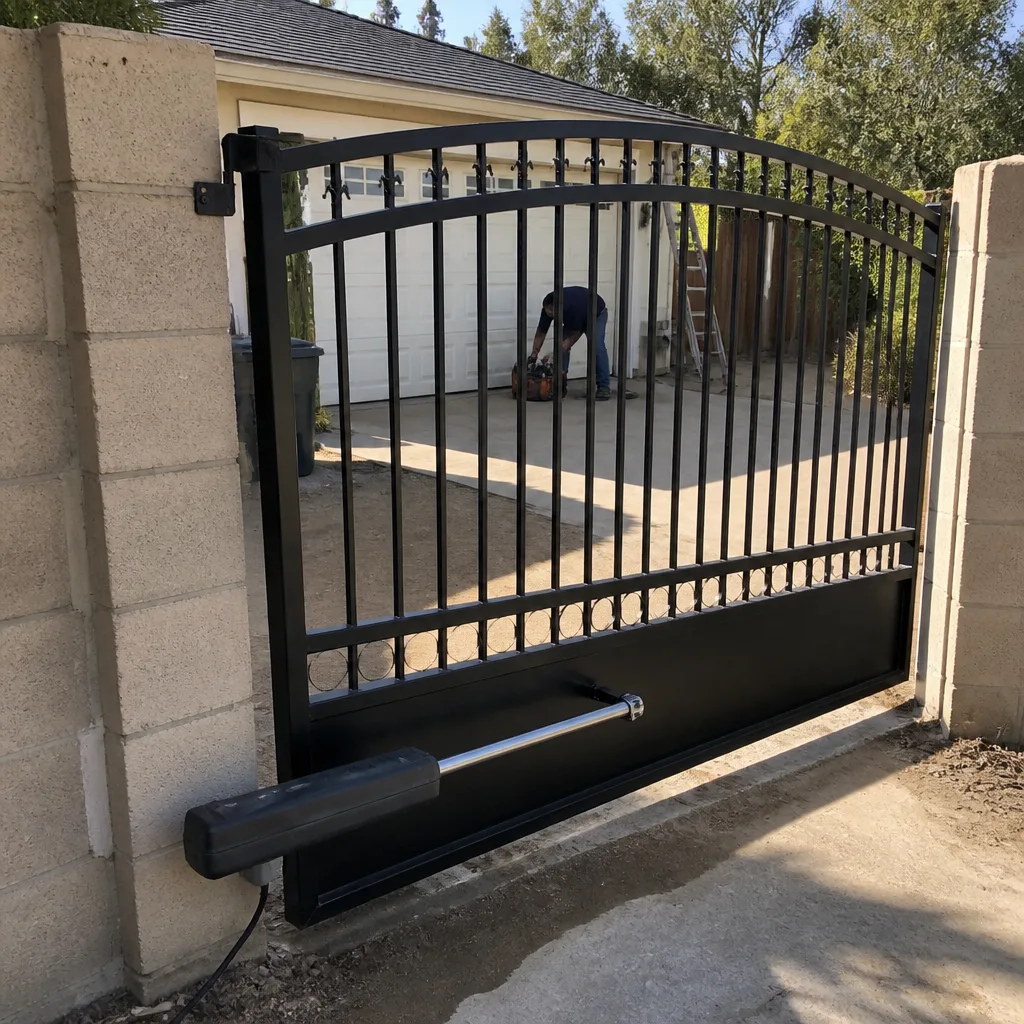 After
After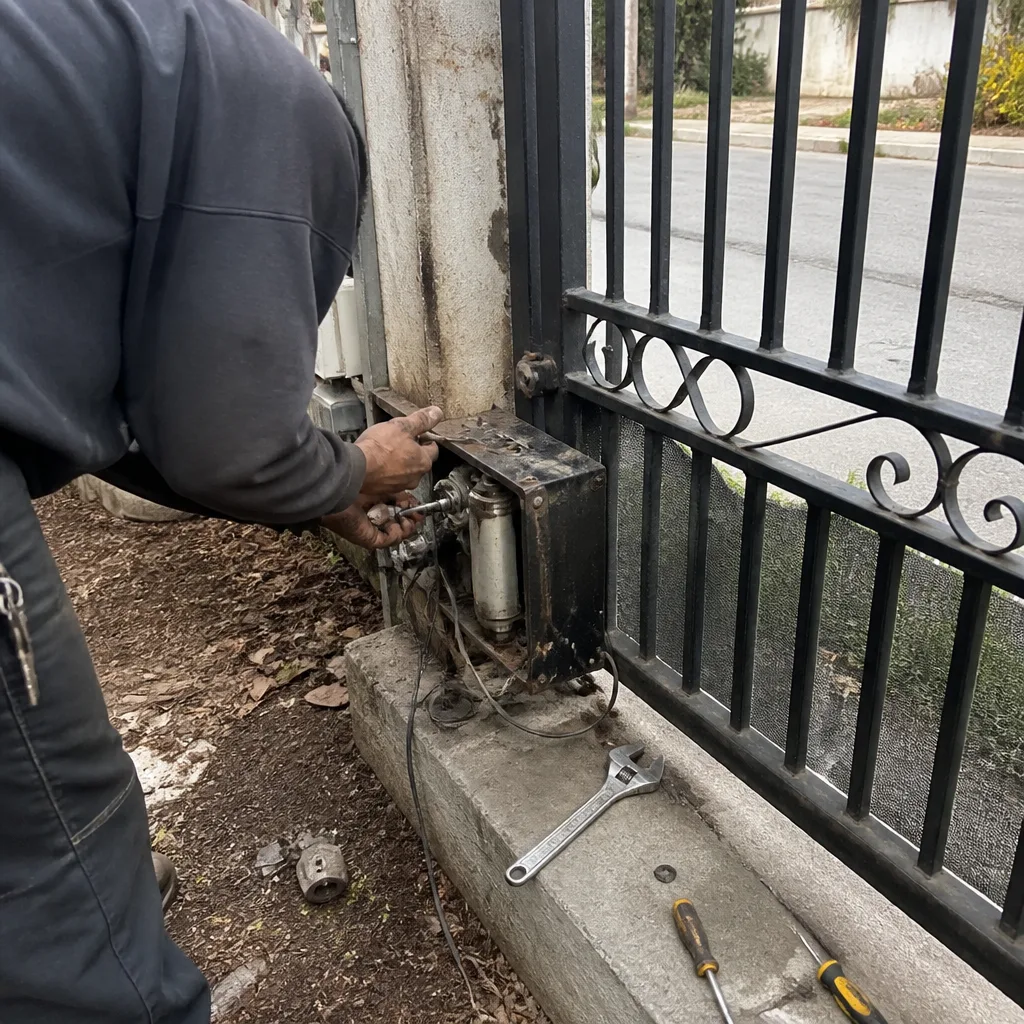 Before
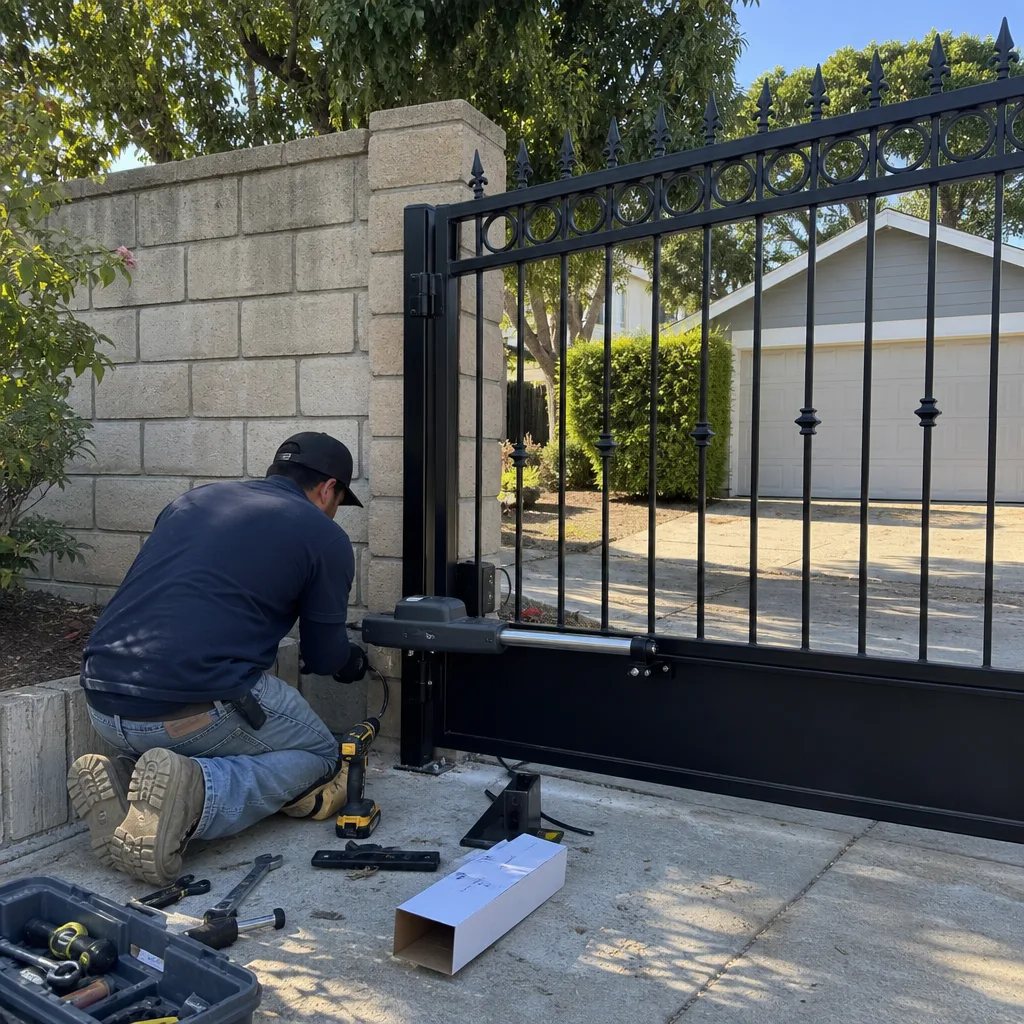 After
After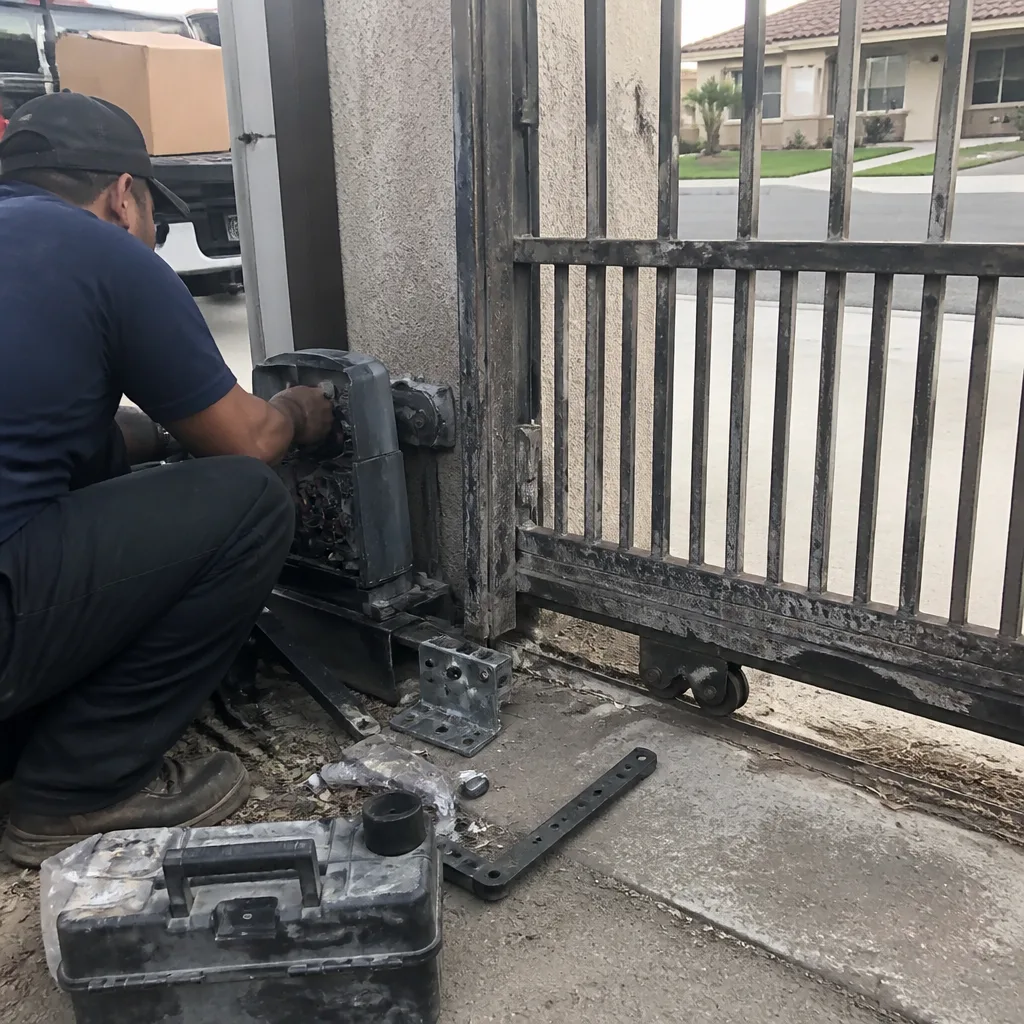 Before
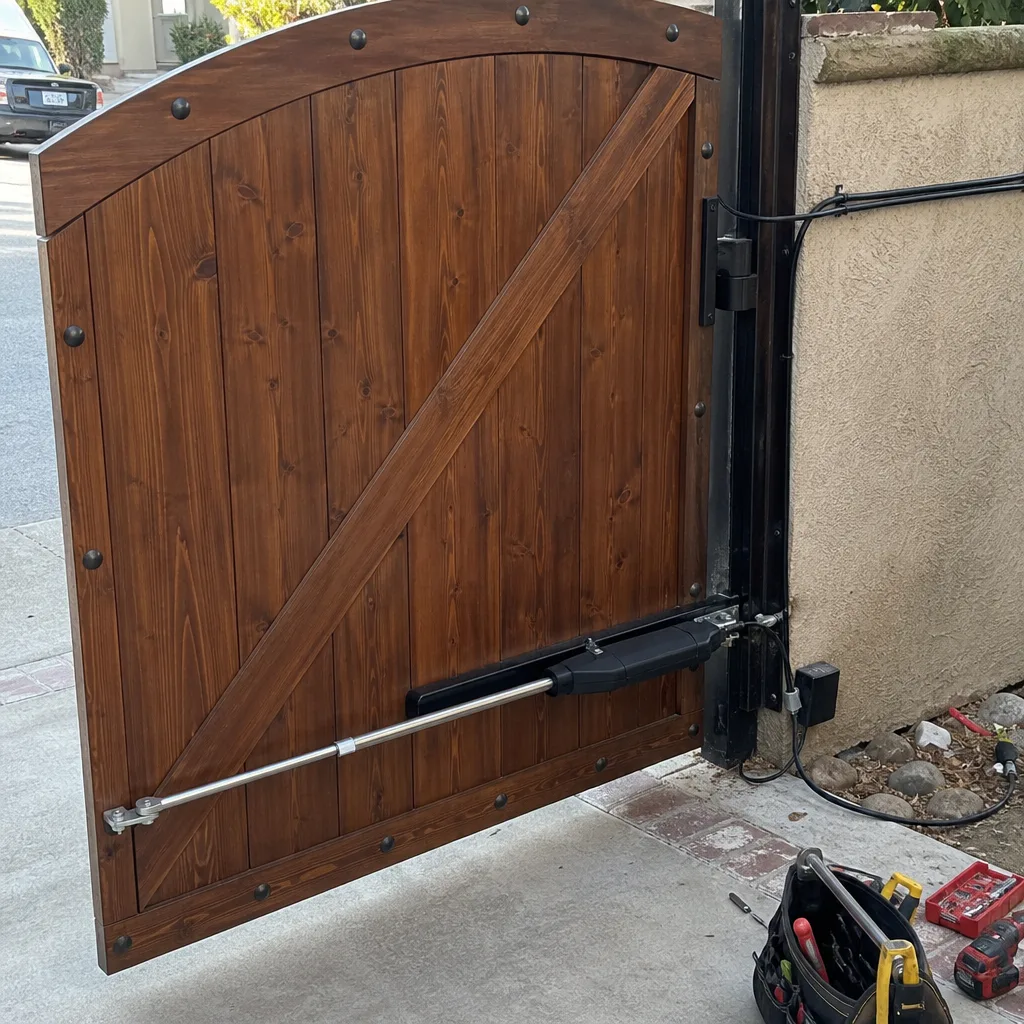 After
AfterSeasonal Gate Repair Care for Riverside: Year-Round Homeowner’s Guide
Riverside doesn’t have four equal seasons. It has one brutal heat window, one wind-event period, and two mild stretches that are the only real windows for preventive gate work. Most national maintenance guides were written for places with frost heave and leaf piles. They don’t tell you that a swing gate arm bracket can fatigue in February’s cold nights, then crack outright during the first Santa Ana event of October. This guide matches gate care to the actual calendar Riverside lives by, with specific inspection points, price ranges, and a seasonal log sheet you can hand to any technician who works on your gate. If you own a gate in Vance Gate Repair Riverside home territory, this is your maintenance calendar.
Quick Answer
Seasonal gate repair and care in Riverside means scheduling preventive service during two mild windows, late February through March and December through January, while monitoring for heat-related wear from June through September and doing a specific post-Santa Ana inspection in October and November. Expect to pay $120 to $280 for a seasonal inspection and relubrication, and $85 to $190 for an hour of corrective adjustment work. The single most overlooked task is setting the gate’s close force and limit switches before peak heat arrives, because those settings drift as metal expands at 105°F and above.
Table of Contents
- Riverside’s Four Functional Gate Seasons, Mapped to the Actual Calendar
- Pre-Heat Prep: February Through March Inspection and Service
- Peak-Heat Stress Monitoring: June Through September
- Santa Ana Wind Recovery: October Through November Inspection Protocol
- Mild-Window Servicing: December and January
- UV Degradation at Riverside’s Inland Latitude: What Wears Faster and Why
- Battery and Backup Power Behavior Above 105°F
- The Seasonal Log Template: What to Record and Why It Matters
BeforeAfterRiverside’s Four Functional Gate Seasons, Mapped to the Actual Calendar
Riverside sits roughly 34 degrees north latitude, far enough inland that summer temperatures routinely cross 100°F and winter nights can dip into the 30s. That temperature swing, more than any single season, is what drives gate component wear. Metal expands and contracts. Rubber seals dry and crack in the low humidity. Grease thins in July heat and thickens on December mornings. The gate doesn’t care what month the calendar says. It cares what the weather is doing.
Here is the functional breakdown we use when we inspect gates across Riverside:
- Pre-heat prep (mid-February through March): The single best window for inspection, relubrication, and corrective adjustment. The coldest nights have already exposed any metal fatigue. The heat hasn’t started degrading grease yet.
- Peak-heat stress monitoring (June through September): Not a service window. This is a monitoring window. You’re checking for swelling, sticking, sensor drift, and battery behavior above 100°F.
- Santa Ana recovery (October through November): After the first strong wind event, inspect the bottom track or guide rollers, check photo-eye alignment, and clear debris from gearboxes. This is the second most important service window of the year.
- Mild-window servicing (December through January): The second preventive window. Temperatures are mild, the gate has cooled down and contracted, and a technician can do slow, deliberate adjustment work without heat interfering.
If you only schedule professional gate service once per year, do it in late February, as outlined in The Complete Guide to Gate Repair in Riverside. It catches winter fatigue before summer stress adds to it, and it sets the gate up for the hottest months with fresh grease and correctly set limits. That’s the window almost everyone misses, and it’s the one that prevents most August service calls.
Pre-Heat Prep: February Through March Inspection and Service
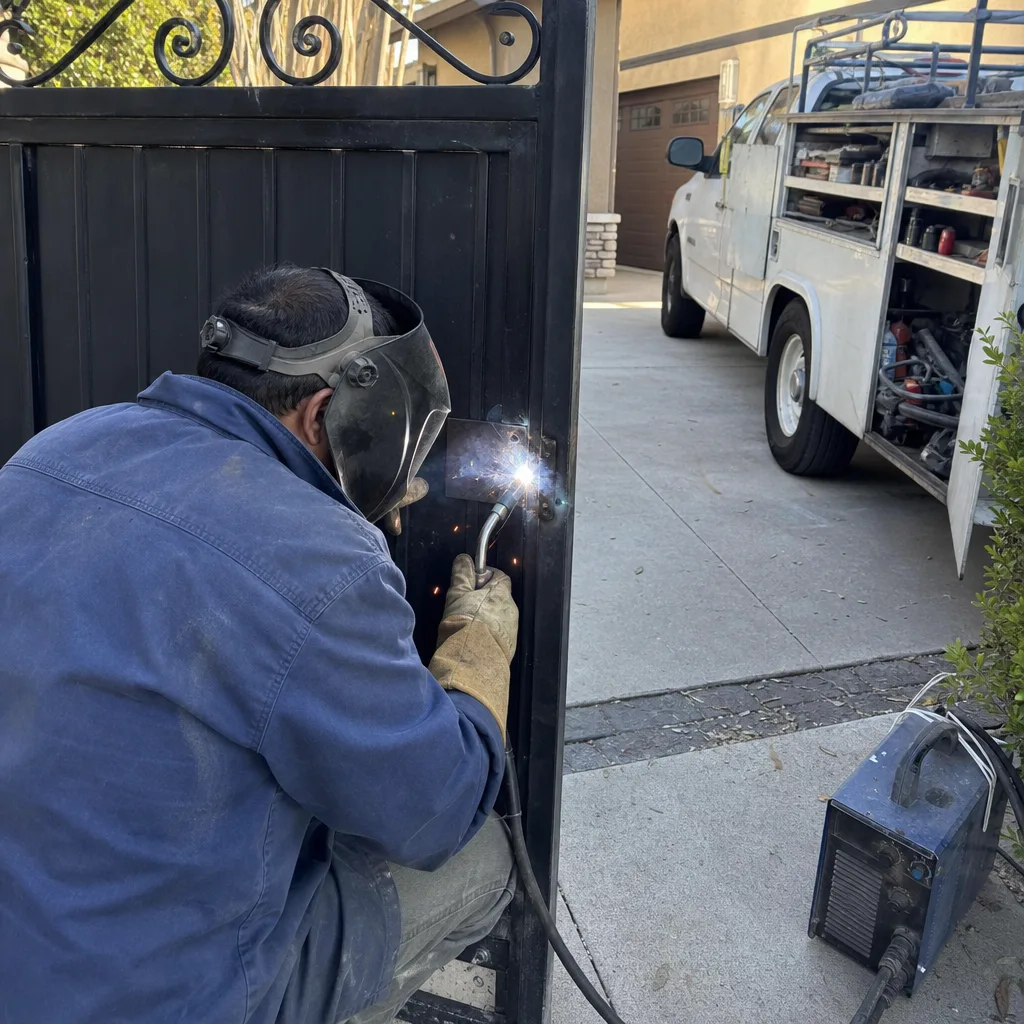
Late February is the optimal time to inspect and relubricate a Riverside driveway gate. The coldest nights have already happened. If a weld was going to crack from contraction stress, it’s cracked now. If a capacitor in the control board was going to fail from cold-morning voltage draw, it’s showing symptoms now. And April heat hasn’t yet begun to accelerate grease breakdown or make a technician rush through an outdoor service call.
What a Gate Repair in Riverside pre-heat inspection covers, in order of priority:
- Limit switch position on every travel axis. On most swing and slide gates, the motor stops when a limit switch tells it to. Those switches sit on threaded rods or cam assemblies that drift over time. Setting them in February means the gate won’t overtravel or under-travel through the summer months when the gate material has expanded.
- Close-force setting. This is the setting that determines how hard the operator pushes the gate closed. In Riverside, we set close force slightly lower than the manufacturer’s default during pre-heat prep, because metal expansion in summer effectively increases friction at the hinges and guide rollers. A gate that closes fine at 65°F can fault out at 105°F if the close force was set to the edge of tolerance in March.
- Drive chain or belt tension. Chain-drive operators, common on Riverside slide gates, stretch in heat. February is the time to confirm the tension falls in the middle of the manufacturer spec, not at the tight end.
- Hinge and roller lubrication. Use a heavy, heat-rated grease on steel hinges and a dry graphite or PTFE spray on nylon or Delrin rollers. Light household oils break down by June.
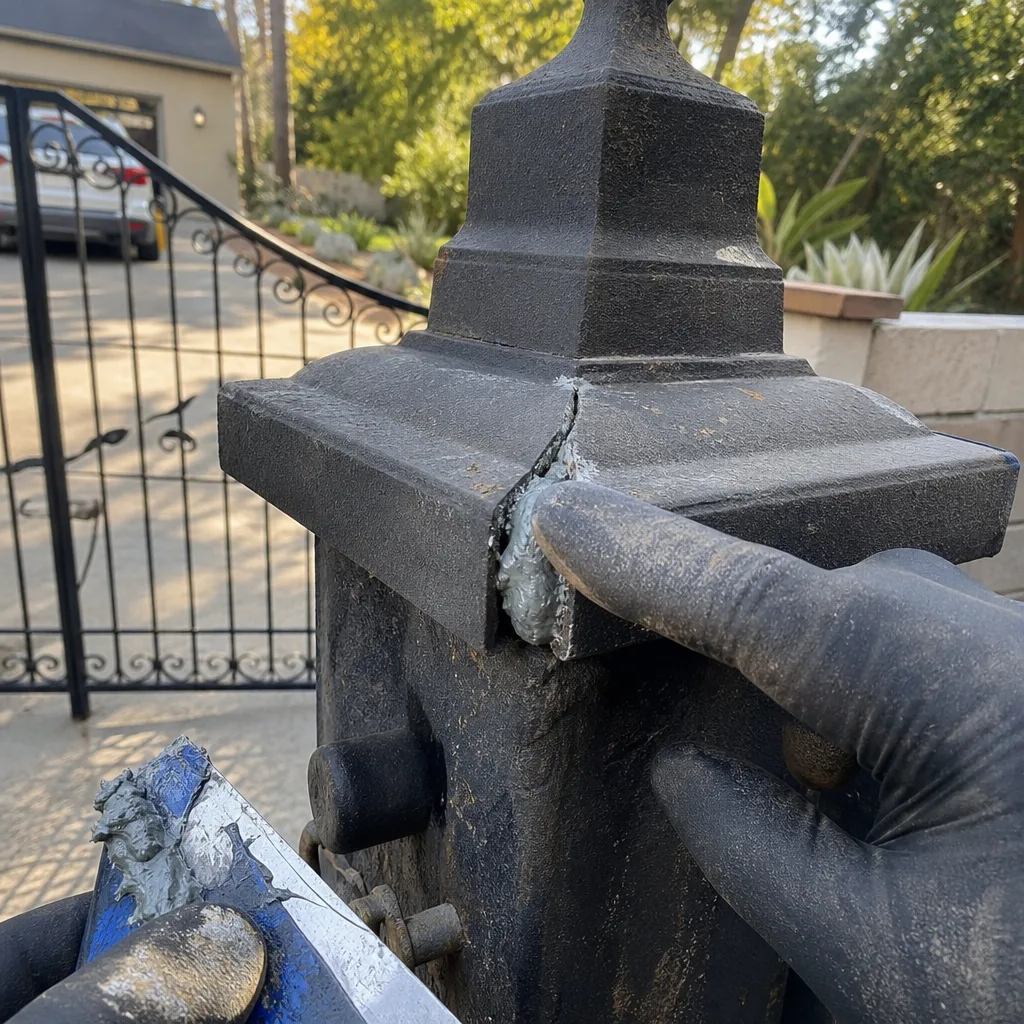
- Photo-eye and safety-edge response test. The photo-eye is the infrared beam that stops the gate if something crosses the path. Safety edges are the pressure-sensitive strips on the gate’s leading edge. Both should be tested every pre-heat window and after any wind event that moves the gate post.
Most swing-gate motor replacements run between $850 and $1,600, depending on the brand and whether the arm bracket is intact. A pre-heat inspection that costs a fraction of that prevents the failure modes that shorten motor life, a point covered in our DIY vs Professional Gate Repair: The Riverside Homeowner’s Decision Guide. If you have a LiftMaster, FAAC, or BFT operator, the pre-heat inspection is the single best dollar-per-year you can spend on that equipment.
Peak-Heat Stress Monitoring: June Through September
Once Riverside daytime temperatures start crossing 95°F, the gate enters stress mode. We don’t recommend scheduling elective service during this window. The heat makes adjustments less accurate, and a technician working on a metal gate at 2 p.m. in a Riverside August is making decisions in conditions that don’t match the rest of the year. Instead, monitor.
What to watch for during peak heat:
- Slower travel speed or a gate that pauses mid-cycle. This is often thermal overload protection kicking in. The motor is getting too hot and the control board is throttling it. It’s not a failure, it’s a safety response. But repeated thermal cycling shortens control board capacitor life.
- Gates that reverse for no visible reason. Heat swells metal. Hinges get tight. The close-force sensor sees the increased resistance and treats it as an obstruction, so it reverses. If this happens every afternoon but not in the morning, it’s thermal expansion, not a sensor problem.
- Humming or clicking from the control box without gate movement. Capacitor degradation accelerates above 100°F. The start capacitor behind the motor may be failing. This is a cheap part, usually $25 to $60, but the behavior is often misdiagnosed as a motor problem.
- Gate stops leaving a gap of one to three inches. The gate material has expanded along its length. The limit switch position set in February is now slightly wrong. This is normal. Make a note, not an emergency call, unless the gap exceeds four inches or the gate reverses.
If you’re seeing repeated heat-related faults, calling for service during the heat wave itself is fine. We handle peak-season calls in Riverside all summer. But the adjustment work is tougher to do precisely on a 104°F afternoon, so expect the technician to make a temporary correction and recommend a follow-up adjustment during the October or December mild window.
Santa Ana Wind Recovery: October Through November Inspection Protocol
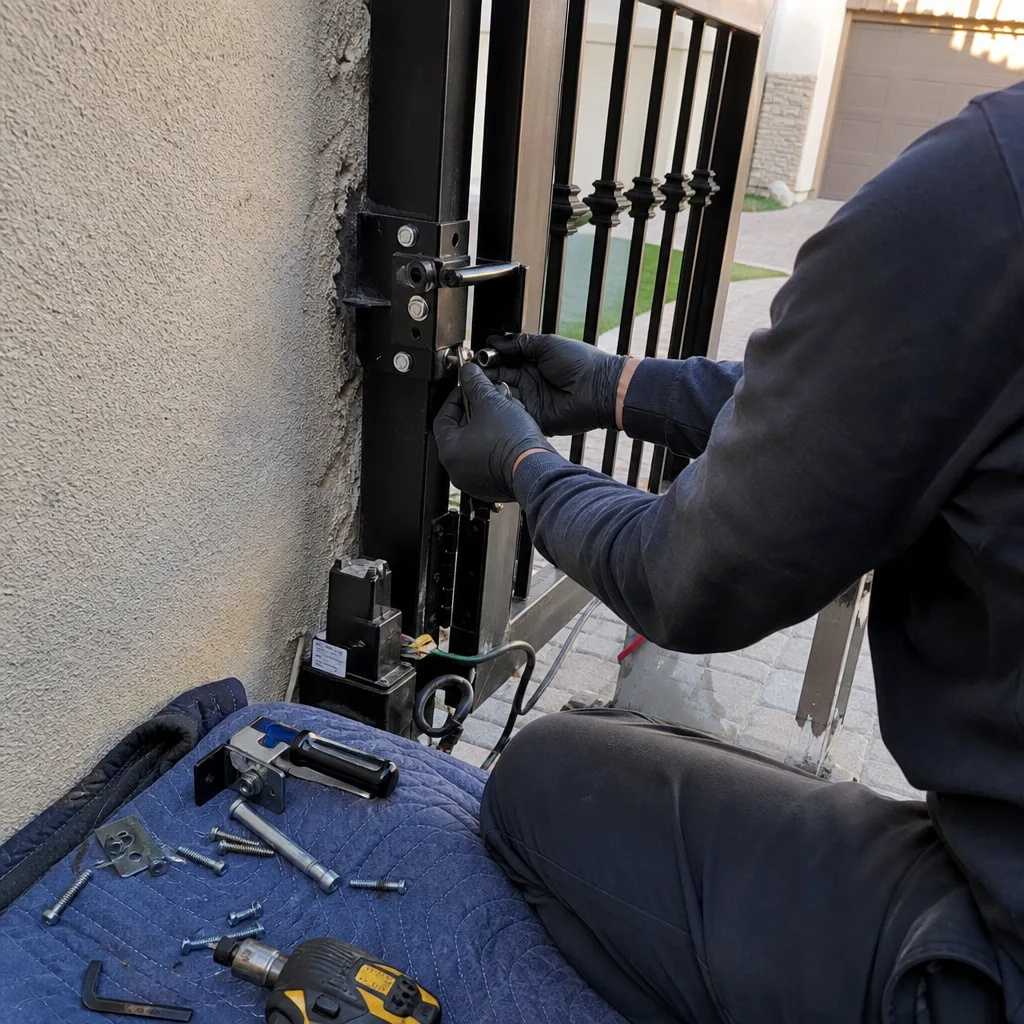
Santa Ana winds are Riverside’s most predictable gate-damage event. They arrive in fall, they blow dry air down from the high desert, and they carry fine dust, small branches, and sometimes larger debris. The gate itself isn’t usually damaged by wind force directly. It’s damaged by what the wind pushes into the mechanism.
After the first significant Santa Ana event of the season, run this inspection sequence:
- Clear the bottom track on slide gates. Wind-blown sand and leaf debris accumulate in the track channel. This is the number one cause of jerky slide-gate operation in Riverside after a wind event. Use a shop vacuum or compressed air, not a hose. Water turns the dust into mud slurry that gets into the roller bearings.
- Check photo-eye alignment. Wind flexes gate posts. A photo-eye that was aligned in March can be off by two inches after a strong gust rotates the post a fraction of a degree. The symptom is a gate that refuses to close and needs the manual override. The fix is usually a five-minute realignment, not a new photo-eye.
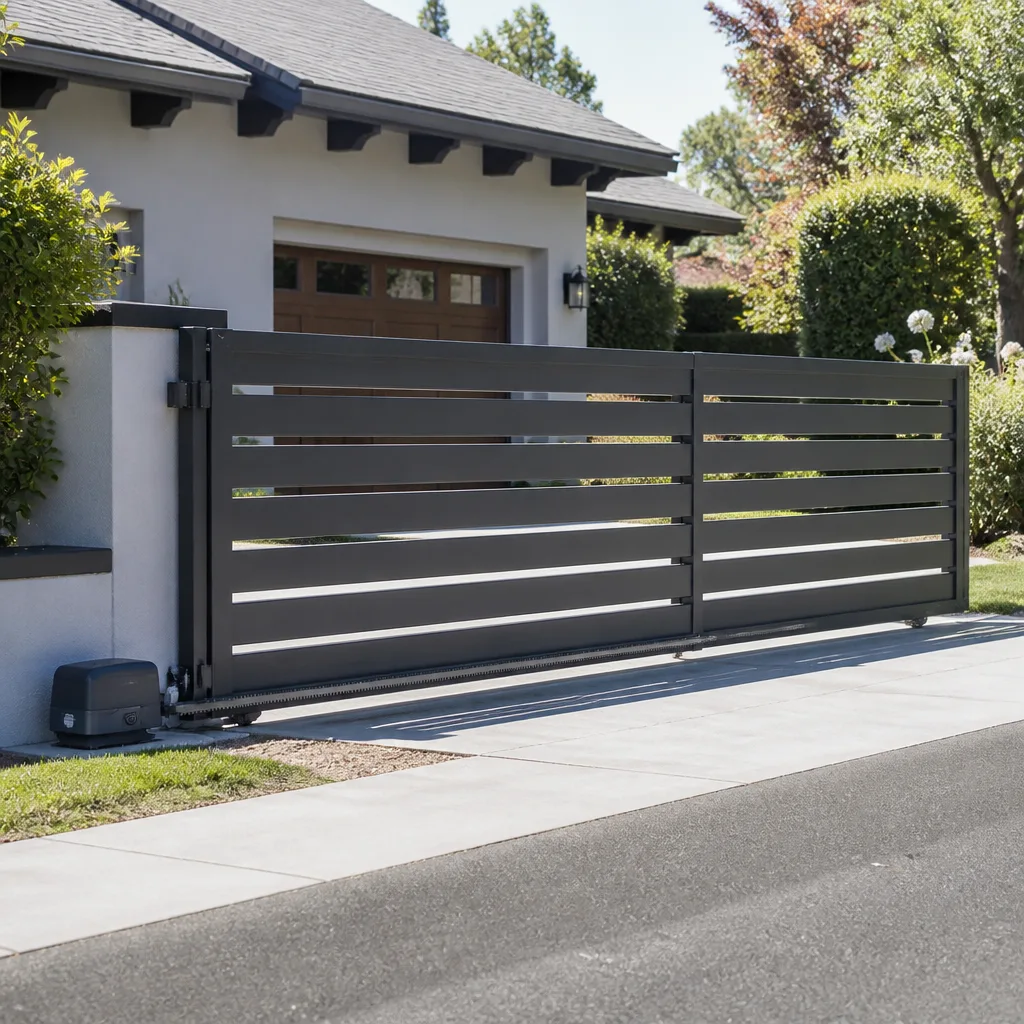
- Inspect the guide rollers on cantilever slide gates. These rollers sit in a frame and guide the gate as it slides. Wind load pushes the gate sideways against the rollers, and fine grit works its way into the bearings. Listen for grinding or squealing when the gate moves.
- Check the operator gearbox for debris intrusion. On Linear and BFT slide operators, the gearbox breather can pull in fine dust under pressure changes from high wind. If you see dust around the gearbox seal, have it opened and regreased in the October window.
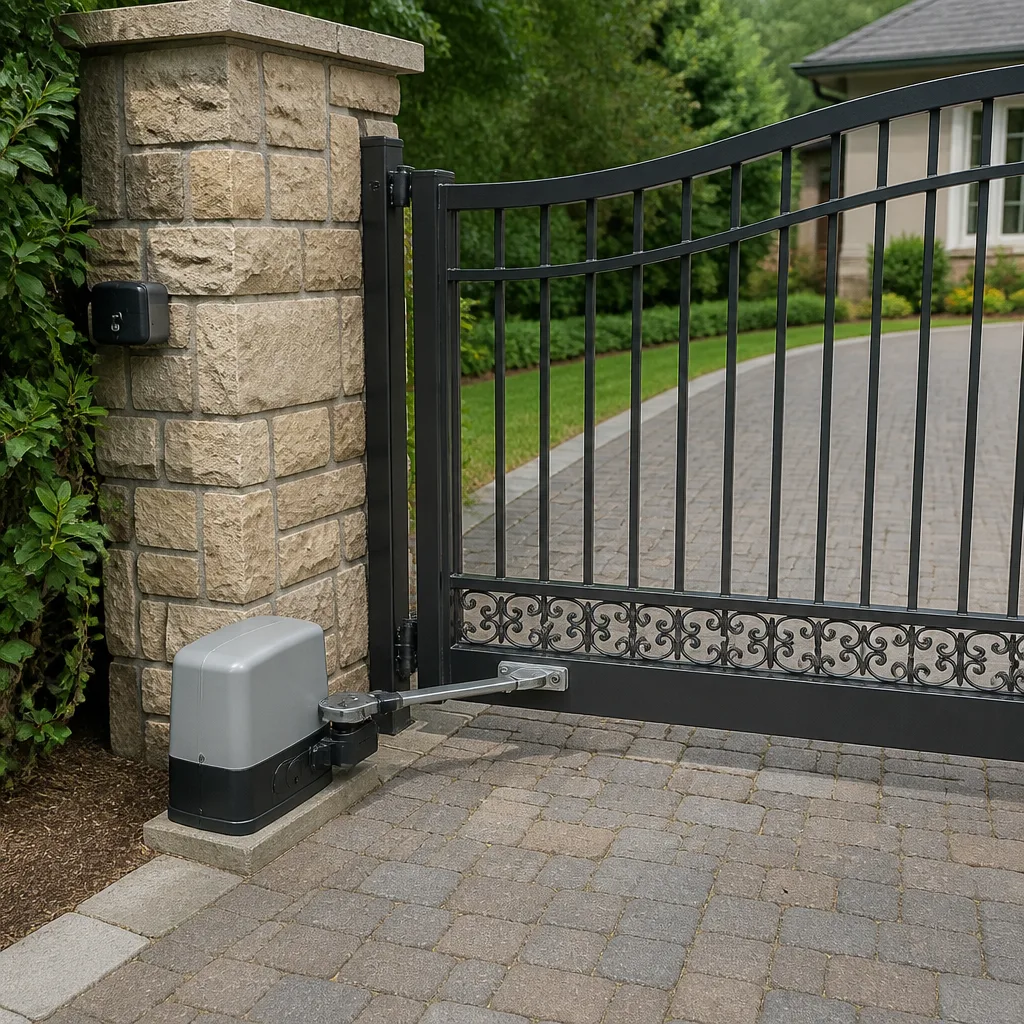
- Tighten hinge bolts on swing gates. Wind buffeting works hinge bolts loose over time. A gate that wobbles in the wind is putting oscillating stress on the motor mount and the arm bracket. Tighten them before the wobble becomes a crack.
This Santa Ana recovery inspection is the second most important service window of the year, after pre-heat prep. It takes about an hour and typically runs between $85 and $190 for corrective work if a service call is needed, less if it’s bundled into a scheduled maintenance visit.
Mild-Window Servicing: December and January
December and January give Riverside the second true preventive window. Temperatures sit in the 60s and 70s. The gate has contracted after the summer. Grease is thick and visible. A Gate Motor & Opener in Riverside technician can do the slow adjustment work that makes the other three seasons easier.
What the mild window is best for:
- Limit switch fine-tuning. With the gate at its coldest and most contracted, you can set limits precisely and trust that the summer expansion will land within tolerance.
- Full gearbox and chain inspection. The thick winter grease makes wear patterns visible. Metal shavings in the gear oil, stretch marks on the chain links, worn teeth on the drive sprocket. This is inspection season, not just adjustment season.
- Wiring and connection tightening. Cold weather contracts wire terminations. A terminal screw that was tight in August may be marginally loose in January. Loose connections cause arcing, which causes heat, which causes component failure. This is the most under-appreciated preventive task on a Riverside gate.
- Weld inspection on steel gates. Cold contraction opens hairline cracks that are invisible in summer. December and January are the right months to inspect weld joints and hinge tabs thoroughly.
- Battery and backup health check. Cycle the gate on battery power if you have a backup unit. December temperatures don’t stress batteries the way July does, but a battery that’s already weak will show it clearly on a cold morning.
Expect a full mild-window service visit to run between $120 and $280 for most residential gates in Riverside. That includes inspection, relubrication, limit and force adjustments, wiring check, and safety system testing. If a component needs replacement, the written price for that work is quoted before any tool comes out.
UV Degradation at Riverside’s Inland Latitude: What Wears Faster and Why
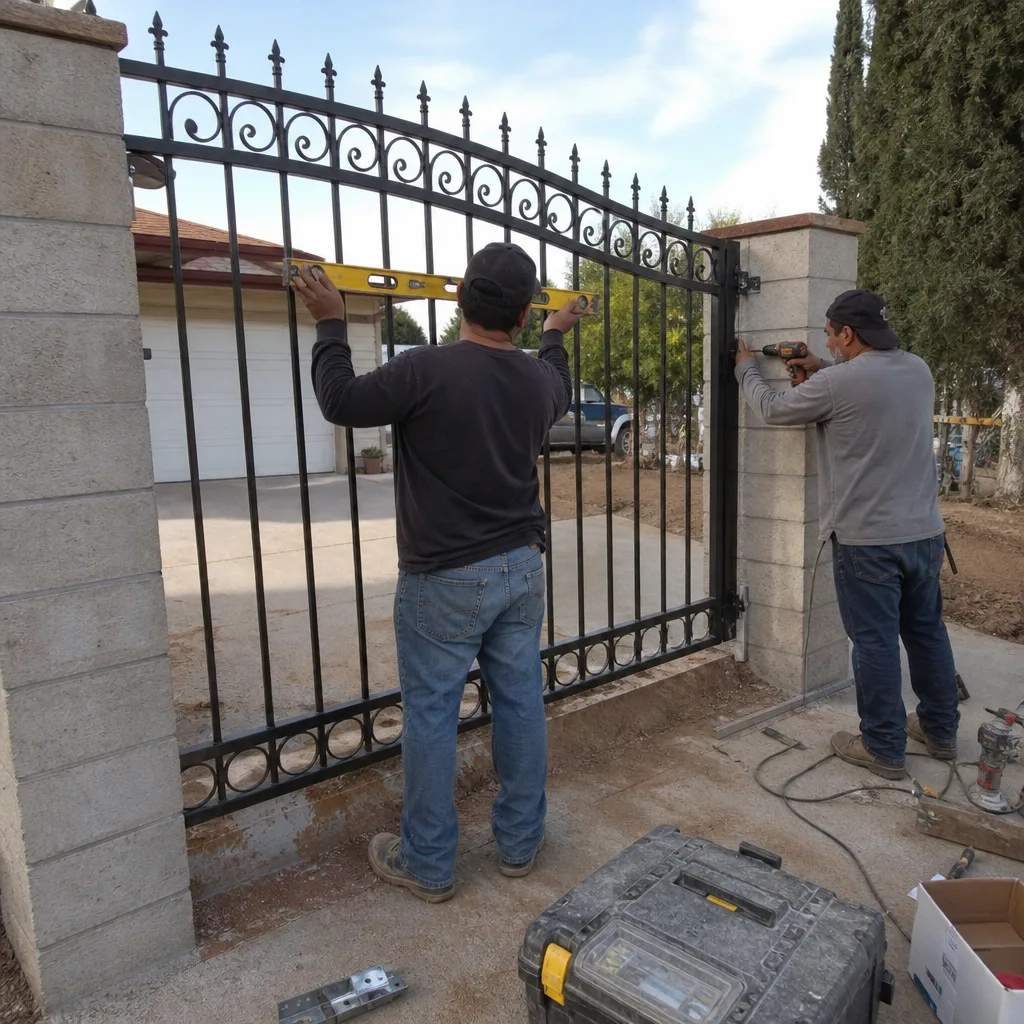
Riverside sits at a latitude that gets more annual ultraviolet exposure than coastal California. Coastal marine-layer fog filters out a meaningful percentage of UV. Riverside doesn’t have that. The result is that certain gate components age faster than manufacturer service intervals assume.
What fails first in Riverside’s UV environment:
- Rubber seals on the control box and operator housing. These dry, crack, and lose their seal within three to five years. Water or dust intrusion follows the cracked seal. A $12 seal replacement prevents a $400 control board replacement.
- Wiring insulation on any exposed low-voltage runs. The photo-eye wiring, keypad wiring, and loop-detector wiring that runs along the gate post or fence line gets baked. PVC insulation turns brittle and begins to flake. We see this constantly on gates that are five or more years old in Riverside.
- Painted gate surfaces, especially dark colors. Dark paint absorbs more solar radiation. Surface temperatures on a black steel gate in Riverside can exceed 150°F in July. Paint fails from the inside out, and rust follows. Lighter colors and factory powder coating hold up significantly better.
- Plastic housings on photo-eyes and keypads. These yellow, haze, and eventually crack. The photo-eye’s internal lens can develop a film that reduces its effective range, leading to intermittent “photo-eye blocked” faults that are actually UV-damaged lenses.
- Vinyl and plastic gate rollers. Nylon and Delrin rollers degrade under UV. They get rough, then they get noisy, then they bind. Riverside sees roller replacements more frequently than coastal markets.
You can’t prevent UV degradation. You can inspect for it on schedule. The pre-heat window in February and the mild-window service in December are both good times to check seals, insulation, and plastic components. A component that’s sun-brittle in February will fail by September if it’s not caught.
Battery and Backup Power Behavior Above 105°F
The battery backup units sold with most residential gate operators come with manufacturer specs written for temperate climates. Those specs assume the battery sits at an ambient temperature between 60°F and 90°F. A Riverside summer puts the battery inside a metal control box that reaches 120°F to 140°F on a 105°F afternoon. The battery behavior changes.
What heat does to gate backup batteries in Riverside:
- Charge thresholds shift. A sealed lead-acid battery that floats at 13.5V at 70°F will overcharge at 13.5V when the battery case is at 120°F. Overcharging in heat causes electrolyte loss. The battery dries out from the inside and dies early. Manufacturer charge specs assume cooler air.
- Capacity drops temporarily. A battery rated for a certain number of cycles at 77°F will deliver fewer usable cycles on a 110°F day. The chemical reaction runs faster. It’s not a defect, it’s physics.
- Backup runtime during a heat-wave power outage is shorter than expected. The battery is already degraded by heat soak before the power goes out. A gate with a two-day backup rating at 70°F may deliver four to six hours of operable time at 110°F ambient. If you need gate access during a Riverside heat-wave outage, plan for a shorter window than the spec sheet suggests.
- Lithium options handle heat better but cost more. Some operators can accept lithium iron phosphate batteries, which tolerate higher ambient temperatures than sealed lead-acid. Expect to pay $200 to $450 for a lithium upgrade on a residential gate, compared to $75 to $150 for a standard SLA backup battery.
If your gate has battery backup and you live in Riverside, test the backup under load in June. Cycle the gate three or four times on battery power and note how quickly it drains. That gives you a summer baseline. If the battery fails the test, replace it in the mild window, not during a heat wave. The new battery will be stronger through the coming summer months.
The Seasonal Log Template: What to Record and Why It Matters

Gate service records matter because the gate doesn’t keep its own history. A technician who shows up in Riverside in August has no way to know that the close-force setting was increased in March, or that the photo-eye was realigned after last October’s Santa Ana event. Unless you wrote it down. Or unless the technician who did the work left a documented record.
We provide a photo log and written record on every visit as part of the job. For homeowners who run their own seasonal checks, we have more guides & resources including the log format that matches the tasks:
- Date and ambient temperature at time of check. Gate behavior at 65°F and at 105°F are different machines.
- Limit switch position readings, if visible. Note the physical position or setting value on each axis. This is the reading a future technician needs to see whether drift has occurred. If the limit switch was set 12 degrees past travel on a previous visit, the next tech needs that written down.
- Close-force and open-force settings. Record the numeric setting, not just “checked.” These numbers drift and the history matters.
- Grease or lubrication type used and date applied. Different greases have different heat tolerances.
- Photo-eye alignment status and any adjustment made. “Aligned, no adjustment” is a valid entry.
- Battery test result, including number of cycles and time under load. “Three cycles, gates operated normally” tells you something. “Two cycles, slowed on second” tells you more.
- Any part numbers replaced. The written record of the part number installed means the next technician doesn’t have to guess what’s in there.
- Weld inspection notes, especially “no cracks observed” on the hinge tabs and motor mount. Negative findings are findings. They establish a baseline.
If you don’t have a log book, a simple note on your phone with a few photos will work. The point is that the record exists. A gate that’s been maintained with records is cheaper to keep running. No future technician has to re-diagnose what’s already known. The cost of rediscovering a problem is real. Records are how you avoid paying for it twice.
Common Mistakes to Avoid
- Using WD-40 or household spray oil on gate hinges or rollers. These products are solvents with light lubricant mixed in. They strip the heavier grease and evaporate in Riverside heat within weeks. The hinge is then drier than before. Use a heat-rated grease on metal hinges and dry lubricants on nylon or Delrin parts.
- Skipping the post-Santa Ana photo-eye check. Wind rotates gate posts. The photo-eye misalignment can be invisible to the eye but enough to trigger a “photo-eye blocked” fault. Most “photo-eye failures” we see in Riverside after October are misalignments, not component failures.
- Adjusting limit switches during a heat wave. The gate is expanded. A limit set at 105°F will be wrong when the temperature drops to 60°F. Set limits in the mild windows, monitor during the heat, and adjust only if the gate is failing to close or open.
- Ignoring a gate that’s reversing every afternoon but working in the morning. That’s thermal expansion, not an intermittent sensor problem. The close-force sensor is reading the extra friction from heat-swollen hinges. The fix is usually a lower close-force setting combined with hinge lubrication, not a new sensor.
- Not recording the settings before making a change. If you adjust the close force and the gate behaves worse, you need to know what it was set to before. Write down the old number first. This is the single most common DIY mistake we see on gate control boards in Riverside.
- Replacing the motor when the capacitor has failed. A humming or clicking sound from the control box without gate movement is frequently a start capacitor. A replacement capacitor runs $25 to $60. A new motor runs $400 to $900. The capacitor test takes a minute. A new Gate Installation in Riverside should never be the first recommendation when the problem might be a $40 part.
- Hosing out the bottom track on a slide gate. Water pushes the wind-blown dust into a slurry that works into the roller bearings and then dries into a cement. Use a vacuum or compressed air. Water belongs in irrigation systems, not in slide-gate tracks.
When to Call a Professional
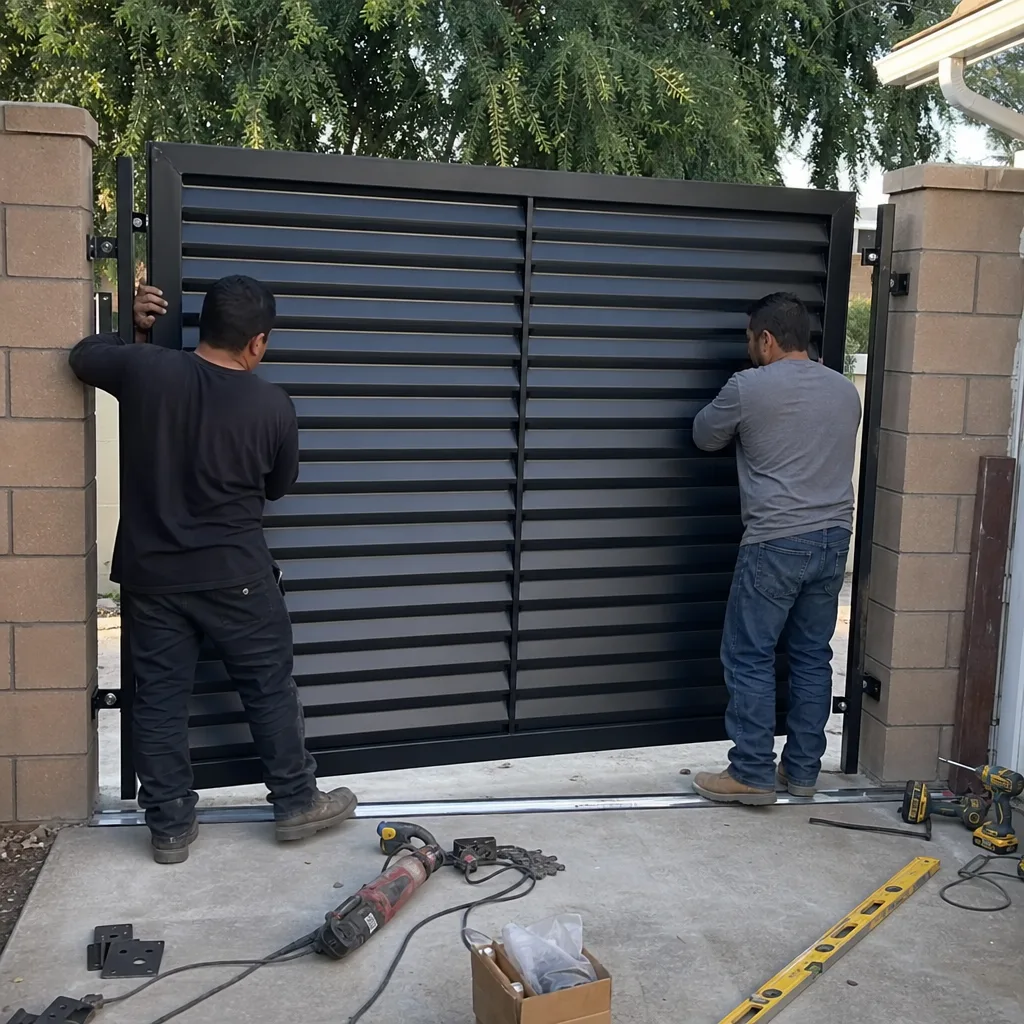
Some gate conditions are diagnostic problems, not maintenance items. If your gate is reversing unpredictably and you’ve adjusted the close force twice with no improvement, the issue may be a failing control board, a sensor conflict, or a mechanical bind that takes a trained eye to isolate. If the gate makes a grinding sound from the gearbox or drive mechanism, continued operation will cause damage that costs more than the repair. High-tension springs exist on some counterweighted gates and should never be adjusted or removed by a homeowner. They store enough energy to cause serious injury. If the photo-eye is aligned but the gate still refuses to close, the problem may be in the loop detector or the control board logic. And if the gate has been in service for more than seven years with no documented service history, the first visit should be a full inspection, not a single-problem repair. Vance Gate Repair Riverside offers free estimates for gate repair in Riverside. Call (951) 934-7330 and we’ll give you a written price before any work starts.
Frequently Asked Questions
A Riverside gate should be serviced twice per year, once in late February or March before the heat arrives, and once in October or November after the first Santa Ana wind event. Each visit runs $120 to $280 for inspection, lubrication, and adjustment work. Gates that operate more than 20 cycles per day or carry heavy traffic may need a third inspection in mid-summer. Call (951) 934-7330 for a written quote on your specific gate.
A seasonal gate inspection in Riverside typically runs $120 to $280, depending on the gate type, operator brand, and whether the visit includes corrective adjustments or just inspection and lubrication. Corrective work during the same visit is quoted in writing before it’s performed. Estimates are free. Call (951) 934-7330 to schedule or to get a written price.
The best time of year to have a Riverside gate serviced is late February through March. The coldest nights have already exposed any metal fatigue, and the summer heat hasn’t begun degrading grease or making precise adjustments difficult. The second-best window is December through January.
In most cases yes. A live person answers the phone 24 hours a day, seven days a week, and repair calls in Riverside are typically dispatched the same day or the next morning, depending on when you call. The price is written before work starts, so you know what the repair will cost before we touch anything. Call (951) 934-7330.
Most swing-gate motor replacements in Riverside run between $850 and $1,600, depending on the brand and whether the arm bracket is intact. Slide-gate operator replacements run slightly higher, typically $1,100 to $2,200. A free estimate with a written price is available by calling (951) 934-7330.
We work on nine major gate automation brands, including LiftMaster, FAAC, BFT, and Linear. Whatever motor is already on the property, we can service it. We don’t steer customers toward replacements when a repair is the right call. The brand on the operator matters less than the condition of the installation.
After a Santa Ana wind event, clear debris from the bottom track, check photo-eye alignment, listen to the guide rollers for grit, inspect the operator gearbox for dust intrusion, and tighten hinge bolts on swing gates. These five checks catch most wind-related damage before it becomes a bigger problem. If anything looks off, call (951) 934-7330 for a free estimate.
Yes. Heat above 100°F changes the charge threshold on sealed lead-acid batteries and shortens backup runtime during outages. A battery that tests fine at 70°F may deliver only four to six hours of viable operation on a 110°F afternoon. Test backup batteries under load every June to establish a summer baseline. Call (951) 934-7330 for a battery test or replacement quote.
The Bottom Line
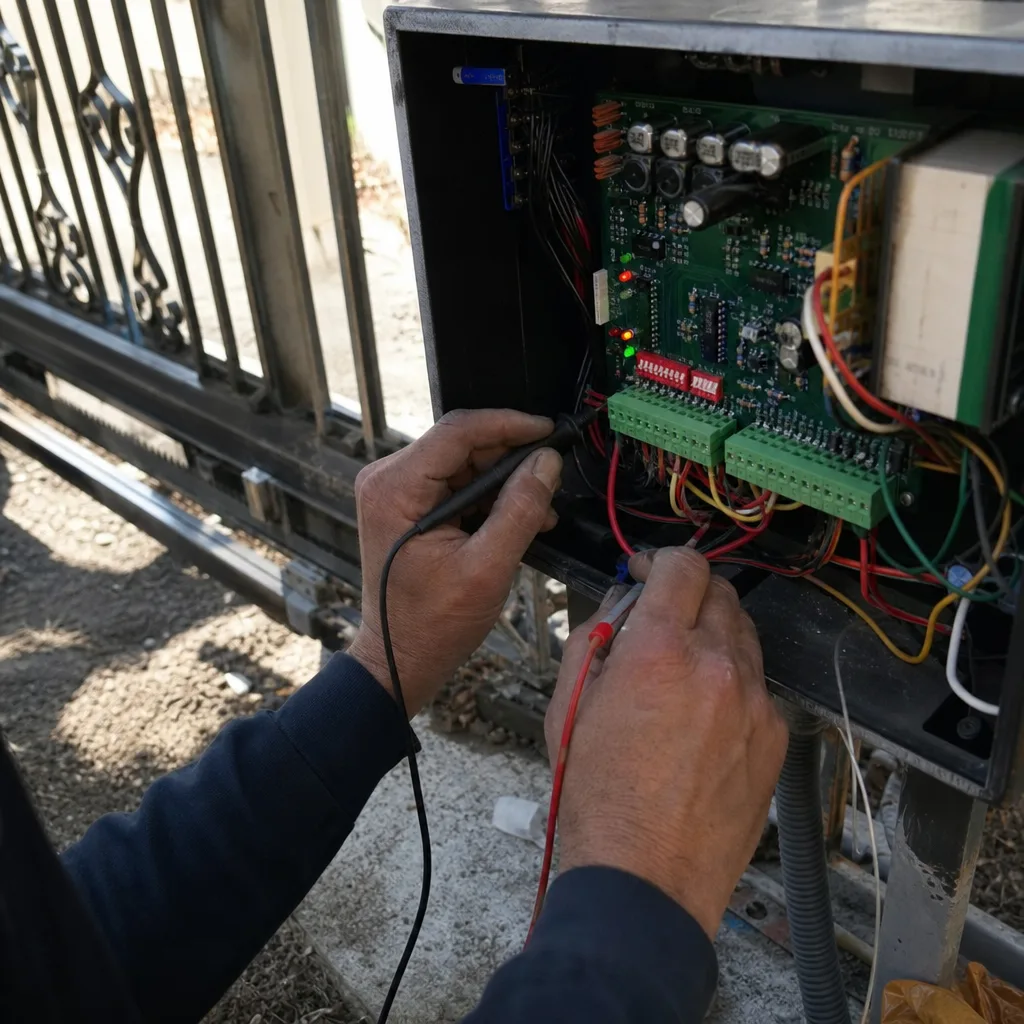
Riverside gates fail on a predictable calendar. Metal fatigue shows itself in late winter. Heat stress builds through summer. Santa Ana winds hit the mechanism in October. If you service the gate in late February and again after the first strong wind of fall, you’ll catch most failures before they happen, and the gate will run smoother through the two seasons that would otherwise tear it up. A $120 to $280 seasonal visit is cheaper than an emergency motor replacement every time. Vance Gate Repair Riverside serves Riverside with free estimates and written pricing on every job. Call (951) 934-7330 to schedule the next seasonal service window.
Written by Adrian Vance, Owner at Vance Gate Repair Riverside, serving Riverside since 2014.